

Audio By Carbonatix
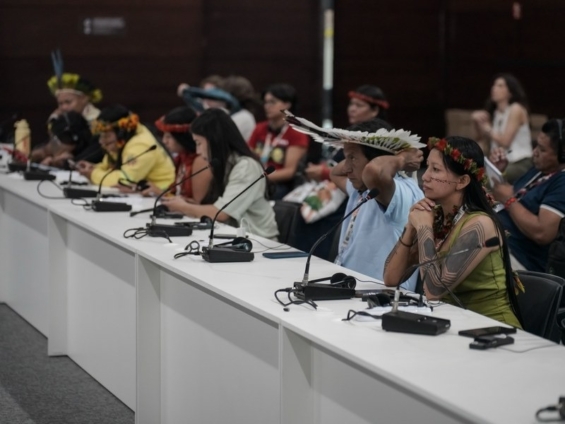
The role of Indigenous peoples in national climate adaptation efforts is gaining stronger recognition, as global leaders and experts at COP30 stressed the need for direct support, land protection, and greater participation of Indigenous communities in climate decision-making.
These issues were discussed during the High-Level Ministerial Event “Indigenous Adaptation” held on Wednesday, November 12, at COP30.
COP30 Special Envoy Ms. Sineia do Vale, who hosted the session, said Indigenous knowledge is essential to climate solutions and global goals.
“Indigenous peoples have been doing millennia-old work in their territories, bringing solutions to climate change. It is important that they can continue living their way of life,” she said.
UNFCCC Adaptation Committee representative Mr. Carlos Ruiz-Garvia agreed, noting that many international agreements—including the Paris Agreement, the Convention on Biological Diversity, and the Global Goal on Adaptation—recognize the importance of Indigenous peoples in climate action.
Speakers stressed that direct climate finance for Indigenous communities is critical for protecting their land and adapting to climate change.
The Green Climate Fund (GCF) also highlighted ongoing efforts to open direct funding channels for Indigenous-led actions.
“Our goal is also to ensure that Indigenous peoples benefit from climate finance — not merely to prevent harm to them,” said Mr. Artur Lacerda, Director of Governance Affairs and Secretary to the GCF Board.
Ms. Lívia Kraemer from the Norwegian International Climate and Forest Initiative (NICFI) said countries should design climate finance policies with Indigenous participation. She pointed to the Tropical Forests Forever Facility (TFFF)—to which Norway has pledged USD 3 billion—as a strong example of support for forest communities.
Land protection was another major issue. Dr. David Kaimowitz from the International Land and Forest Tenure Facility said securing Indigenous land rights is essential for reaching climate targets. His FAO-backed research shows that Indigenous and traditional communities are the most effective protectors of forests.
On Friday, November 14, COP30 will also see the launch of a new adaptation plan created by Indigenous leaders from the state of Roraima in Brazil. The plan is led by Ms. Sineia do Vale, who also serves as Co-Chair of the International Indigenous Peoples Forum on Climate Change (IIPFCC).
“Indigenous peoples offer natural indicators that demonstrate the impact of climate change on the cultural and social lives of communities,” Ms. Sineia said.
This new document is one of the few Indigenous-led adaptation plans in the world and the third in Brazil. It includes detailed traditional knowledge, such as identifying climate-resilient seed varieties and tracking the link between water temperature and native fish populations.
Leaders at COP30 say that protecting Indigenous territories and giving communities direct access to climate finance is not just fair—but essential for global climate progress.
Latest Stories
-
Toobu rejects calls to recall Parliament over 3.9-tonne cocaine shipment
33 minutes -
Residents in 5 Northern Regions warned of approaching rainstorm
36 minutes -
Constituency Games still a work in progress – Sports Minister
53 minutes -
Team Ghana set for historic Karting Africa Showrun in Angola
58 minutes -
52-year-old South African arrested with suspected heroin after arriving from Accra
1 hour -
Shatta Wale challenges UPSA students to build entrepreneurial mindsets
2 hours -
Finance Minister advises African governments to strengthen regional tax cooperation
3 hours -
NPP accuses NDC of master-minding demolition of Ho regional office fence
3 hours -
Ghana plans stronger regional power trade with Nigeria
3 hours -
GRA Commissioner-General calls for stronger tax cooperation to boost regional revenue mobilisation
3 hours -
NACOC needs more personnel to tackle drug trafficking – Toobu
3 hours -
Railway workers resist KMA eviction order, demand consultation
3 hours -
Legacy Leadership Africa Institute to host boardroom women’s leadership programme
4 hours -
Ghana needs a law to sustain constitutional reforms – CDD-Ghana
7 hours -
COVID fumigation audit: Auditor-General has a lot of questions to answer – Akwatia MP
7 hours