

Audio By Carbonatix
In Ghana’s most vulnerable coastal communities, the sea is no longer just swallowing homes, it is tearing at the very foundations of public infrastructure. As the coastline retreats year after year, schools, hospitals, and health centers are edging closer to collapse.
In communities such as Fuveme, Salakope, Agavedzi, Kporkporgbor, and Kedzikope, the question hangs heavily: When the sea vomits again, where will the people run?
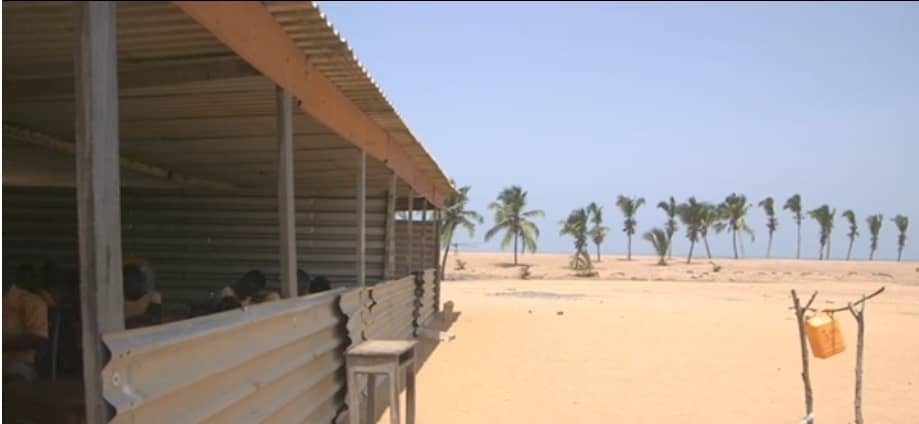
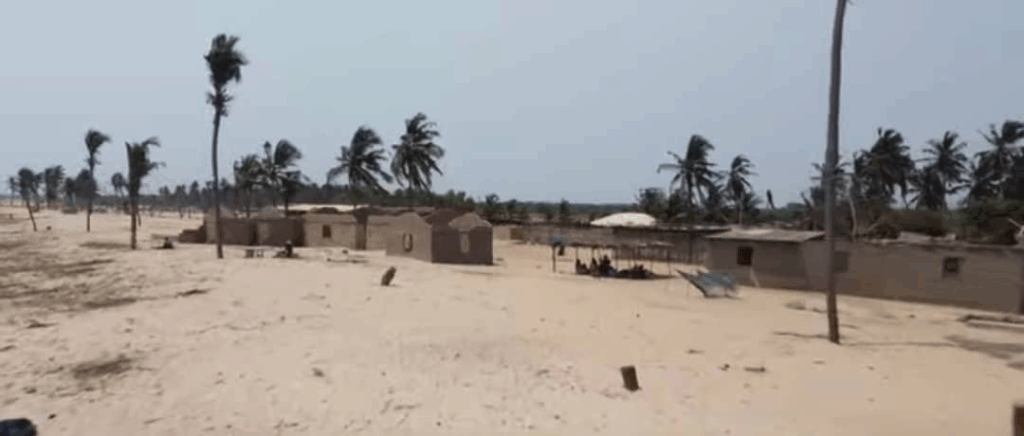
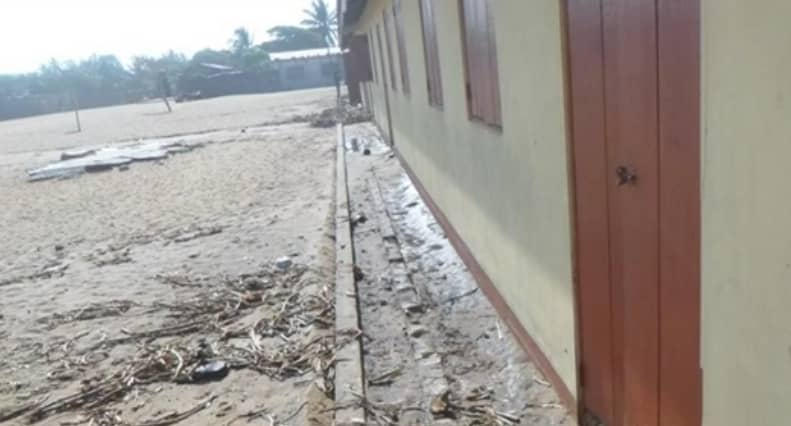
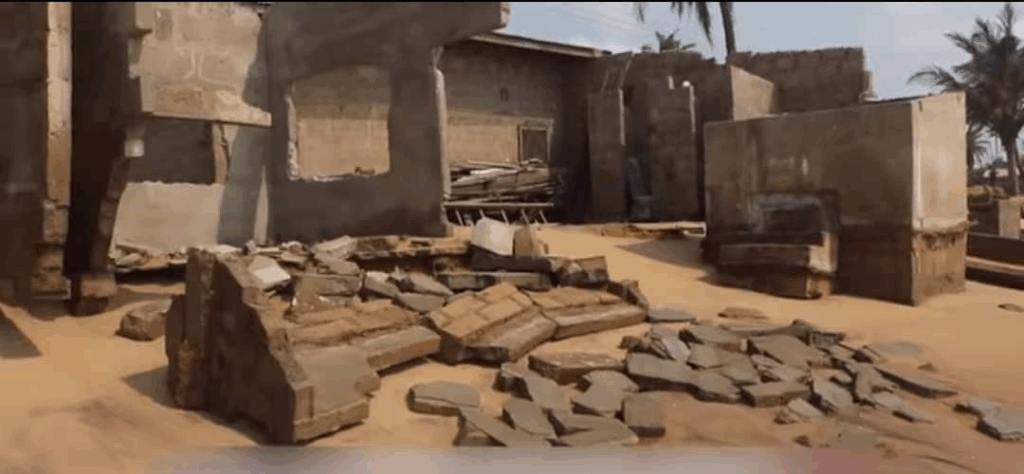
In Fuveme, the school compound once echoed with laughter. Today, it stands fractured, its foundation eaten by waves.
Mr. Nyatefe, the headteacher, now holds classes under trees.
“I cannot risk the children’s lives,” he told JoyNews.
“When the tide is strong, the ground shakes. We have lost too much already.”
Three school blocks along this stretch have partially collapsed. Others stand dangerously close to the shoreline.
At the Kedzikope Health Centre, nurses work while watching the sea inch closer every day.
For nurse Elorm, every night brings dread.
“When the waves hit the walls, I panic,” she admits. “We cannot run fast enough if something happens.”
Ambulances can no longer access flooded roads. Pregnant women now walk up to nine kilometres for care. Medical supplies are delayed for days because transport routes are repeatedly cut by water.
Infrastructure on a Tight Rope
Experts estimate that sections of Ghana’s coastline are eroding at over five meters a year.
That rate threatens: School buildings, health facilities, water and electricity lines, and community roads.
This deterioration is fueled by sea level rise, extreme tidal waves, sand mining, mangrove loss, and decades of unmanaged coastal development.
When a school collapses, children lose their right to education. When a clinic is cut off, lives are lost. When a community road vanishes, the entire local economy stalls.
The threat is not theoretical, it is unfolding now. Experts call for a national emergency plan, not piecemeal projects. Ghana must: reinforce or relocate endangered public facilities, restore mangroves to buffer the coastline, implement sustainable dredging, and build climate-resilient infrastructure.
“The sea is moving faster than policy,” a district official warns.
“If we delay, we will lose more than buildings; we will lose lives.”
***
This article is written as part of a collaborative project between JoyNews, CDKN Ghana, and the Centre for Climate Change and Sustainability at the University of Ghana, with funding from the CLARE R4I Opportunities Fund.
Latest Stories
-
Ghana’s mining deaths fall sharply, but Chamber insists ‘three deaths are too many’
1 hour -
Tatale Sanguli officials destroy expired food products, warn traders
1 hour -
Police arrest two watchmen over alleged defilement of 14-year-old student
2 hours -
The woman behind General Mosquito: Could Ghana be meeting its next First Lady?
2 hours -
Court remands man over alleged Labone bank robbery attempt
2 hours -
Supreme Court to rule on injunction application on legal vacation today
2 hours -
Tamale Metropolitan Assembly distributes 10,000 bags of fertiliser to farmers
2 hours -
TUSAAG suspends strike, resumes work after renewed talks with government
2 hours -
PIAC marks 15 years of oil revenue accountability and transparency
2 hours -
Adongo calls for non-political interference in $1.46bn Heritage Fund review
2 hours -
FDA records GH¢70m surplus in 2025 amid concerns over ageing lab equipment
2 hours -
Arise Ghana demands stronger commitment to end galamsey
2 hours -
96% of Ghanaian pensioners willing to work beyond retirement age – Study
2 hours -
Ghana gets nuclear power plant simulator
2 hours -
Temporary Akosombo power control facility to be ready by September – Energy Ministry
2 hours