

Audio By Carbonatix
Earlier this month, a video circulated widely on social media of a man violently assaulting his wife with two metal rods in Ofankor, a suburb of Accra. The video prompted public outrage – and rightly so. But for the victim of the assault, the outcry was too little, too late: she had already reported her husband’s physical assaults to the police several times before the recent incident was captured on video.
However, they still failed to keep her safe.
For too many of Ghana’s women and girls, violence at home remains a fact of life.
Recent national surveys conducted by the Ghana Statistical Service (GSS) show that 28-30% of Ghanaian women have experienced intimate-partner violence. Other studies have found that nearly three in ten women have faced domestic violence in the previous 12 months, while still others have recorded high levels of emotional and controlling behaviours, alongside physical and sexual violence.
Ghana’s Domestic Violence Act (Act 732), passed in 2007, was meant to put an end to this terror. But nearly two decades after the Act took effect, the legislation has failed to deliver – and Ghana’s girls and women are still suffering. It’s time for the government to dedicate the funding, training, and data collection required to finally put an end to the epidemic of violence in the home.
The Domestic Violence Act established protection orders, mandated support services and created the Domestic Violence Secretariat under the Ministry of Gender, Children and Social Protection. But multiple assessments by national and international bodies have highlighted the same challenges, year after year: inadequate funding, insufficient shelters for victims, limited training for police and judicial officers, low prosecution rates, and continued reliance on informal mediation, which often pressures victims into silence.
The Domestic Violence and Victim Support Unit (DOVVSU) of the Ghana Police Service was designed as a one-stop centre for victims, but reporting, prosecution and survivor support systems remain far below what the scale of the problem requires. Even the police are reported to intervene only when DOVVSU makes official requests, partly due to limited training and logistical constraints.
Laws do not enforce themselves. A protection order is only effective if it is issued swiftly and respected by both the courts and police. Shelters for victims and counselling centres cannot function in policy documents alone; they need sustained investment. Community norms that favour mediation and reconciliation at all costs often push survivors back into unsafe situations.
Aggravating these issues is a weak national data system. While the Ghana Statistical Service provides prevalence data, consistent monitoring of protection orders, prosecutions and shelter capacity is irregular. Effective solutions require evidence, yet the evidence remains incomplete.
For Ghana’s Domestic Violence Act to actually protect the nation’s women and girls, the government must take action on three fronts: budget and essential services, police and prosecution, and data and community engagement.
On budget, the government must establish predictable, recurrent funding for shelters for victims and counselling services across the country. DOVVSU must also receive the necessary funding to be adequately staffed, trained, and resourced to provide round-the-clock support.
Meanwhile, the government must implement trauma-informed training for police officers, prosecutors and judges. Protection-order hearings must be fast-tracked, and institutions must be held accountable when complaints are ignored. The government must empower DOVVSU to act decisively, not merely record cases.
Finally, the government must develop integrated data systems that track cases across police, health and social services, in addition to publishing clear performance reports. At the community level, government representatives must work with traditional authorities, faith-based institutions and youth groups to shift harmful social norms that excuse or minimise violence.
Every year that one in three women experiences violence is another year in which preventable harm is tolerated. The legal framework exists, but the infrastructure needed to make it effective remains fragile and insufficient. Ghana’s Domestic Violence Act has failed to deliver value to its citizens, particularly victims of violence. As the world marks the 16 Days of Activism against Gender-Based Violence, Ghana must confront a painful truth: After nearly two decades of Act 732, preventable violence remains a fact of life for nearly one-third of the nation’s women and girls.
Progress is not measured by legislation alone, but by safety, justice and dignity in the everyday lives of survivors. That’s why we must come together to demand a Domestic Violence Act that works – and that protects us all.
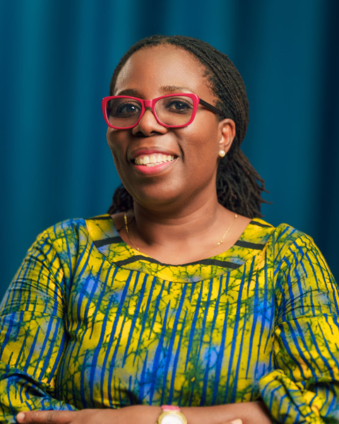
Professor Deborah Atobrah is Director of the Centre for Gender Studies and Advocacy at the University of Ghana.
Latest Stories
-
Mahama inspects Nkokɔ Nketenkete plant, eyes Bechem as chicken capital
4 minutes -
Ghana not seeking full BRICS membership, applying as Partner Country – Ablakwa
5 minutes -
Woman injures three people in third Poland school knife attack in a week
6 minutes -
Ghana should join BRICS as partner, not member – NPP Bono East Regional Secretary
7 minutes -
Ghana High Commission warns nationals in South Africa over protests in Johannesburg, Durban
7 minutes -
Mahama praises Roads Minister for keeping Big Push contractors on their toes
13 minutes -
World Cup Visa Scandal: ‘My client has not collected money for visas’ – Ampofo Ankrah’s lawyer
25 minutes -
US immigration officials defend ICE agents who shot man in same car as child
34 minutes -
Commentator Katie Zacharia picked as new White House press secretary
38 minutes -
Drone strike by Sudan paramilitary kills 41 near Ethiopian border, rights group says
44 minutes -
King warns malicious online actors are evolving tactics
51 minutes -
Several injured as Saudi capital airport reportedly hit again
54 minutes -
Christa Pike discharged from hospital and returned to prison, her lawyers say
56 minutes -
Ghana’s BRICS move requires clear strategy to manage risks – Godfred Bokpin
3 hours -
Pay teachers realistic income – Duncan Amoah to gov’t
3 hours