

Audio By Carbonatix
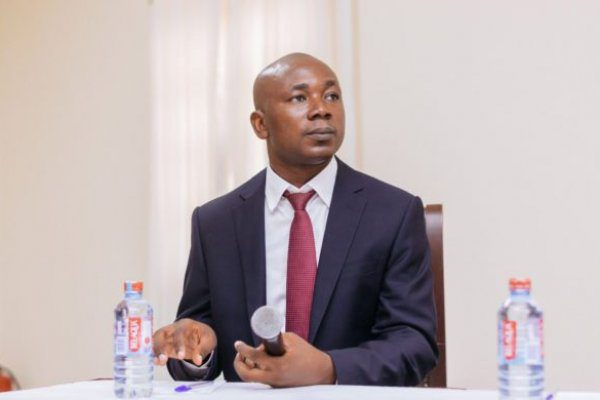
An economist at the University of Ghana Business School, Professor Godfred Bopkin, has called for closer collaboration between the state and the private sector, including religious bodies, to drive sustainable development in the country.
His comments come after the ongoing debate stems from a suit filed on December 24, 2024, by private legal practitioner Shafic Osman, who is invoking the original jurisdiction of the Supreme Court under Articles 2(1)(b) and 130(1)(a) of the 1992 Constitution.
Speaking on JoyNews’ Newsfile programme on Saturday, Professor Bopkin highlighted the need for a framework that promotes both state-led initiatives and private investment, stressing that this partnership would benefit the nation as a whole.
Prof. Bopkin noted that there has historically been a reluctance by certain religious groups to engage fully with formal education and investment initiatives.
However, he acknowledged that this perspective has evolved, with many religious institutions now seeing the value in contributing to societal development through education, healthcare, and other vital services.
“I understand where my Muslim brothers are coming from,” said Professor Bopkin, referring to religious groups' diverse approaches to development.
“And I also share my own experiences over the years. Decades ago, some religious bodies had a limited stance towards formal education. This belief also influenced how they made their investments. However, other religious bodies recognised early on that education was key to not only propagating their faith but also ensuring the sustainability of their initiatives.”
He pointed out that institutions such as schools, hospitals, and other social interventions have been crucial tools for religious groups to support both their faith and the development of communities.
He further emphasised that the Ghanaian constitution allows for religious groups to play an active role in social development, providing them with the legal framework to establish such ventures.
The economist believes that fostering a productive partnership between government and private entities, including religious organisations, is essential for the country to unlock its full potential.
Latest Stories
-
Ghana qualifies for quarterfinals of Africa Volleyball Nations Cup after beating Zambia
1 minute -
WAFU B WCLQ: Ampem Darkoa Ladies come from behind to beat Edo Queens
23 minutes -
Photos: National Youth Authority Festival
34 minutes -
Bawumia commissions St Jude’s Catholic Church he funded to completion at Weija
49 minutes -
Government defends new beer exercise rates; sliding scale has not been abolished
49 minutes -
Bolgatanga Assembly denies blanket ban on events beyond 8pm
1 hour -
Photos: Ghana Immigration Service removes 1,055 street beggars from Accra, Kumasi streets
1 hour -
‘He always comes to our aid’ – Fr. Campbell recounts Bawumia’s support for Church, poor
1 hour -
Remittances drop marginally year-on-year to US$3.65bn in half-year 2026
2 hours -
T-bills: Government exceeds target by 139%, interest rates tumble
2 hours -
Why Chelsea need more than a new goalkeeper to be title challengers
2 hours -
Outlook of Ghana’s external sector remains positive for second-half of 2026 – BoG
2 hours -
Prisoners freed early are returning to jail at rapid rate, governors tell BBC
2 hours -
Two charged after €2.3 million worth of drugs seized in Dublin
2 hours -
Head teacher evacuated 900 children minutes before Nepal floods hit school
2 hours