

Audio By Carbonatix
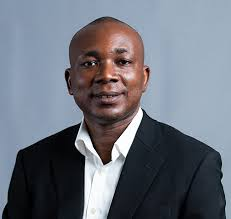
An economist at the University of Ghana Business School, Professor Godfred Bopkin, has raised key concerns about the country’s tax system, emphasising the potential for tax reforms that could improve both fiscal stability and business confidence.
Speaking on the Joy FM Super Morning Show on Monday, February 17, Prof Bopkin asserted that the nation is largely on track in terms of revenue performance but stressed that the current tax regime has imposed a significant burden on businesses, particularly manufacturers and financial institutions.
"If you look at the revenue performance, you can say that we are largely on track. In fact, per our analysis, we could do away with these taxes without compromising the trajectory. And with some additional measures, we could actually close the fiscal gap," Prof Bopkin explained
However, the economist highlighted the ongoing challenges faced by businesses, noting that companies have been forced to continually reconfigure their systems to ensure compliance with the country’s evolving tax policies.
He pointed out that this constant restructuring comes at a considerable cost to businesses, including manufacturing disruptions and increased operational costs, making long-term planning difficult. “The compliance cost has been quite enormous,” Prof Bopkin said.
He added "The uncertainty, in fact, the unpredictability in the business environment that our tax regime introduces clearly we should be able to avoid that."
Prof Bopkin emphasized that, despite challenges, the country’s tax revenue collection has been impressive over the years.
According to his analysis, the Ghana Revenue Authority (GRA) has consistently exceeded its revenue targets between 2020 and 2023. He noted that this achievement could be further optimized by revising the targets set for the tax collection body.
“This is a country that we would say we are not collecting enough revenue, but in the last four years, in fact, 2020, 2021, 2022, 2023, GRA has been exceeding their target, precisely, we should be looking at the module to which we set the target. What it also means is that, actually, with the right target setting and challenging enough, we could actually collect more tax revenue,” he remarked.
Latest Stories
-
GTEC flags over 100 tertiary institutions as unrecognised
11 minutes -
Agric Committee chair commends NAFCO for turnaround from GH¢20m debt to GH¢96m profit
16 minutes -
NPP: Judicial office requires judges to surrender some personal freedoms
21 minutes -
Senyo Hosi: Ghana missed its chance to end galamsey under Akufo-Addo
27 minutes -
Okaikwei Central MP alleges Ghana was close to settling Tullow tax dispute for $150m
29 minutes -
Patrick Boamah credits Godfred Dame for Ghana’s victory in $400m Tullow tax arbitration
32 minutes -
Dr Jasaw calls for National Agriculture Development Fund to accelerate food systems transformation
36 minutes -
Armah-Kofi Buah honoured for developmental initiatives in Aiyinasi-North
40 minutes -
Agbodza didn’t accuse Adom Kyei’s church of blocking road — Spokesperson
46 minutes -
Tema native petitions EOCO over GH¢889,000 payment
46 minutes -
VIP Jeoun Service opens new terminal in Ho, expands transport network
50 minutes -
Mahama orders immediate action to get striking teachers back to class
54 minutes -
Tema Fire Commander calls for private-sector support
54 minutes -
Adaklu is not a safe haven for environmental degradation – DCE
58 minutes -
Judiciary urged to expedite corruption cases
1 hour