

Audio By Carbonatix
On the night of May 26, 2018, Sergio Ramos turned football violence into choreography.
Mohamed Salah’s shoulder was dislocated in the Champions League final, and three weeks later he arrived in Ekaterinburg visibly diminished for Egypt’s first World Cup in 28 years.
The Pharaohs lost all three matches. The dream ended almost as soon as it began.
Eight years later, the shoulder has healed. The wound has not.
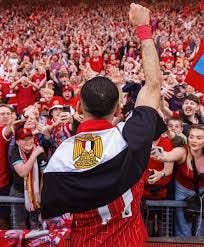
This summer, Salah comes to the 2026 World Cup carrying more than memory: nine qualifying goals, the all-time African record in World Cup qualifying, and the weight of a football-mad nation that has won Africa seven times but never a single World Cup match.
Egypt does not merely want to participate. They want to matter.
The paradox of power
No football country better illustrates the gap between continental dominance and global disappointment.
Egypt were among Africa’s pioneers at the World Cup, appearing as early as 1934. In the 2000s, they built a dynasty that remains unmatched: three straight AFCON titles, a level of sustained success no other African nation has matched.
And yet their World Cup record remains stark: four appearances, no wins, no knockout-stage matches. That divide between regional triumph and global struggle has shaped Egyptian football for generations.
Redemption in Casablanca
In October 2025, in Casablanca, Salah delivered the decisive blow with two goals against Djibouti. When the final whistle sounded, he stood motionless in the center circle, hands on his knees, staring at the turf as the noise rose around him. It was the posture of a man who had waited a long time for this moment.
On the touchline, Hossam Hassan Egypt’s all-time leading scorer and now head coach watched with the intensity of someone who knows both sides of the dream. A three-time AFCON champion as a player, Hassan helped guide Egypt to the 1990 World Cup under Mahmoud El-Gohary.
Now, with his twin brother Ibrahim as assistant, he has delivered in his first major campaign. After the match, he was characteristically direct: “I had faith in Mohamed Salah… he is of great moral importance to us.”
His squad reflects modern Egypt: European-based stars such as Salah and Omar Marmoush alongside homegrown players fighting for their place.
For many Egyptians, those diaspora players are not distant exports but extensions of the national team’s identity proof that the country’s football reach extends far beyond its borders.
A manageable group
Group G offers Egypt a real chance. Belgium are no longer at their peak, Iran are awkward, and New Zealand should be beatable.
Egypt open their campaign against Belgium in Seattle on June 15, and a positive result there would shift the mood from cautious hope to genuine belief.
Hassan’s team is pragmatic, usually in a compact 4-3-3 built around quick transitions. It lacks Morocco’s depth and Senegal’s physical range, but when Salah and Marmoush connect, Egypt can be efficient and dangerous.
At 33, Salah is not the same relentless force he once was, but his decision-making has sharpened. The question is whether his body can hold and whether the team can keep pace with his standard.
The stakes
Egypt have waited nearly a century for a World Cup campaign that reflects how they see themselves. Not just qualification. Not just respect. Something closer to validation.
The wait is over. The harder part begins now.
Latest Stories
-
Nana B denies claims that Kojo Bamba was his driver and bodyguard
15 minutes -
Engage Now Africa to construct a 10-unit classroom block for struggling Navrongo Vocational Training Centre
22 minutes -
One digital financial breach could expose linked accounts to fraud – Financial Crimes Manager
27 minutes -
Ghana Russia Centre signs ICT cooperation agreement with Moscow University
31 minutes -
The powerhouses of the village: Honouring Ghana’s rural women on International Rural Women’s Day
31 minutes -
Vincent Assafuah petitions CHRAJ to investigate alleged irregularities in 2026 World Cup visa arrangements
32 minutes -
12-year-old boy found dead in muddy pit at Opeikuma
34 minutes -
GHS begins Yellow Fever vaccination campaign in three Upper West districts
35 minutes -
Organised Labour pushes for higher 2027 base pay despite slowing inflation
37 minutes -
Parliament’s Human Rights Committee demands swift justice in Obuasi SHTS sexual abuse case
47 minutes -
From Campaign Propaganda to Gov’t Accountability: When the message-makers demand a seat at the table
1 hour -
Ashanti Region Security Coordinator warns sand winners to stay off Accra–Kumasi Expressway site
1 hour -
PZ Cussons Ghana promotes hand washing among schoolchildren through Camel campaign
2 hours -
30 NDC aspirants file nominations in Upper West as regional election approaches
2 hours -
UPSA launches laptop assembly plant, requiring new students to assemble their own devices
2 hours