

Audio By Carbonatix
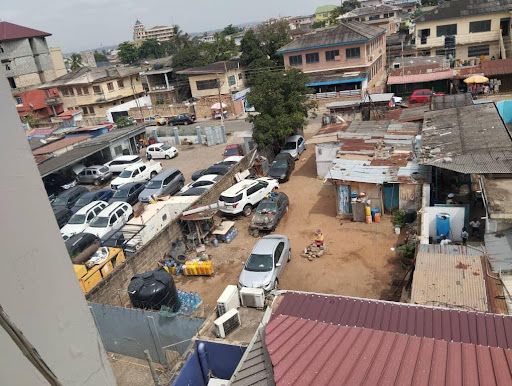
When Isaac Peprah bought his car, a Honda Accord, he thought he had finally escaped the long tro-tro commutes between East Legon and Spintex that had taken hours from his day.
But barely a week after he bought it, a group of young men from a makeshift mechanic shop flagged him down near a junction close to his house.
The men claimed they had heard a “strange sound” from under his car - something dangerous that needed immediate attention. “They sounded very confident, so I honestly thought they were trying to help,” he recalled.
Within minutes, they had the hood lifted, tools clinking as they assured him they were only tightening a loose part. Two days later, the truth became clear: the car’s engine roared louder than usual, fumes seeped into the cabin, and the fuel gauge dropped fast. Isaac had become the latest Ghanaian to fall victim to catalytic converter theft.
“I felt stupid,” Isaac admitted. “I didn’t even know what a catalytic converter was.”
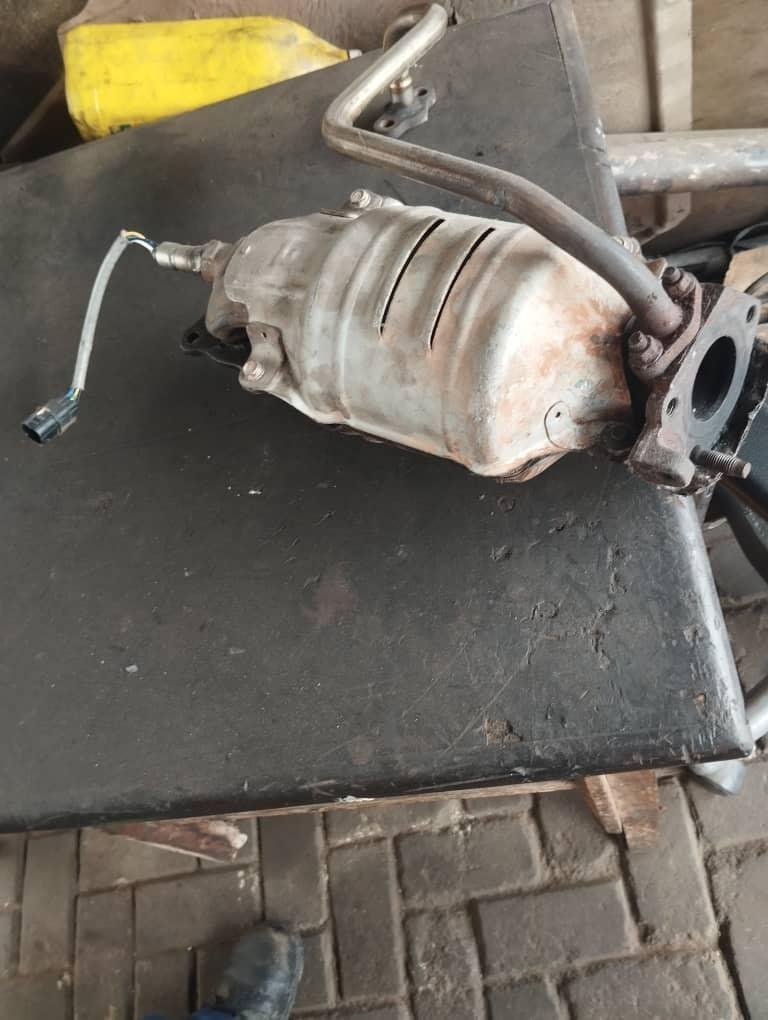
The converter is a small part that plays a big role in filtering dangerous toxins from the engine and making the car run efficiently. But they are prized for their precious metals and are a key ingredient in a narcotic drug that’s fueling a growing trade in stolen parts.
The impact on Isaac’s car made it obvious that something was wrong. He took it to Carbon Cleaning Accra, a local engine cleaning workshop, where an engineer broke the news. The thieves had cut the converter out cleanly, leaving Isaac with a replacement cost of nearly GH₵7,000 ($US500) - an expense he hadn’t planned for and still struggles to understand.
“They used my ignorance against me.”
At Autolast Ghana, a popular automotive shop, workers said catalytic converters are now worth more than small gold bars. Some types sell for over $100, while high-grade versions used in certain SUVs fetch more than $8,000 on the international scrap market.
Mechanics said the thefts have exploded. “Between five and 10 clients come to me every day with the same problem,” said Andrews Asare Agudey, a mechanic at a motor repair shop in Dome Pillar 2, in Accra’s north, speaking in Twi.
At Kaneshie, close to Abossey Okai, the largest spare parts hub in Accra, mechanics confirm the same pattern. Thieves here resell the parts for around GH₵1,000 ($US70), depending on the car model.
Stolen parts fueling a drug trade
It’s not just precious metals driving the trade. According to mechanics interviewed for this story, the powder inside catalytic converters is being crushed and mixed into hard drugs. The brown dust obtained by breaking the ceramic core has been linked to new street drugs in the Democratic Republic of Congo and South Africa.
In 2021, Congolese police arrested more than 100 users of a drug known as “bombe”, meaning “powerful,” allegedly produced with crushed converter powder. In 2022, South African authorities seized converter powder valued at $US1 million at Johannesburg’s international airport and issued a warning about a growing regional black market.
“This drug thing is hurting our clients,” Agudey said quietly. “It’s not just spare parts anymore.”
Catalytic converters are built into engines for a good reason. Unlike many other parts, they are not essential for the vehicle to operate. But they play a crucial role in making the engine healthier and more efficient. “The three main pollutants of concern emitted by internal combustion engines are hydrocarbons, carbon monoxide and nitrogen oxides (which contribute to acid rain and smog), ” said Kofi Annan, head service technician at Carbon Cleaning Accra.
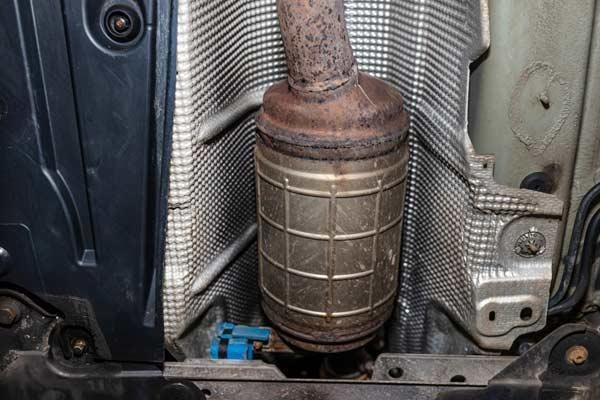
Before they leave the car, the gases pass through the catalytic converter, a small metal box under the vehicle. Inside tiny amounts of platinum and palladium, a chemical reaction occurs that changes the toxic gases into safer ones.
They reduce harmful emissions by up to 90 percent said Alex Johnson, Director of Metro Transport at the Accra Metropolitan Assembly. “When they’re cut out, the engine becomes a poison pipe.”
The thefts are worsening an already dangerous air pollution crisis in Accra. About 32,500 people died prematurely from air pollution-related causes in Ghana in 2023, according to the State of Global Air 2025 report, and doctors say millions more are becoming sick from chronic diseases that are caused or worsened by air pollution, including asthma, diabetes, heart disease, cancer, stroke and infertility. Air pollution in Accra is routinely measured at 11 times higher than the World Health Organisation’s recommended limits.
For Ghanaian commuters, air pollution is hard to escape. The transport sector is the leading source of air pollution, according to the Ministry of Transport’s recently released National Electric Vehicle Policy. Seventy percent of daily commuters use privately run minibuses known as ‘tro-tros’, which are often older, higher-emitting vehicles. Converters wear out after a decade, so even with a converter, older cars are likely not protected.
Health officials are sounding an alarm.
“These gases and particulate matter are killing people silently,” warned Dr Carl Stephen Osei, programme manager of the Occupational and Environmental Health Unit at the Ghana Health Service.
For the mechanics who work with these cars, the consequences can be deadly.
“These things accumulate in the body,” said mechanic Agudey, at Dome Pillar. “We see chest tightness, shortness of breath, and headaches. Some don’t last long.”
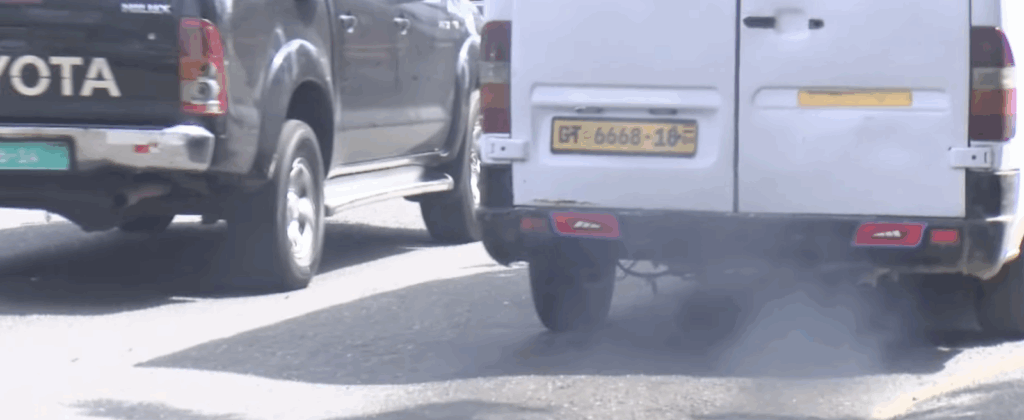
A Transport System Poisoning Commuters and Pedestrians
Ghana’s vehicle fleet - 3.2 million cars in 2022 - is overwhelmingly old, second-hand, and heavily polluting. More than 95 per cent fall into this category, according to the Ministry of Transport’s National Electric Vehicle Policy. No government agencies are tracking catalytic converter theft, but experts said the majority of Ghanaian vehicles are likely missing the part, whether through theft or because they are too old. Many Ghanaians also remove them because of misinformation that claims - in error - that cars run faster and are cheaper without them.
The consequences of Ghana’s deteriorating vehicle emissions are severe and far-reaching.
At the Kwame Nkrumah Circle transport station, Emmanuel ‘Paa Joe’ Agyekum, a 42-year-old tro-tro driver on the Circle–Lapaz route, rubbed his chest as he talked, although he claimed to be healthy. He has been driving for 19 years, and said the fumes today are “nothing like before.”
His Toyota Hiace, like most commercial vehicles, is over 20 years old - part of a fleet where the average age is 18.6 years, according to the 2022 Vehicle Population Report. More than 70 per cent lacked functioning emission control systems.
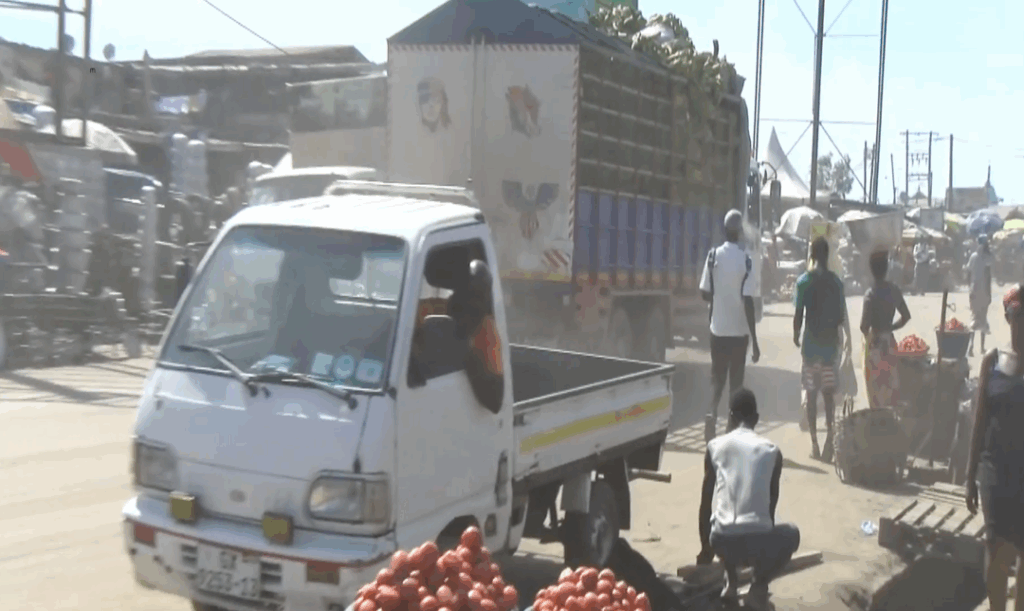
Street traders are also in danger. At Lapaz Market, Esther Nyarkowaa, a tomato seller, wiped soot off her table as she spoke. Her stall sits three metres from the road, a location she thought was ideal for sales. Now, she is not so sure.
“I have noticed I cough frequently, especially every evening, ” she said.
Esther spends an average of 10–12 hours at her stall each day. She said she’s yet to properly get checked at the hospital, but a few times she’s been, after doctors run tests, the first question is about her line of work. “The doctors said my cough and rising blood pressure are most likely the dust and smoke from cars,” she said. “But where can I go? This is my work.”
None of this surprised Dr Sandra Kwarteng Owusu, paediatric pulmonologist. She said she sees the consequences of Accra’s vehicle emissions long before any ministry or agency announces figures. “We are seeing far younger patients with chronic cough, wheezing, and reduced lung function. Many of them are commercial drivers or roadside traders who spend their lives in traffic.”
Successive Ghanaian governments have been enacting laws to address air pollution. Ghana’s vehicle emission standards do not require the installation of catalytic converters, according to the Ghana Standards Authority, but they do have limits for the amount of emissions from a vehicle. Experts said it would not be possible for a vehicle to pass without one.
In March 2020, the government amended the Customs Act to prohibit the importation of cars over 10 years old.
But Alex Johnson of the Accra Metropolitan Assembly said poor enforcement by governmental agencies was limiting the effectiveness of the new rules. He pointed to another new regulation - the 2023 Emissions Levy Act - which imposes an annual fee on internal combustion engine vehicles.
Under the Act, the levy must be settled before drivers can renew their roadworthiness certificates at the Driver and Vehicle Licensing Authority. But compliance is low. Johnson said inadequate monitoring and corruption allow some vehicle owners to bypass inspection processes.
“The levy is supposed to push us toward cleaner transport, but enforcement of emission controls and roadworthiness inspections remains weak across agencies,” he said.
His concerns echoed those of automobile experts. Godwin Kafui Ayeto, a lecturer in automobile engineering at the Kwame Nkrumah University of Science and Technology (KNUST) said Ghana must strengthen roadworthiness checks.
“Without strict enforcement and regular inspection, the levy becomes just another payment, not a tool to reduce harmful emissions.”
For now, mechanics and experts are urging Ghanaians to look for the catalytic converter before they buy a car, to install one if theirs is missing, and to be vigilant whenever anyone wants to look under the hood of their car.
This story was a collaboration with New Narratives as part of the Clean Air Reporting Project. Funding was provided by the Clean Air Fund which had no say in the story’s content.
Latest Stories
-
Sammy Gyamfi never BoG has not ceded forex role to us – GoldBod
12 minutes -
High Court sets November 4 for ruling on Wontumi’s bail application
26 minutes -
Tetteh Kwetey files nomination for NDC Greater Accra Regional Chairmanship
35 minutes -
Korle Bu appeals for more doctors, nurses as A&E Centre struggles under pressure
48 minutes -
AFCON 2027Q: ‘I’m optimistic Black Stars can turn things around’ – Agyemang-Badu
49 minutes -
Digital innovation could widen Africa’s inequalities if people are left out – Sam Jonah
51 minutes -
Galamsey is an economic, health and moral problem – Sam Jonah
54 minutes -
Africa must create AI technology instead of paying to use it – Sam Jonah
56 minutes -
2026 U-17 WWC: Black Maidens to face Norway, Brazil and Canada in Group C
1 hour -
Agbodza, Sam George move to curb fibre optic cable cuts during road works
1 hour -
2026 U-17 WWC: Black Maidens unveil 21-player squad for competition in Morocco
1 hour -
South Africa evacuation and the minority’s half-truth
1 hour -
‘You never know tomorrow’ – Anthony Baffoe on contesting for GFA Presidency
1 hour -
Obuasi SHTS head accused of sexually abusing students is NDC Juaben secretary seeking chairmanship
2 hours -
Cedi depreciates by 7.11% against dollar in August 2026 – BoG report
2 hours