


Audio By Carbonatix
The National Premix Fuel Secretariat has announced plans to scale up the Premix Accountability Series nationwide in early 2026, following what officials describe as a successful pilot in three Western Region communities.
Administrator Ebow Mensah said the initial engagements in Sekondi, New Takoradi, and Abuesi represent only a small fraction of the over 300 landing beaches supplied with premix fuel across the country.
“This is not the end of the accountability series,” he said. “We have only done three communities. Come early 2026, we are going to ensure that all metropolitan and municipal chief executives are notified so that this happens across the country.”
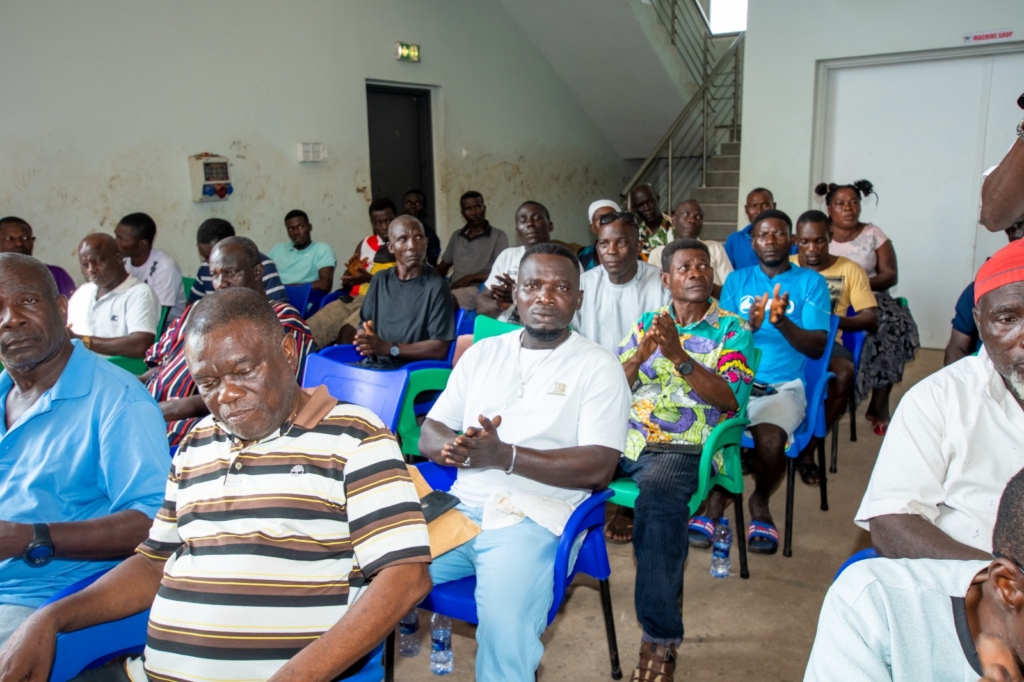
He explained that MMDCEs are legally mandated to oversee the operations of landing beach committees and are expected to play a stronger role in enforcing transparency.
Mr Mensah also issued a warning to committees that operated between 2017 and 2024 but failed to render accounts to their communities.
“For those that have not engaged their communities or accounted for how the community funds were used, we will deal with them,” he said, adding that chief fishermen would be empowered to demand accountability at the local level.
On operational challenges, Mr Mensah cited intermittent premix shortages, often linked to liquidity constraints faced by bulk distribution companies, as well as poor record-keeping at some landing beaches.
To address this, the Secretariat has introduced a Premix Fuel Returns Booklet to standardise documentation of fuel receipts, sales, profits, and the 53 per cent community share.
“This is basic arithmetic,” he said. “We believe everyone can do it with the right tools. That is why we have introduced a single booklet and logbook system to track all transactions.”
He expressed optimism that consistent accounting and public reporting would strengthen confidence in the premix system and protect the long-term sustainability of the subsidy.
For many fisherfolk, this was the first time they had seen figures, bank statements, and explanations laid out openly before the community.
“I have been fishing here for more than 20 years, but this is the first time I am seeing them show us the books like this,” said Kwame Essel, a canoe owner at the Sekondi landing beach.
“When they mentioned the amounts and showed where the money is kept, it gave us some confidence.”
Under L.I. 2233, 53 per cent of premix fuel margins is reserved for community development. Yet in many communities, fisherfolk say they only hear about the fund in passing, without knowing how much has accrued or what it has been used for.
At New Takoradi, fishmonger Esi Armah said the accounting session answered long-standing questions.
“Before now, when we asked about the premix money, people would say, ‘It has been used.’ Used for what? We didn’t know,” she said. “This time, they told us how much came in and where the money is. That is what we want.”
Some fisherfolk said the transparency reduced tension almost immediately.
“When people don’t know, they suspect everything,” said Yaw Mensah, a crew member at Abuesi. “Today, when they showed the bank statement, the shouting reduced. Even those who were angry became calm.”
The figures also surprised many. At Sekondi, the committee disclosed that about GH¢126,000 had been raised for community development over the past 10 months.
“I didn’t know the money could reach that level,” said Mary Koomson, who sells smoked fish near the landing beach. “If we manage it well, we can do something meaningful for the whole place.”
For others, the exercise raised new expectations. Fisherfolk said rendering accounts should not end with figures on paper but lead to visible projects.
“We have seen the money now,” said canoe owner Kofi Blay. “The next thing is to sit down as a community and agree on what to use it for. If we see toilets, lights, or repairs at the beach, everyone will support the system.”
There was also a strong call for consistency.
“If they do this only once, it will not help,” said Abdul Rahman, a fisherman at New Takoradi. “They should come every quarter or every year and tell us the same thing. That is how trust will stay.”
Officials from the National Premix Fuel Secretariat said the reactions from fisherfolk reinforced the purpose of the Premix Accountability Series.
Administrator Ebow Mensah noted that transparency changes attitudes on the ground.
“When communities can see the figures and ask questions, the system becomes stronger,” he said. “That is how premix moves from suspicion to shared responsibility.”
As the sun set over the landing beaches, fisherfolk lingered in small groups, still discussing the figures, the bank accounts, and what projects might come next.
For many, the numbers mattered. But what mattered more was the feeling that, for once, the premix story was being told in the open.
“As long as they keep doing this,” Kwame Essel said quietly, “we will also protect the system. Because now, it feels like it truly belongs to us.”
Latest Stories
-
GoldBod must be more accountable to Ghanaians – Haruna Iddrisu
7 minutes -
Affi Agbenyo’s EC appointment is constitutionally appropriate, but politically, people have the right to remind us – Haruna Iddrisu
19 minutes -
Education is critical to Ghana’s future and development – Haruna Iddrisu
37 minutes -
Who’s Emelia Affi Agbenyo, the 43-year-old newly sworn-in Deputy EC Chair?
1 hour -
Haruna Iddrisu calls for limits on annual university accommodation fee increases
2 hours -
Today’s front pages: Tuesday, October 13, 2026
3 hours -
Wealth Over Water: How Galamsey Is Threatening Ghana’s Water Security
3 hours -
LA 2028: Black Queens pumped up for second leg of Mauritius tie
3 hours -
LA 2028: Black Queens hold final training session ahead of second leg against Mauritius
4 hours -
Standards are not Seasonal: What the EC appointments teach both sides
4 hours -
King Mohammed VI urges private sector to create youth jobs and spread benefits of growth
4 hours -
KGL U17 Colts 2026: Greater Accra win title after penalties win over Western Region
4 hours -
UK Investment Roadshow opens in London to advance UK-Ghana growth partnership
4 hours -
Assemblies of God requires pastors to resign before entering partisan politics – Rev. Wengam
4 hours -
Ghana targets 20% annual reduction in maternal deaths – Health Minister
5 hours