

Audio By Carbonatix
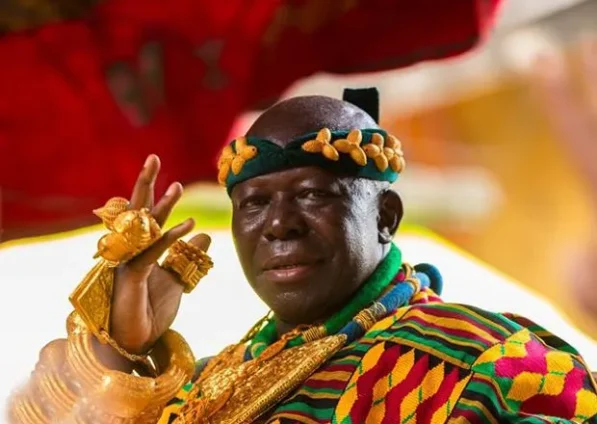
The Asantehene, Otumfuo Osei Tutu II, has issued a powerful call to action to traditional authorities across the Ashanti Region, demanding a paradigm shift from passive observation to active participation in the execution of government development projects.
Addressing the final 2025 general meeting of the Ashanti Regional House of Chiefs in Kumasi on Friday, December 19, the Asantehene emphasised that the modern role of a chief extends far beyond traditional rites; it requires serving as a primary advocate and "project manager" for the socio-economic welfare of their subjects.
A Call for Proactive Monitoring
The Asantehene expressed concern over the tendency of some traditional leaders to remain detached from the infrastructure and social intervention programmes being implemented within their jurisdictions.
He noted that relying solely on political appointees—such as Metropolitan, Municipal, and District Chief Executives (MMDCEs)—often leads to project delays, substandard work, or a disconnect from the actual needs of the community.
Instead, he urged chiefs to be the first line of accountability. He argued that as the permanent custodians of the land, chiefs are better positioned than transient political officials to ensure that state resources are utilised effectively.
“We must reflect on our actions and inactions, mindful that we represent the people. There should be frequent engagements with MMDCEs and other government appointees to stay abreast of projects within our jurisdictions, make follow-ups, and offer meaningful contributions. Chiefs must not sit back and wait for officials to visit before raising concerns or making inputs; rather, you must be proactive and fully involved in development processes,” the Otumfuo urged.
Legacy Defined by Impact
The monarch’s address was also a reminder of the historical weight of the chieftaincy institution.
He warned the gathered traditional leaders that history would judge them not by the length of their reign or the height of their stools, but by the tangible improvements they brought to their people.
Otumfuo encouraged chiefs who are financially capable to personally invest in community-focused initiatives, such as clinics, schools, or sanitation facilities, highlighting the long-term impact that private traditional investment can have alongside government efforts.
The Bridge Between State and Tradition
The Asantehene’s remarks come at a critical time as Ghana continues to navigate the complexities of its decentralised governance system.
Under the 1992 Constitution, chiefs are barred from active partisan politics, yet they remain central figures in local administration and land management.
By advocating for closer collaboration with MMDAs (Metropolitan, Municipal, and District Assemblies), the Asantehene is seeking to strengthen the bridge between the formal state structure and traditional authority.
He stressed that a chief’s input should not be an afterthought but a central component of the planning process.
A Vision for 2026 and Beyond
As the 2025 administrative year draws to a close, the King’s message serves as a blueprint for the coming year.
He tasked the House of Chiefs to remain committed to initiatives that enhance the well-being of their communities, specifically focusing on grassroots development.
The meeting concluded with a renewed sense of responsibility among the members of the House, as they pledged to take up the mandate of being "developmental chiefs" who are both mindful and responsible in the discharge of their sacred duties.
Latest Stories
-
MP status does not place anyone beyond law – EOCO on Manhyia MP’s attempted arrest
29 seconds -
Chief Justice must examine arrests of suspects on court premises – Afenyo-Markin
3 minutes -
Black Stars arrive in Bouake ahead of Cote d’Ivoire clash
7 minutes -
We’ve identified two persons who allegedly helped Manhyia South MP escape arrest – EOCO
12 minutes -
Manhyia South MP declined two invitations in February, attempted arrest was lawful – EOCO
24 minutes -
Bosomtwe Assembly ultilises PWDs fund to empower over 30 PWDs with start-up kits
28 minutes -
Nkrumah’s ideas must be given practical meaning – P.L.O. Lumumba
37 minutes -
Disproportionate arrests over criticism may create ‘undeserving martyrs’ – Mahama
39 minutes -
“This is an abuse of power” – Minority slams EOCO over attempted arrest of Manhyia South MP
40 minutes -
Time to turn Volta Region’s economic potential into action – EXIM Bank CEO
41 minutes -
Bring your appointees to order – Afenyo-Markin urges Mahama to act against alleged EOCO abuses
54 minutes -
Mahama tasks MFWA, GJA to lead national dialogue on hate speech, harmful digital content
55 minutes -
Manhyia South MP recounts alleged attempt to forcibly take him to EOCO
1 hour -
‘I had to drive off to safety’ – Nana Agyei Baffour Awuah on why he fled after High Court clash
1 hour -
Nkrumah was a lonely man because of Pan-African vision – PLO Lumumba
1 hour