

Audio By Carbonatix
Every breath in Ghana’s cities now carries a silent threat. According to experts, thousands of vehicles are moving without catalytic converters — a small but essential device that filters dangerous gases before they reach the air we all breathe.
Many drivers remove it for what they mistakenly believe will deliver “more speed” or “cheaper fuel.” But many mechanics are also stealing them from unsuspecting customers to strip and sell the precious metals they are made from.
Air quality experts warn this has come at a high price for drivers and Ghanaians as a whole: polluted air, sick traders, drivers and children, rising hospital costs, and an environment that keeps getting worse.
A City Waking Up to Dirty Haze
Kumasi wakes up early. Markets open, traffic builds, and the streets come alive. But behind the noise hangs something more dangerous — a thick layer of fumes floating quietly in the air. Everyone in the city breathes it, whether they know it or not.
At the heart of the city’s automobile industry, Suame Magazine, the biggest auto repair workshop, the problem is no secret.
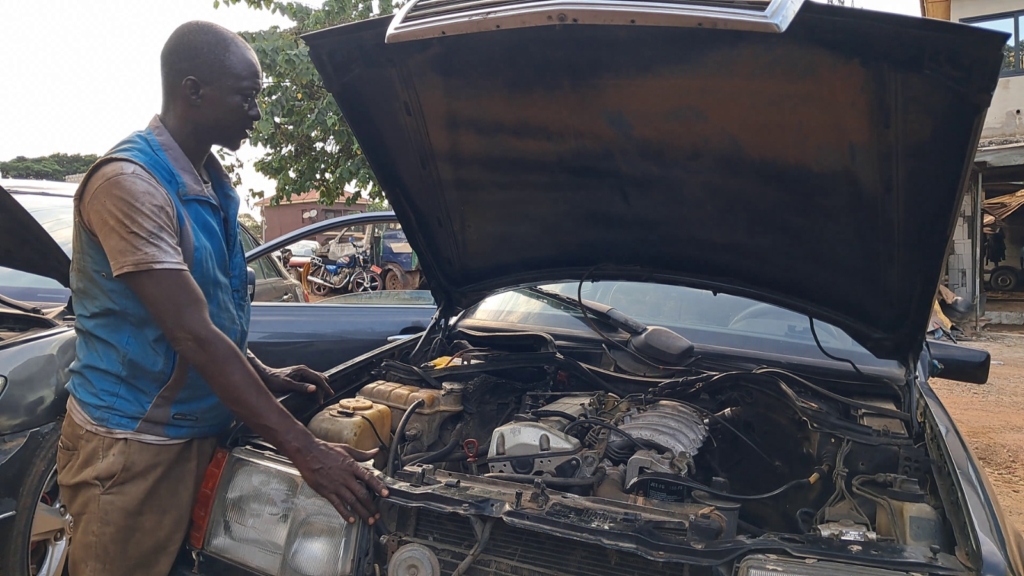
Exhaust welder Mark Opoku sees the pattern every week. He says the problem has worsened over the years. Almost weekly, drivers ask him to remove their catalytic converters.
“Customers complain all the time,” he says, brushing metal dust from his hands. “They say the converter slows the car or costs too much to repair. When it spoils, they refuse to replace it.”
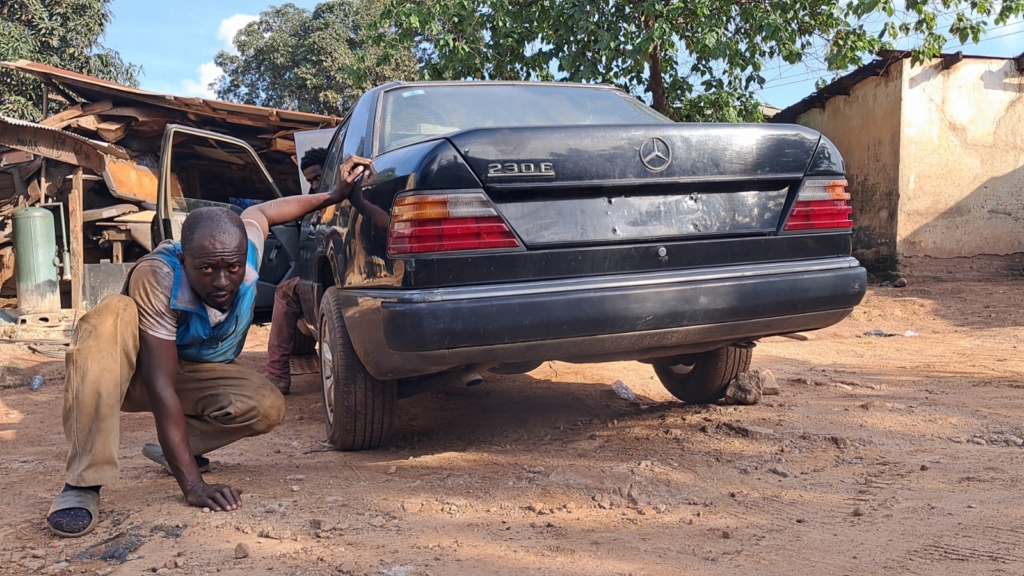
For Mark, the trend is clear: “If you take 100 cars that originally came with converters, maybe only 20 still have theirs working. The rest? Removed — especially taxis.”
Some drivers, he adds, simply don’t believe the converter helps the vehicle.
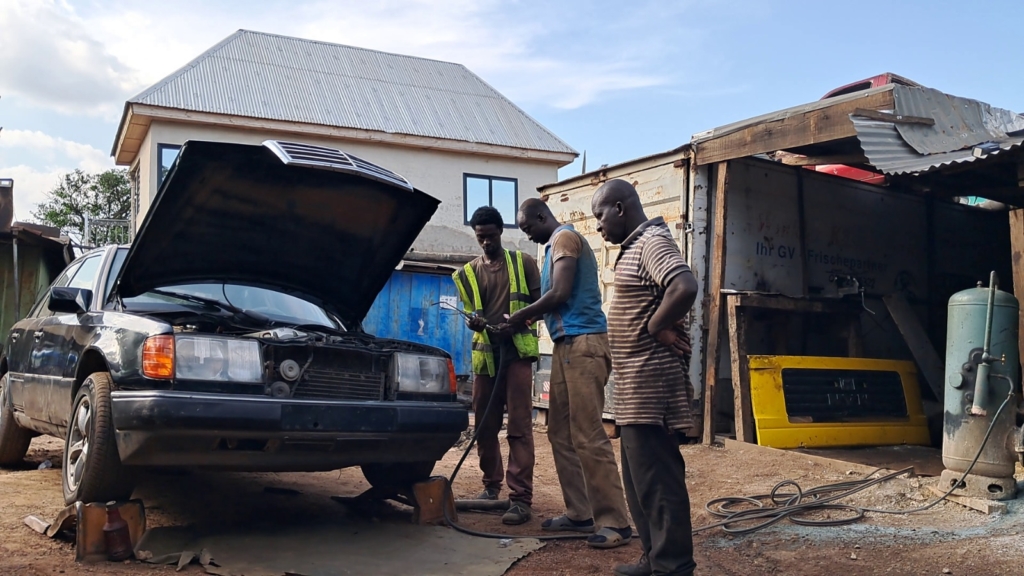
The Small Part Causing Big Problems
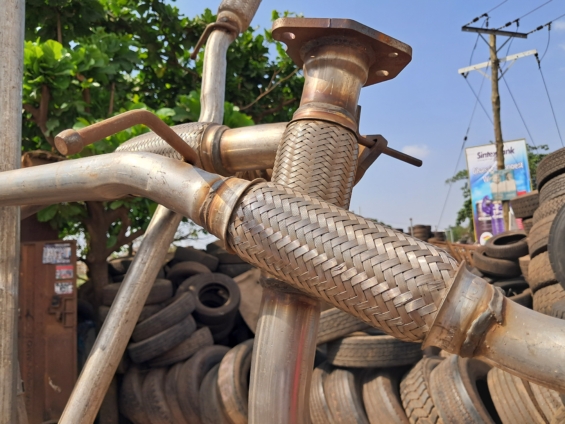
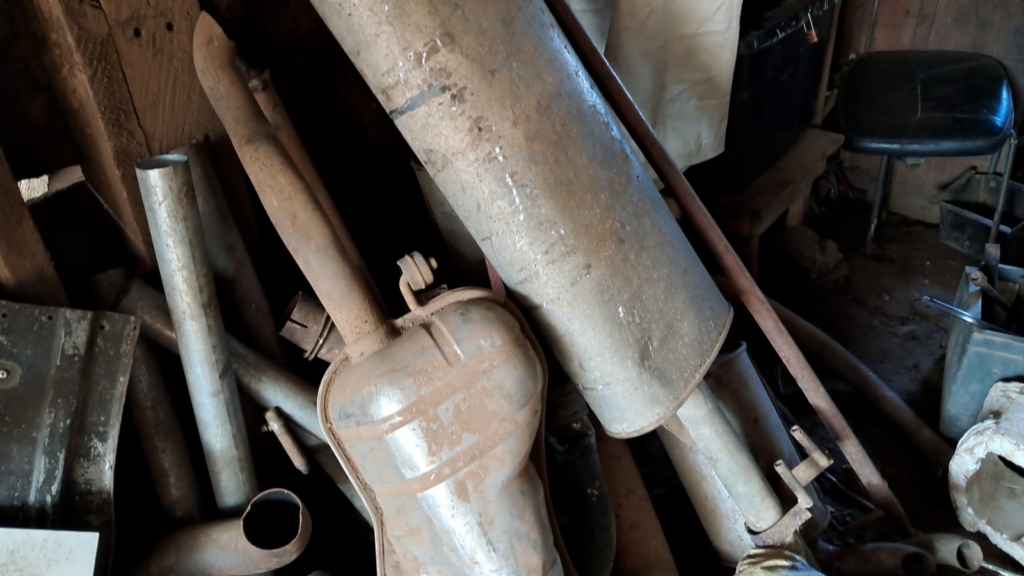
A catalytic converter is a small device on a vehicle’s exhaust pipe that helps clean the air. When a vehicle burns fuel, it creates dangerous gases that can harm people’s lungs and the environment. The catalytic converter uses special metals to change those toxic gases into safer ones before they come out of the tailpipe.
Many drivers in Ghana believe a catalytic converter is “bad” for their car, but experts say most of these ideas come from misinformation. When an old or poorly serviced engine starts burning too much fuel, it can clog the converter and make the car feel slow. Converters also expire after 10 years.
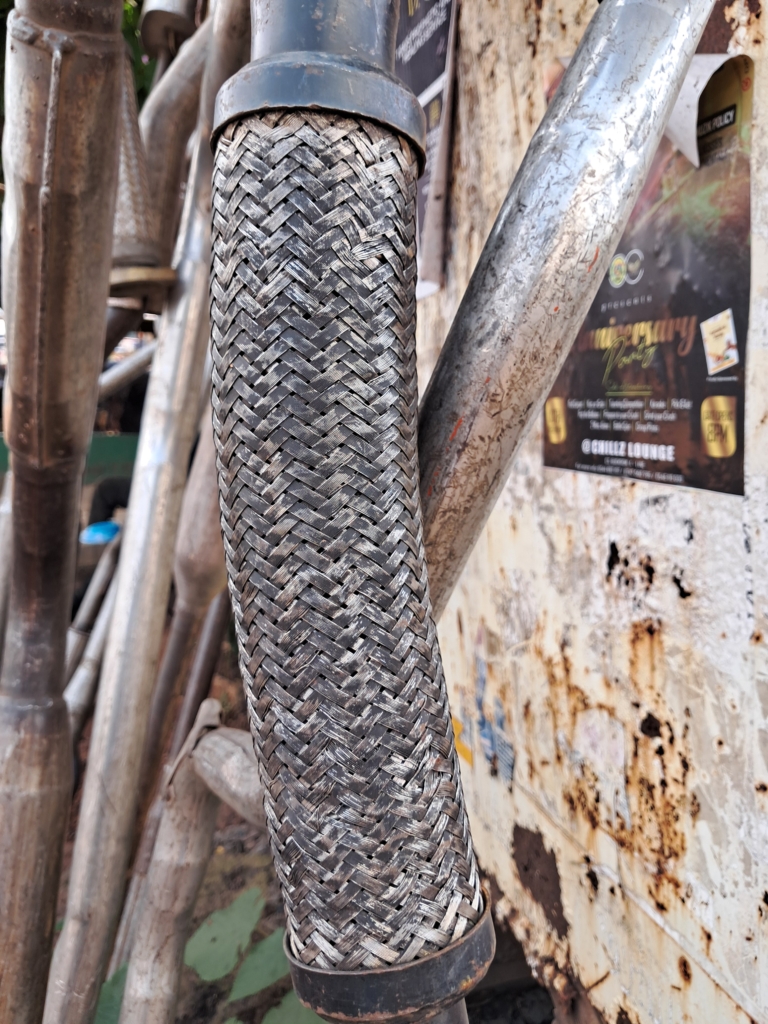
Instead of fixing the real engine problem, some mechanics tell drivers to remove the converter entirely, which makes people think the device was the cause. The high cost of replacing it also adds to the belief that it is a troublemaker rather than a safety tool.
Some mechanics have another incentive to remove the converters:
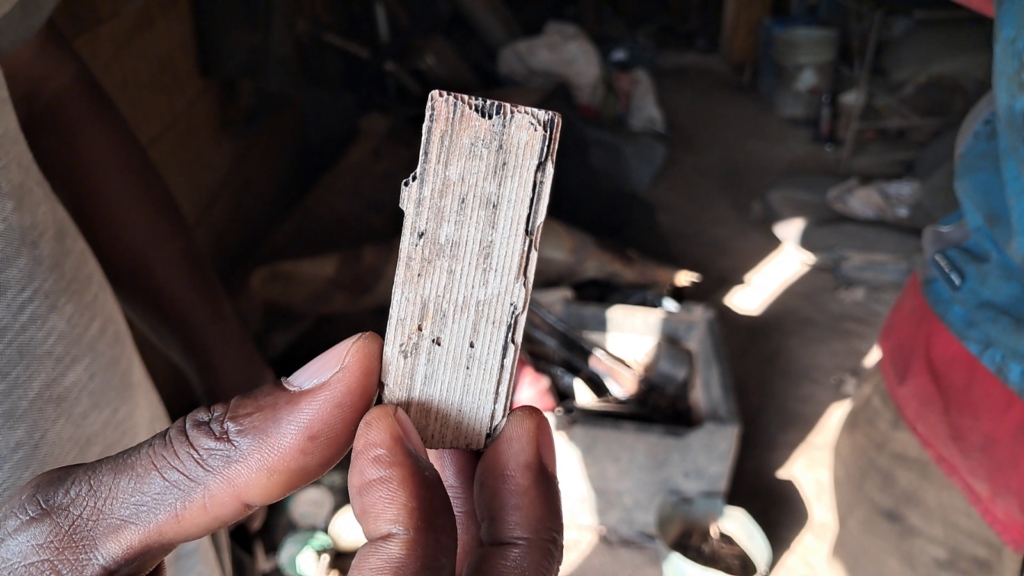
Rhodium in a catalytic converter
“People steal catalytic converters or remove them to sell,” says Dr Godwin Kafui Ayetor, senior automobile engineering lecturer at KNUST University in Kumasi, explaining they contain precious metals such as platinum, palladium, and rhodium — highly valuable on the scrap market. “This is not only in Ghana. In the US, thousands are stolen every year.”
Often, the theft happens before the vehicle reaches the shores of Ghana.
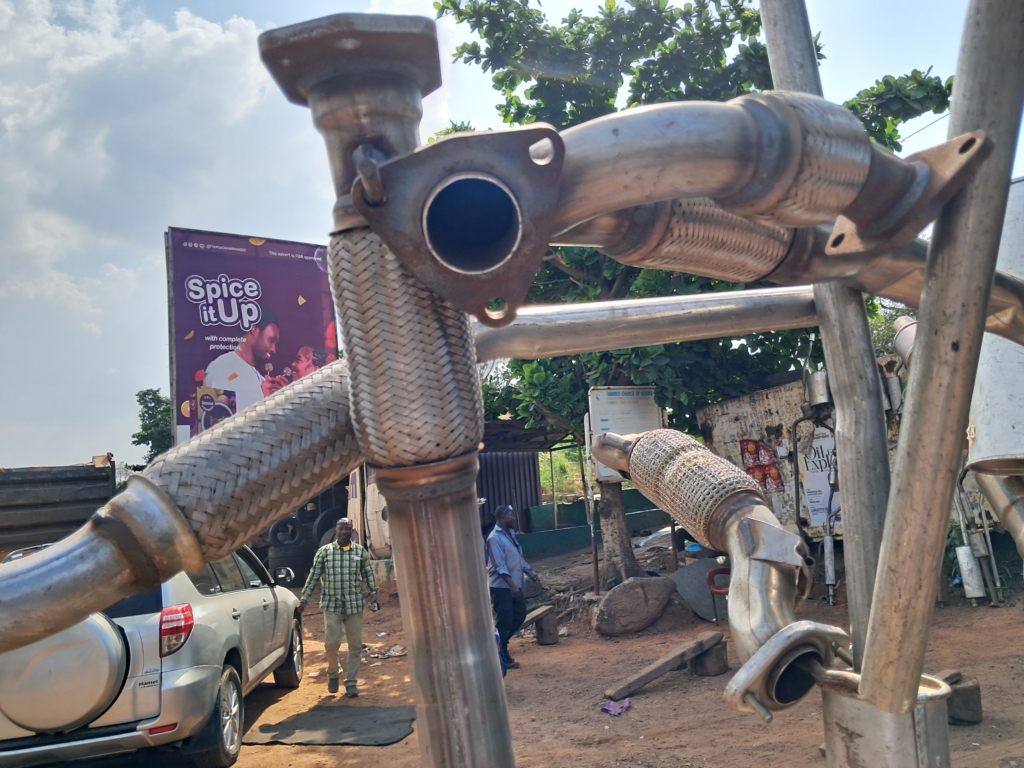
A United Nation Environmental Programme report shows that many used vehicles exported to Africa arrive with missing or compromised converters – some are stolen or simply expired. A minimum of 23 million used vehicles were exported between 2015-2022 to low and middle-income countries. One in three of those exports came to Africa.
Here at Suame magazine, mechanics tell customers that converters can actually reduce fuel waste and keep engines efficient saving them money long term.
“Catalytic converters must be expensive because of the important job they do,” says Seidu Salifu, another mechanic. “They help the engine run well and reduce dangerous smoke. If a part does a big job, it will cost more.”
Dr Ayetor says removing converters actually makes the car more expensive to operate. The engine’s oxygen (lambda) sensors depend on the converter to burn fuel properly. Without it, the engine enters “default mode” and wastes fuel.
“That is why many drivers complain about high fuel consumption,” he adds.
Missing Converters Add to Ghana’s Dangerous Levels of Air Pollution
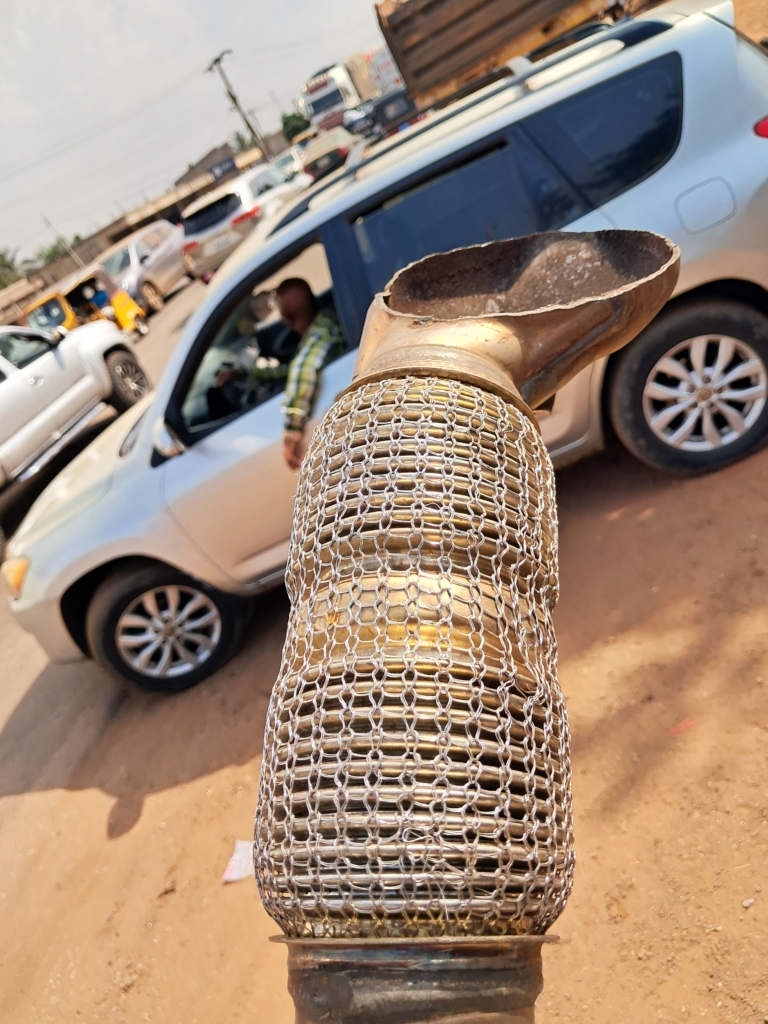
What many drivers also don’t know is that a catalytic converter also protects people, not just engines. It cleans the toxic fumes that come out of a vehicle's exhaust pipe, reducing dangerous gases that make people sick. When converters are removed, vehicles release far more pollution—right into the homes, markets, and schools.
Combatting dirty air is rapidly becoming an urgent priority in Ghana as air pollution levels climb each year. The most recent World Health Organization study found that 32,000 Ghanaians are dying prematurely because of air pollution. The biggest contributor in Ghana by far is transport.
Experts say millions more are being sickened by illnesses such as asthma, lung, respiratory and heart disease caused or exacerbated by air pollution. Children, older adults, and pregnant women are especially vulnerable.

“It is very worrying and many people are getting sick unnecessarily,” says Dr Sandra Kwarteng Owusu, pulmonologist at the KNUST School of Medicine.
Traders, Pedestrians and Commuters In the Firing Line of Dirty Air
At nearby Kumasi Central Market, the health impacts of the toxic air spewing from vehicles are clear. Fumes settle on traders’ stalls from morning to evening. Traders here know the danger, but they feel powerless.
“I’ve heard these fumes can cause cancer, and I believe it,” says Selina Addai, a second-hand clothing seller who spoke in Twi. “I know people who became sick after breathing fumes for years.”
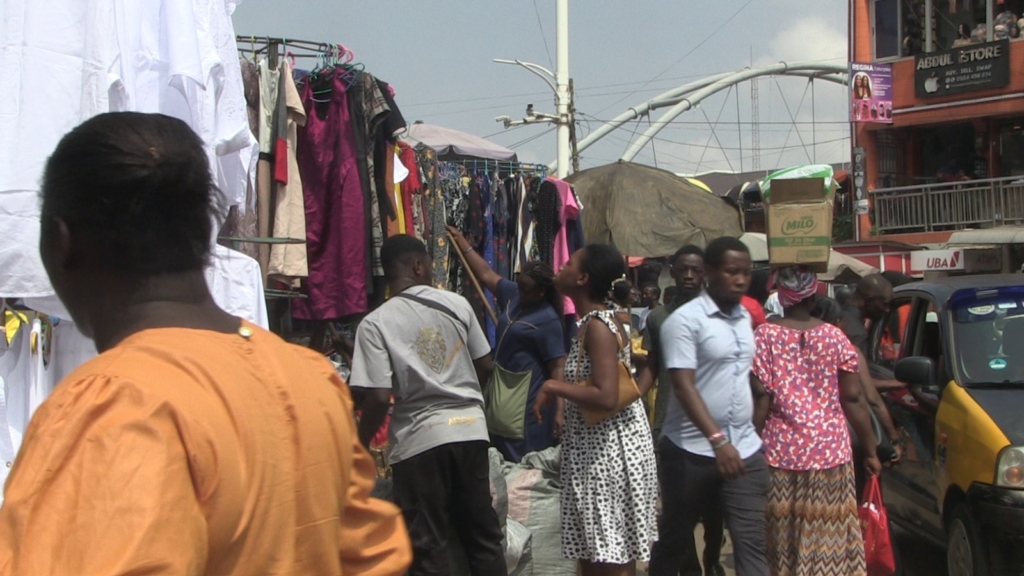
“Most vehicles that pass release heavy smoke,” says Ophelia Asare. Another trader also said, “We cough every day. I go for regular checkups because of the fumes.”
Schoolchildren are also on the frontlines. Schools are often located near heavy traffic zones. A team in the KNUST Department of Meteorology and Climate Science monitored pollution in 14 schools across Kumasi from 2022 to 2024 and found worrying results.
“Most schools had air pollution above safe levels,” says study lead Dr Edmund Yamba. “Schools near busy roads were the worst. Without catalytic converters, the situation will worsen.”
With Increasing Knowledge, Vehicle Owners Are Seeing the Benefits of Converters
Musah Abubakari is one driver who saw firsthand the need for a catalytic converter. His car began burning fuel excessively, making unusual noises, and releasing thick smoke whenever he started the engine.
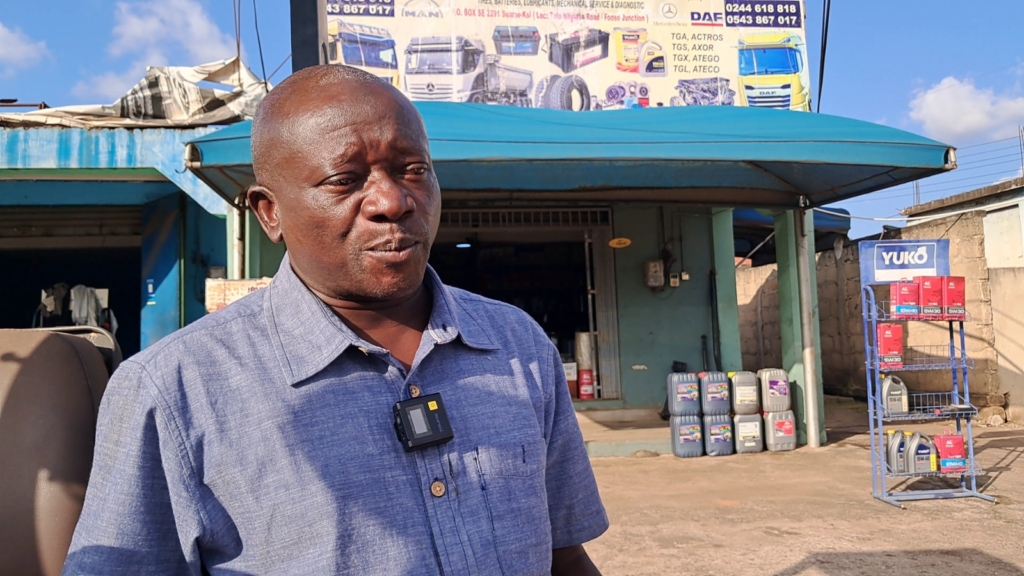
“I realised the car was consuming fuel, it was making unusual sounds, and plenty of fumes were coming out,” he says. “When I checked, I saw the converter had been removed.”
The thick smoke was not only polluting Kumasi’s air — it was draining his wallet. Musah searched online, bought a new converter, and the problem disappeared.
“The engine became calm. The smoke stopped, and my fuel use returned to normal,” he says. “I advise drivers to fix their converters. It helps the car and the environment.”
Ghana’s Environmental Protection Authority has carried out many actions over the past decade to improve air quality. It has enforced environmental assessment regulations that require industries to adopt preventive measures, install pollution control systems, and monitor emissions and implemented the Ghana Online Continuous Emission Monitoring System, which strengthens real-time monitoring and enables quick action when emission levels rise.
In an interview, Selina Amoah, head of the Environmental Quality Unit at the Authority, said the 2025 Environmental Protection Act provides a stronger legal framework to control emissions from all pollution sources, including vehicles.
Though the Act does not mention catalytic converters specifically, it requires all vehicles to undergo emission testing at designated centres. Vehicles that pass the test will receive an Emission Compliance Certificate to show they are roadworthy. Experts say it is impossible to pass this test without a converter.
“Currently, we have about 70 emission testing centres, and any vehicle that does not pass the test is not worthy to be on the road,” she said. There is also a ban on imports of vehicles older than 10 years.
Experts agree that Ghana now has good laws requiring vehicles to meet emission standards, but they say they have yet to be enforced.

Dr Ayetor says the country must stop importing vehicles without converters, enforce emission inspections, adopt designs that place converters closer to the engine, and tag converters to reduce theft. “If there is no converter, the car should fail the test,” he says.
Experts say raising public awareness through education campaigns would be another important strategy. Richard Boadi, Ashanti Region Environmental Protection Agency Deputy Director, says the Authority will start awareness creation about the new regulation and enforce it. He agrees that though progress is slow, strict rules and public cooperation can help.
“Those who use catalytic converters can testify that emissions are reduced,” he says. “We advise people to use them. It is for the safety of everyone.”
Mechanic Mark Opoku says making the process cheaper will be essential.
“A new catalytic converter can cost about GHS1,000,” he says. “Most drivers will not pay for that. Government should subsidize or reduce taxes. Otherwise, people will keep removing them.”
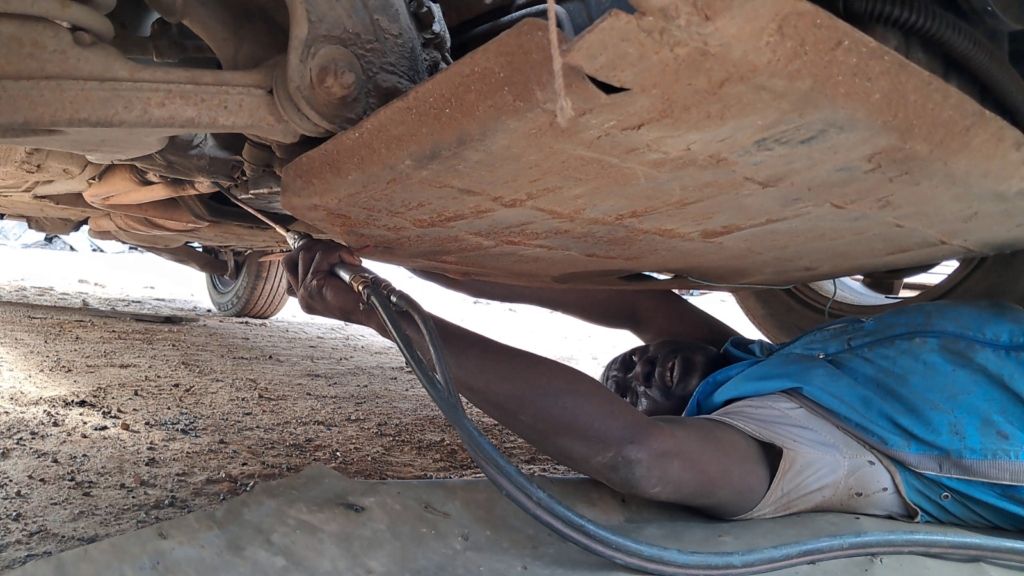
In the meantime experts urge drivers to check their catalytic converter and replace or install as soon as they can. And until then, to wear nose masks whenever they’re near the vehicle or in traffic.
This story was a collaboration with New Narratives as part of the Clean Air Reporting Project. Funding was provided by the Clean Air Fund. The funder had no say in the story.
Latest Stories
-
GJA President urges Ghana to weigh environmental and social costs alongside mining revenues
11 minutes -
Irresponsible mining: The land is not your own – Prof Mike Oquaye cautions
19 minutes -
62 Ghanaians killed, 15 missing in Russia-Ukraine war – Ablakwa
20 minutes -
GJA President urges responsible, sustainable mining
21 minutes -
Ghana must take charge of its mineral resources – Prof. Mike Oquaye
27 minutes -
KickedIn uses technology to connect African football talent with global opportunities
28 minutes -
GoldBod did not record GH¢22bn loss; audited accounts show GH¢5.44bn surplus – Institute of Fiscal Policy Governance
32 minutes -
Mining comes with responsibility to future generations – Ga Mantse
35 minutes -
Ga Mantse calls for measurable CSR and stronger local participation in mining communities
41 minutes -
Ga Mantse urges mining industry to protect communities beyond the life of mines
56 minutes -
Empowerher in Upper West region
1 hour -
Ga Mantse challenges mining stakeholders to consider long-term impact of Ghana’s mineral wealth
1 hour -
Afenyo-Markin accuses GoldBod of mismanaging Ghana’s gold resources
1 hour -
Non-interest banking products must meet required standards – BoG Governor to NIFAC
1 hour -
Social licence to mine can be withdrawn – Ga Mantse warns mining companies
1 hour