

Audio By Carbonatix
Fashion has always been a way for people to express themselves, but in Ghana it has also become a reminder of a global system that treats some lives as more disposable than others.
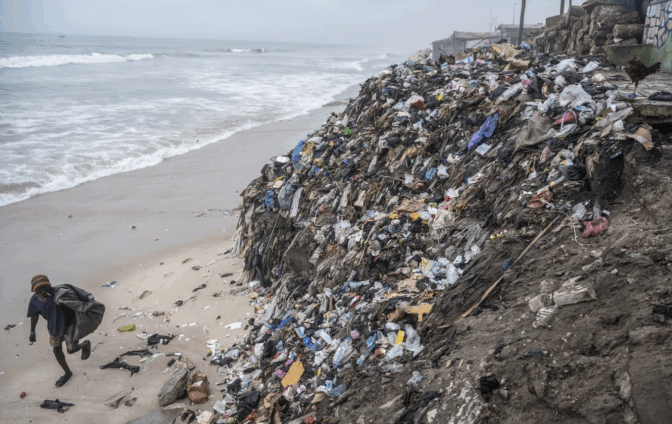
Every week, thousands of bales of second-hand clothing arrive at our ports. Some of it is useful, but a shocking amount is already damaged, stained, stretched, or simply unwearable.
These clothes begin their journey in high-income countries as “donations”, but by the time they reach Ghana, they have become waste disguised as charity.
This reality was made even clearer through the YouthOvaFashionWaste webinars, which broke down how overproduction in the Global North turns into environmental and social pressure on countries like ours.
One statement from the webinar has stayed with me: “Ghana did not create the fast fashion problem, but we are paying for it.” This truth is visible in places such as Kantamanto, where traders work incredibly hard, yet almost half of what they buy cannot be sold.
What does not sell ends up in gutters, burnt in open spaces, or dumped in already overflowing landfills. This is not just a market issue; it is a national environmental challenge.
Our drains choke during the rainy season not only because of plastic waste, but also because textile scraps and torn clothing escape the markets and find their way into the city’s waterways.
The webinars also highlighted the human dimension of the problem. Many young people depend on second-hand clothing markets for their livelihoods. They buy, sort, repair, remake, and resell, contributing to a circular economy without formal recognition.
Yet they also bear the financial risk when a bale contains mostly waste. Behind the piles of unwanted clothing are real people trying to survive in a system they did not create.
Importantly, the webinars did not focus solely on the challenges. They also showed what change can look like. Policy reforms in exporting countries are beginning to demand that brands take responsibility for the full life cycle of their products.
If these policies are strengthened, Ghana may one day receive fewer low-quality garments, as brands will face consequences for dumping waste.
Another key focus was on domestic solutions: investing in textile recycling technology, supporting young designers who work with deadstock and discarded fabrics, and improving data on textile waste so that policies are driven by evidence rather than assumptions.
Listening to these discussions made it clear that change cannot come from one direction alone; it must be shared. Government agencies need to regulate imports more strictly so that Ghana stops becoming the final destination for unwearable clothing.
Importers and traders need better protection from exploitative suppliers. Schools and organisations must integrate sustainable fashion into youth education. And all of us, as consumers, need to think more critically about what we buy, why we buy it, and how long we keep it.
There is a growing movement of Ghanaian youth who are not waiting for permission to act. Some are building small brands that upcycle old clothing into something new. Others are teaching communities how to repair garments instead of discarding them.
A few are even experimenting with textile waste as raw material for art, furniture, or insulation. The webinars highlighted these young innovators, demonstrating that solutions are not only possible, but already taking shape around us.
After participating in all three sessions, what stood out most was that sustainable fashion in Ghana is not about rejecting second-hand clothing. It is about demanding fairness and accountability from the global system that created the waste crisis.
It is about valuing the people who work in our markets. It is about equipping young creatives with the tools and support to build alternatives. And above all, it is about recognising that every item we discard must go somewhere — and too often, that “somewhere” is Ghana.
I believe the future can look different. If Ghana invests in proper recycling infrastructure, strengthens import quality checks, supports youth-led innovation, and pushes for global accountability, we can turn a crisis into an opportunity.
We can build a fashion system that does not drown us in waste, but instead empowers communities, protects the environment, and showcases the creativity for which Ghana is known.
The webinars did more than inform me; they changed how I see my own responsibility. Sustainable fashion is not a distant concept — it begins with everyday choices and collective action.
Ghana deserves better than being the world’s dumping ground, and with awareness, ambition, and the courage to act, we can create a future where our relationship with fashion is defined not by waste, but by purpose.
This article was written by Abigail Appoh, the third-place winner for the #YouthOvaFashionWaste Webinar and Digital Contest, organised by the Ghana Youth Environmental Movement (GYEM) with support from the Pulitzer Center.
Latest Stories
-
Okai Mintah outlines vision for NDC Youth Wing as he engages MMDCEs
2 minutes -
Mahama Ayariga leads renewed push for stronger local governance through partnerships
5 minutes -
NDC youth organiser aspirant Okai Mintah consults MMDCEs ahead of elections
6 minutes -
PHOTOS: Ayikuma Methodist Basic School wins National Juniors Challenge
9 minutes -
Silence has entered our homes : Salomey Awiti Bafoh and the chilling effect of free expression in Ghana
9 minutes -
UG Pro-VC calls for stronger research funding to curb brain drain
11 minutes -
Woman in critical condition after shooting at funeral grounds in Yeji
13 minutes -
Breast Cancer awareness must lead to action – Deputy Health Minister
16 minutes -
UK identified as leading destination for Ghana’s illicit cannabis exports – Report
18 minutes -
Drug money allegedly finances Ghana’s political parties and real estate – Global Organised Crime Index
23 minutes -
NSA outlines seven steps for successful posting and validation of national service personnel
24 minutes -
GPRTU taskforce clamps down on unapproved fares at Kasoa
25 minutes -
Prime Insight: Making room for meaningful national conversations on Joy Prime
36 minutes -
FABAG commends Ato Forson’s over removal of 20% excise duty on locally manufactured fruit juices
43 minutes -
HIV stigma discourages testing, prevention and treatment in Ghana – Ghana AIDS Commission
45 minutes