

Audio By Carbonatix
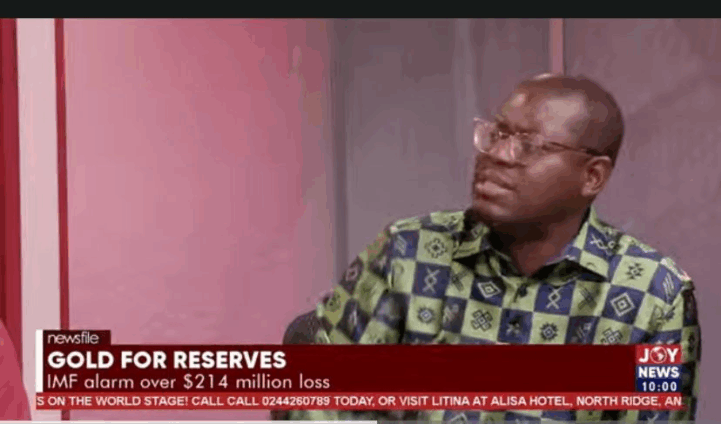
Honorary Vice President of IMANI-Africa, Bright Simons, has raised concerns over transparency, competition, and financing structures within Ghana’s gold trading and aggregation system, warning that the current setup may disadvantage private sector participants.
Speaking on JoyNews' Newsfile on Saturday, January 3, Mr. Simons said once the International Monetary Fund (IMF) identified losses in the Gold-for-Reserves programme as trading losses, responsibility could not be attributed to only one side of the transaction.
“If one institution is responsible for buying and another for selling, then responsibility is shared. At the very least, this is a joint effort,” he argued.
He questioned whether pricing mechanisms on both the buying and selling sides, particularly discounts and premiums offered by off-takers, were competitive and transparent.
“The only way to know whether off-taker pricing is competitive is through an open and transparent bidding platform,” he said.
According to him, feedback from self-financed gold aggregators suggests they are struggling to compete under the current system, especially against an aggregator that enjoys financing advantages.
“You have one aggregator receiving funding from the Bank of Ghana and another sourcing funds commercially from banks. One pays interest, the other does not. Who do you think will win?” he asked.
He dismissed claims that government funding is interest-free, insisting that such financing still carries economic cost, even if not explicitly priced.
Mr Simons also raised concerns about the aggregator licensing process, describing it as opaque and lacking transparency.
“Applicants are told that only one entity qualifies, but there is no publicly known evaluation mechanism,” he said.
He compared the situation to the telecoms sector, where the National Communications Authority (NCA) uses auctions to allocate scarce resources, allowing for greater transparency and public confidence.
“In this case, the public has no visibility. We are simply told who has been selected, without knowing the criteria or process,” he added.
He called for greater openness, competitive bidding, and clearer rules, warning that without reform, the system risks inefficiency and public mistrust.
Latest Stories
-
Trump $1 coin makes him first living president on US currency in a century
1 hour -
Sydney police investigate second possible mistaken identity killing in two days
1 hour -
Gauff’s flaw forgotten on winning US Open return
3 hours -
Birds stop play but Medvedev flies into third round
4 hours -
LA Clippers fined $30m by NBA over Leonard scandal
4 hours -
Uber to cut over 3,000 jobs in major global restructuring
4 hours -
Tiger Woods gets five-year driving ban after reckless driving plea
4 hours -
South African airline behind daring stadium stunt cancels next flyby
4 hours -
PURC urges ECG to address outages, metering delays
4 hours -
Police engage traders over alleged harassment, extortion on Aflao-Accra highway
4 hours -
Uber shuts operations in Nigeria and Uganda with immediate effect
5 hours -
Netherlands moves billions in gold to London in ‘crisis preparedness’ move
5 hours -
Legal vacation does not halt urgent court cases – Chief Justice
5 hours -
Keta residents react with mixed feelings to fresh fuel price hike
5 hours -
Managing Director on GH¢150,000 bail over five dud cheques
5 hours