

Audio By Carbonatix
Dr Kwame Asah-Asante, a political scientist and Head of the Centre for European Studies at the University of Ghana, has warned that the government’s handling of illegal mining, commonly known as galamsey, could become a major political liability if urgent action is not taken.
Speaking on Joy FM’s AM Show on Tuesday, January 7, as President John Dramani Mahama marked one year in office, Dr Asah Asante described galamsey as one of the “ugly” issues under the current administration, despite acknowledging efforts made to address the problem.
While commending the government for deploying interventions, including military operations and other task forces, he questioned the lack of prosecutions following arrests.
“My surprise is that a lot of people who have been arrested are not put before the court. What are we doing?” he asked.
Dr Asah-Asante expressed concern that water bodies continue to suffer severe pollution, warning that the situation has worsened in recent months. He cited reports from parts of the Central Region, where residents are forced to buy a gallon of water for as much as five cedis due to contaminated sources.
“These are early warning signals to the government,” he said, stressing that the environmental and social costs of galamsey are becoming unbearable for affected communities.
He cautioned that failure to decisively address illegal mining, particularly by ensuring prosecutions and restoring polluted water bodies, could have serious political consequences for the administration. “If they fail to address this, I’m afraid it’s one of the things that can send them home,” Dr Asah Asante warned.
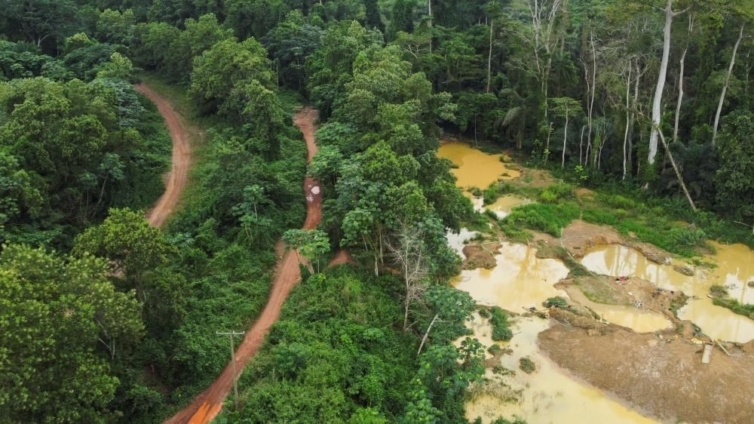
Illegal mining has remained a major national issue, blamed for the destruction of forests, pollution of major rivers, and threats to public health.
Successive governments have launched campaigns to curb the practice, but enforcement and accountability have often been criticised as weak.
Dr Asah-Asante’s comments add to growing calls for stronger action as the Mahama administration enters its second year in office, with environmental protection and water security emerging as key tests of governance.
Latest Stories
-
Sammi Awuku urges NPP Germany to unite ahead of 2028 elections
23 minutes -
The Inconvenient Truth: We cannot pray for the cure while protecting the disease
1 hour -
MTN Ghana trains civil society organisations on artificial intelligence
2 hours -
GoldBod FX framework aims to make dollar supply predictable – Acheampong
2 hours -
How does a Ghanaian team make it to the BAL?
2 hours -
Ghana’s investment climate presents opportunities for industrial growth and job creation.
2 hours -
‘I paid thousands to a company for jobs that never came’
3 hours -
SSNIT intensifies informal sector enrolment drive with Techiman float
3 hours -
Ghana seeks long-term mining investments that benefit local communities – Armah-Kofi Buah
3 hours -
GHATOF demands compensation for 85 businesses affected by La Pleasure Beach demolition
3 hours -
Bono Regional Minister calls for investor education to drive economic growth
3 hours -
Ghana’s Ambassador to China, Kojo Bonsu, presents credentials to Nepalese President
3 hours -
Fairtrade Africa’s Cocoa Hubs Project strengthens rural service centres in cocoa-growing communities
3 hours -
MPs are not development officers – Edem Kpotosu
3 hours -
SEC cautions investors against fraudulent investment schemes
3 hours