

Audio By Carbonatix
In the past few days, social media became awash with sharing comments of Lawyer Anokye, the historian, on how Sir Gordon Guggisberg's deliberate policy of denying northern Ghana formal education delayed the progress and development of the area for ages.
Obviously, the colonial administration policies, such as what Lawyer Anokye described as being deliberately implemented, treated northern Ghana as a labour reserve for mining and cocoa farms in the Southern part of Ghana, thus creating an imbalance that influenced migration patterns that contributed to shaping social perceptions.
Article 17 of Ghana’s 1992 Constitution is explicit: All persons shall be equal before the law, and no one shall be discriminated against based on ethnic origin, enshrining equality before the law and prohibiting discrimination on grounds of ethnicity. Yet still, social discrimination is beneath the radar of expressed laws, manifesting in mockery of accents and casual yet insulting slurs disguised as humour.
The continuous use of words like ‘eseremnim’ or ‘eseremfuo’ reinforces a divisive narrative that southern Ghana is inherently superior to northern Ghana. Such language does not exist in a vacuum. It does reflect and reinforce hurtful stereotyping rooted in economic imbalances, uneven development, and historical migration patterns.
Ghana has faced structural disadvantages in infrastructure, education, and industrial development. Weaponising such disparities through derogatory labels is a demonstration of insensitivity in the face of the injustice suffered by northerners.
'Esere' is the Akan word for a wild grass commonly known as Cogon or Spear grass found in bushy or uncultivated areas. It is a perennial rhizomatous grass known for being highly flammable, growing rapidly, and having sharp-pointed leaves. It is commonly used for thatching roofs in northern Ghana and elsewhere, as fodder for animals and in traditional medicine.
‘Eserenem’ or ‘Eseremfuo’ therefore refers to northerners, and by extension, says we are bush people. That description shifts from a botanical reference to an ethnic insult that implies northerners are bush dwellers, uncivilised, backward, or less sophisticated.
The message is clear in its use; you are lesser and not fully accepted. Such a psychological hurt cannot be dismissed as banter.
To reduce any group of people to a caricature with roots in geography is unacceptable, especially so when Northern Ghana produced distinguished scholars, military leaders, judges, entrepreneurs, academics, public servants and so on, who contributed and continue to contribute immensely to national development, thus being integral to Ghana’s progress.
Be informed; rural does not mean backward. Northern Ghana contributes to feeding the country through farm produce that nourishes the country and beyond.
I bet most people, including politicians and some Northerners, do not even know the meaning of those words. I have had to refer to myself as Eseremni a couple of times but desisted upon getting to know the meaning. I think it was confined to the Akan areas to describe northerners, and later became common use, nonetheless derogatory.
Words can wound and also heal. Inclusive language should be encouraged.
A collective effort is required in ending derogatory language. The word seeks to diminish northerners in the eyes of those using it. It has no place in respectful discourse.
We ought to let go of such words. On a lighter note, as the ‘Duke of Nogsenia’, a co-custodian of our culture and traditions, if any of my Akan friends or in-laws refer to me as such, we would not solve it the ‘Kassena Nankana Way’. The ‘Builsa Way’ SHALL not depart from my actions then and there.
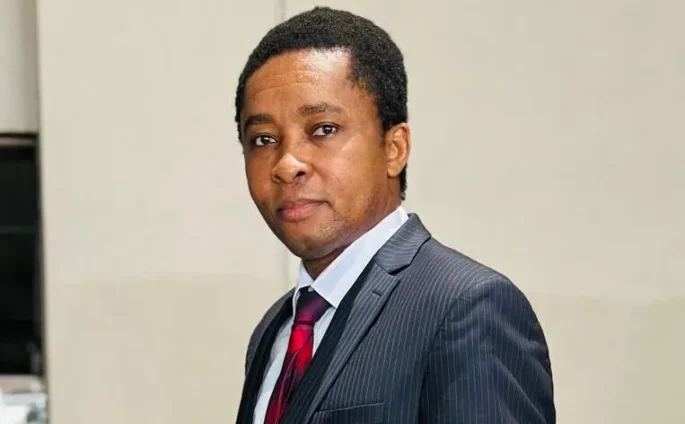
By: Jonathan Balinia Adda, Esq.
Latest Stories
-
GRA fully recovers $154k legacy debt owed by foreign entities between 2022 and 2024
4 seconds -
Kwesi Pratt Jr warns bus preachers are adding to passengers’ stress with accident prophecies
1 minute -
MTN Ghana to spend $1.1bn in 3 years, build 500 new sites as MoMo hits 44% Growth
3 minutes -
I have no regrets joining Assemblies of God – Mahama
3 minutes -
Starlink restrictions in Ukraine war linked to political situation, Zelensky aide says
6 minutes -
Furniture boost for Techiman North schools as MP donates to 20 institutions
7 minutes -
Assemblies of God to loan 10,000-seater dome for Ghana@70 celebrations
7 minutes -
Government to audit 2,016 community network sites – Communications Minister
7 minutes -
Heritage Series notes: BoG promises more inclusive cedi with improved sizes, tactile features
24 minutes -
‘We want answers’ – Family seeks probe into 14-year-old’s death 12 days after starting SHS
35 minutes -
No preacher has the right to impose beliefs on bus passengers – Kwesi Pratt Jr backs preaching ban
39 minutes -
Africa Maritime Security Forum opens in Accra with call for stronger continental cooperation
40 minutes -
Techiman North MP fulfills promise with new CHPS Compound in Kokoago
50 minutes -
Enterprise Trustees, Sinapi Aba launch ‘Asetenapa Plan’ to promote retirement savings among informal workers
52 minutes -
Gov’t working to ensure GAUA strike is called off by October 16 – Haruna Iddrisu
57 minutes