

Audio By Carbonatix
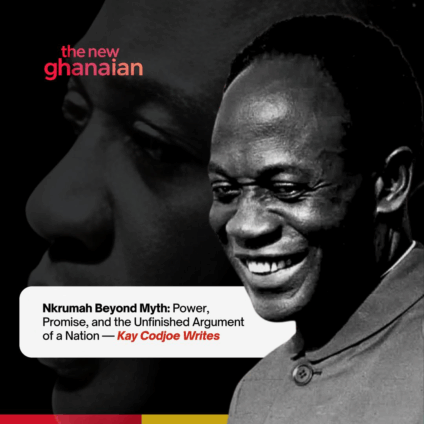
Ghana’s argument about Nkrumah is rarely just about Nkrumah. It is an argument about who gets to define the nation, who gets credit for its birth, and what price we are willing to pay for transformation.
That is why the conversation keeps returning, in new clothing, through Parliament debates about legacy, through the restored Founders’ Day calendar, and now through symbolic battles like whether a national airport should still carry the name of one of the coup’s most prominent officers.
A forensic view starts before the slogans. Nkrumah did not rise as a myth. He rose as an organiser. He learned, abroad, how Black modernity was being debated and fought over, then returned to the Gold Coast and built a mass movement that translated grievance into structure.
The CPP’s advantage was not magic. It was mobilisation, messaging, and a ruthless clarity of purpose: self government now, not after endless constitutional patience. He read history as a clock, and he refused to be late.
Independence in 1957 was therefore not merely a constitutional event. It was a psychological break. Ghana became a living proof that sub Saharan Africa could step out of colonial rule and speak in its own name. That is why Nkrumah’s first years still shimmer in the public memory.
Schools expanded, social services grew, state ambition became normal, and the country tried to build the industrial muscles that colonial economics never wanted it to have.
His development model was state led and impatient. Big projects were not vanity to him. They were instruments to compress decades into years.
But the same impatience that makes a liberation leader effective can also make a ruler dangerous. The record shows a steady tightening of political space. Preventive detention, fear of plots, the swallowing of opposition, and finally the formal embrace of one party rule.
By the time the state declares itself the only legitimate voice, the language of unity starts to sound like a demand for silence. In Ghana’s case, the question is not whether repression existed. It did.
The hard question is why it became politically attractive to those who believed they were building a new society under threat. That does not excuse it. It explains how a freedom story develops a shadow.
It is also impossible to separate Nkrumah’s domestic governance from his continental obsession. He treated Ghana’s independence as a doorway, not a destination. Pan Africanism was not a conference hobby for him. It was strategy.
Support for liberation movements, the push for African unity, the refusal to accept neo colonial economics as normal. When you read the period through that lens, you understand why external powers watched him with suspicion and why he believed he was surrounded by enemies.
You also understand why ordinary Ghanaians sometimes felt the costs of his continental commitments in the most intimate places: prices, shortages, jobs, and the sense that the state’s grand voice did not always match the kitchen’s quiet panic.
Then came the coup of February 1966, staged while Nkrumah was abroad. The most honest way to narrate it is to hold two truths together. One, the coup was enabled by real domestic discontent, including within the military and police.
Two, the coup happened inside a Cold War world where Nkrumah’s ideological posture had made powerful adversaries eager for his removal. A forensic account refuses the lazy comfort of choosing only one explanation.
What followed is where Ghana’s present debate should become more disciplined. The coup makers presented themselves as rescuers of democracy. They did reopen certain spaces and they reversed some authoritarian controls. But they also normalised the idea that guns can correct politics.
That is not a small consequence. Once a society accepts that lesson, coups become a language, and every government rules with the knowledge that power may be interrupted by force. Modern commentary increasingly captures this paradox: Nkrumah constrained democratic freedoms, the coup ended that one party order, but it also planted the habit of unconstitutional takeover into Ghana’s political bloodstream.
So when people say, “Nkrumah built, the coup leaders destroyed,” they are sometimes describing real policy reversals, but they also miss the deeper institutional damage of 1966. The coup did not simply change leadership. It changed the rules of legitimacy.
Ghana then spent decades oscillating between civilian hope and military interruption, paying in confidence, continuity, and long term planning.
The fairest comparison between Nkrumah and those who removed him is not a morality play. It is a performance audit across goals, methods, and outcomes. Nkrumah’s goal was transformational modernisation and continental liberation.
His method was centralised authority and state driven development. His outcomes were mixed: undeniable foundational investments and national confidence, paired with economic stress, political repression, and growing alienation.
The coup leaders’ goal was stabilisation and reversal of ideological direction. Their method was military authority with technocratic adjustments. Their outcomes were also mixed: some immediate stabilisation and a loosening of fear in certain sectors, paired with austerity pain and the long shadow of coup legitimacy.
In today’s Ghana, the dividing narratives have fresh fuel. The restoration of September 21 as Founders’ Day is not only a calendar adjustment. It is a claim about national memory and the hierarchy of founders.
The renewed arguments about Kotoka’s place in public honor are not only about a name on an airport. They are about whether a coup can ever be separated from its moral meaning.
Even within the Nkrumah family, public interventions have underlined an important truth: critique is not betrayal, and honest history is not disrespect.
A powerful, unbiased narrative therefore does not ask Ghanaians to love or hate Nkrumah. It asks us to grow up in our relationship with him. He was not a saint, and he was not a devil.
He was a historic force with a rare strategic imagination, who achieved what many thought impossible, and who then built a political system too small for the freedoms he had awakened.
If we can hold that full sentence in our mouths without choking on propaganda, then Ghana’s divided narratives can mature into civic intelligence.
Latest Stories
-
Joseph Kobinah Esibu elected NPP Central Regional Chairman
5 minutes -
Fernandez booed by Chelsea fans as Alonso offers glimpse of blueprint
13 minutes -
PSG sign World Cup winner Torres from Barcelona
21 minutes -
Odeneho Kwaku Appiah beats former EPA boss Kokofu, to emerge NPP Ashanti chair
25 minutes -
TDC defends statutory mandate, says its authority to develop Tema predates TMA
27 minutes -
Ignatius Kwesi Afrifa elected NPP Western Regional Chairman
31 minutes -
Galamsey will be a key issue for NPP’s 2028 campaign – Annoh-Dompreh
37 minutes -
Makafui Woanyah retains NPP Volta Regional Chairmanship
41 minutes -
Ghana Law Society announces maiden annual Bar conference for September 30
44 minutes -
Abronye DC retains NPP Bono East Regional chairmanship
59 minutes -
NSMQ 2026: Check out the 147 schools battling in 49 preliminary contests
1 hour -
NPP rebuilding to reclaim parliamentary seats lost in 2024 – Annoh-Dompreh
1 hour -
GoldBod has not made GH₵1.7bn loss – Prof Ebo Turkson
2 hours -
Legal vacation trials involving politicians raise fair play concerns – Baffour Awuah
2 hours -
‘It should have been negotiated’ – Dafeamekpor on lawyers’ dispute with CJ over vacation hearings
2 hours