

Audio By Carbonatix
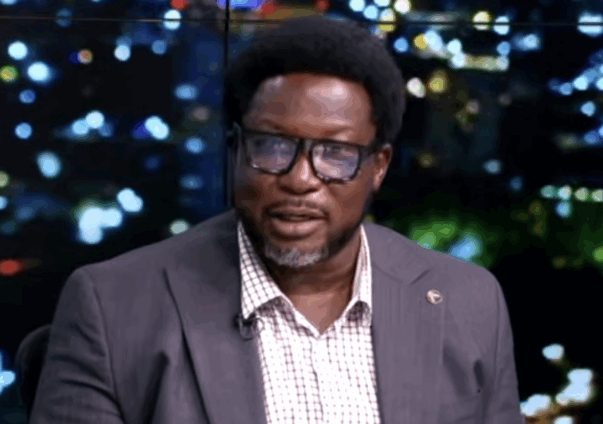
The President of the Licensed Cocoa Buyers Association, Samuel Adimado, has revealed that for the past seven years, Licensed Buying Companies (LBCs) have been pre-financing Ghana’s cocoa business.
He said they borrow from banks to purchase cocoa from farmers and then wait—sometimes for months—before Cocobod pays them.
Speaking on Joy News’ PM Express on Tuesday, Mr Adimado said the association’s recent press conference was necessary to correct public perceptions that LBCs were deliberately withholding farmers’ money after collecting cocoa.
“For the past seven years, the LBCs have been pre-financing the cocoa business… where we go to the banks, borrow money, go and buy cocoa from farmers, and then we deliver to the cocoa board, and then we wait until we are paid,” he said.
He explained that LBCs are licensed and regulated by Cocobod and have a clear mandate to buy cocoa from farmers and deliver it to Cocobod at takeover centres.
“The LBCs are basically licensed by Cocobod to go and buy cocoa from the farmers and deliver to Cocobod at various takeover centres,” he said.
Mr Adimado said the current crisis is tied to a shift in the cocoa trade's funding structure, in which financing is no longer secured and distributed through a syndicated system.
“This model is not the syndicated model where Cocobod secures money and then give to us,” he said, adding that “the model is in the hands of traders.”
“So it’s traders who basically provide the money, and then it enables us to go to the field,” he stated.
He insisted the association’s main concern was that farmers were being misled into thinking LBCs had taken cocoa, received money from Cocobod, and refused to pay.
“The perception was that farmers perceive that we have collected cocoa, delivered to Cocobod, and we are refusing to pay them,” he said.
Mr Adimado said the situation has been worsened by the structure of the relationship between farmers and purchasing clerks in cocoa-growing communities.
He explained that LBCs work through about 50,000 purchasing clerks nationwide, who often operate on trust.
“We have purchasing clerks, about 50,000 purchasing clerks in the various communities where farmers live,” he said.
“As a result of that, the purchasing clerks have a relationship with the farmers… a trust-building relationship,” he added.
In some cases, he said, farmers hand over cocoa even when clerks do not have cash upfront, trusting that payment will follow once the LBC receives funds.
“In a situation where the purchasing clerk doesn’t even have money, the farmer will give his cocoa… with the hope that when the LBC gives you money, I will be paid,” he explained.
He said delays under the current buying model meant some LBCs could not send money to clerks quickly, which then spilt into public accusations.
“That is what came into the airwaves, as if LBCs had borrowed cocoa from farmers and had not been paying,” he said.
Mr Adimado recalled that in the 2023/24 season, LBCs borrowed money, delivered cocoa, and had to wait an extraordinary period before receiving payment.
“In 2023, 24… it took nine months… before we were paid,” he said.
He also disclosed that the association wrote to Cocobod at the time to request compensation for the long payment delays, but “we were not.”
While he said the association is not “fighting Cocobod,” he maintained that the current situation is more complex than it appears, as LBCs are now trapped between unpaid deliveries and bank debts.
He said many members borrowed during the 2024/2025 season, but the expected flow of funds did not materialise.
“The money we borrowed from the banks to provide cocoa to the cocoa board, with the hope that the traders will come for the cocoa. They have not come for it,” he said.
As a result, he said the banks are owed even more than the farmers.
“We owe the banks more than we even owe the farmers,” he stated.
Mr Adimado said Cocobod itself owes LBCs between ¢10 billion and ¢11 billion, and some members have outstanding payments stretching back multiple seasons.
He added that some members from the 2025/26 period “have not been paid,” and claimed that “to the tune of $185 million they’ve not been paid.”
Despite the scale of the crisis, he said the association and Cocobod are engaging to resolve the situation, with expectations that the Ministry of Finance will also be involved.
“There are good indications that… Minister of Finance would… need to address this issue,” he said.
Latest Stories
-
Ghana to host high-level conference on scaling education initiatives in emergencies
4 minutes -
Democracy must not be for sale: Who pays for Ghana’s politics, and how do we confront money, influence and accountability?
19 minutes -
Aburi Amanfrom landowners appeal for government support for Atwapim development project
23 minutes -
Cargill Ghana and International Cocoa Initiative celebrate 111 young graduates building skills for the future
45 minutes -
Video: Madina MP Francis-Xavier Sosu collapses while addressing students at GIMPA
47 minutes -
Hunnyboy reveals how social media landed him Shatta Wale feature
53 minutes -
I am a perfectionist – Actor William Lamptey
57 minutes -
No room for another false start as Ghana begin AFCON qualifying campaign
1 hour -
“We are grateful for what you have achieved” – AGI President tells Finance Minister
1 hour -
“No Nation is Inferior”: Mahama champions human dignity and security council reform at the UN
2 hours -
Manhyia South residents, NPP executives fume over botched EOCO arrest of MP
2 hours -
Mahama unveils new deal with global philanthropy
2 hours -
Daily Insight for CEOs: Building customer-centric leadership
2 hours -
Democracy must deliver food, jobs and healthcare, not just elections – Mahama
2 hours -
Capacity constraints must never be a barrier to restitution – Mahama
2 hours