

Audio By Carbonatix
In the wake of increasing violence and hooliganism at inter-school sports festivals across Ghana, the Central Regional Education Directorate has taken the drastic step of banning such events for the time being.
The decision has sparked a wider debate, with many questioning the effectiveness of banning the festivals as a solution to the rising incidents of student unrest.
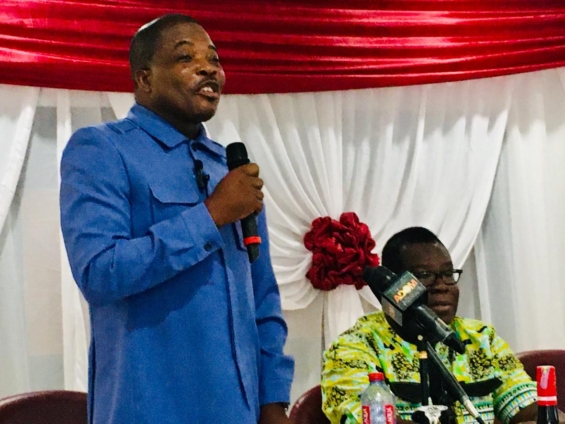
The President of the National Association of Graduate Teachers (NAGRAT), Jacob Anabah, has weighed in on the issue, urging the restoration of discipline in schools rather than imposing blanket bans on student activities.
According to Mr Anabah, the root cause of the violence is not the festivals themselves, but the failure to instil proper discipline in students.
“The issue we’re seeing at inter-school festivals is a reflection of a broken system of discipline within our schools,” Mr Anabah told Adom News.
“Inter-school competitions are not just about sports — they’re an integral part of the education system, offering students a platform to excel, learn teamwork, and grow. These events help shape the future of many young people, providing them with opportunities to succeed in life.”
He believes that the focus should not be on restricting students’ ability to compete, but rather on strengthening the structure of discipline within schools.
He argues that with proper enforcement of rules and regulations, incidents of violence can be curbed, and students can continue to benefit from the valuable life lessons that inter-school competitions provide.
“When discipline is properly enforced, the tendency for hooliganism and violence diminishes,” Anabah said. “It’s about addressing the underlying issues in the school system and ensuring that students learn respect for themselves and others.”
The call from NAGRAT comes as the country grapples with rising tension between safety concerns and the desire to preserve the rich tradition of inter-school sports.
While some believe that banning the events is necessary for the safety of students and staff, Mr. Anabah’s stance underscores the importance of focusing on the broader educational framework to resolve the problem.
Latest Stories
-
US immigration officials defend ICE agents who shot man in same car as child
36 seconds -
Commentator Katie Zacharia picked as new White House press secretary
4 minutes -
Drone strike by Sudan paramilitary kills 41 near Ethiopian border, rights group says
10 minutes -
King warns malicious online actors are evolving tactics
17 minutes -
Several injured as Saudi capital airport reportedly hit again
20 minutes -
Christa Pike discharged from hospital and returned to prison, her lawyers say
22 minutes -
Ghana’s BRICS move requires clear strategy to manage risks – Godfred Bokpin
2 hours -
Pay teachers realistic income – Duncan Amoah to gov’t
2 hours -
Bechem to become chicken capital of Ghana – Mahama projects
2 hours -
Gov’t targets recruitment of 16,500 health professionals in 2026
3 hours -
Two-week strike will not derail academic calendar – GNAT President
3 hours -
Headmaster detained after BBC investigation into alleged sexual abuse of students
3 hours -
GNAT pushes for clear implementation procedures of teachers’ conditions of service
3 hours -
Recurrent strikes threaten quality of education and academic calendars – Prof Bokpin
4 hours -
‘Cockroach’ group leaders among hundreds detained in Delhi protest
4 hours