

Audio By Carbonatix
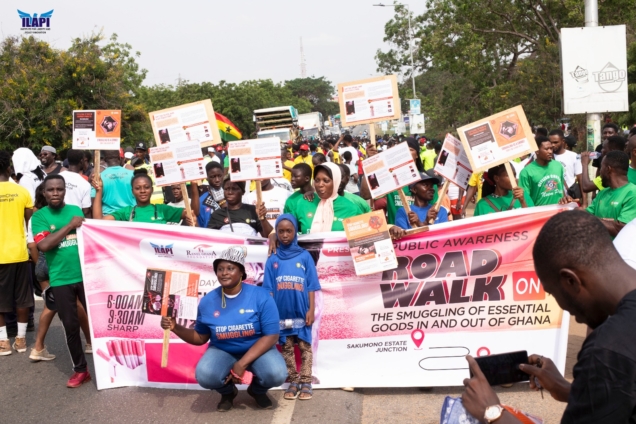
The Institute for Liberty and Policy Innovation (ILAPI), in collaboration with government agencies and civil society partners, has concluded a Nationwide Anti-Illicit Trade Road Walk Awareness and Education Campaign across three major regions of Ghana. The initiative aims to combat the growing menace of smuggling and illicit trade, which threatens national revenue, public safety, and economic stability.
The campaign, held between 1 and 20 December 2025, covered Tamale in the Northern Region, Kumasi in the Ashanti Region, and Accra in the Greater Accra Region. It brought together stakeholders including the Ghana Revenue Authority (Customs Division), Food and Drugs Authority (FDA), Ghana Police Service, Ghana Immigration Service, Environmental Protection Agency, health professionals, students, civil society organisations, and community volunteers.
More than 720 participants joined the exercise — over twice the initial target of 300 — demonstrating strong public and institutional support for the initiative.
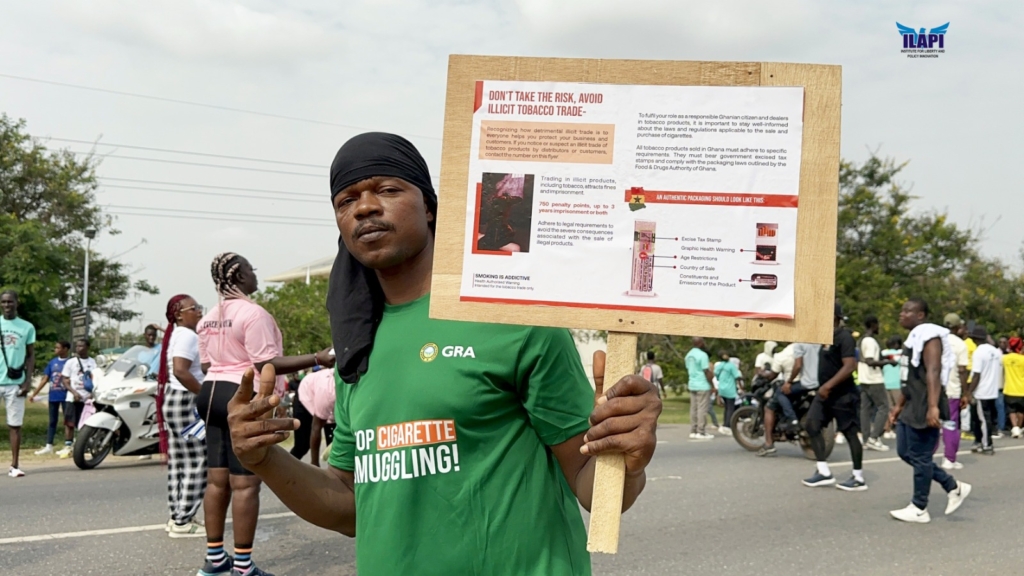
“Illicit trade is not a victimless crime. It weakens our economy, erodes government revenue, and exposes our youth to dangerous products,” said Mr Peter Bismark Kwofie, Chief Executive Officer of ILAPI. “This campaign was designed to take the conversation directly to the streets and markets, where the impact of illicit trade is most deeply felt.”
Despite sustained efforts to strengthen border control, regulatory enforcement, and inter-agency collaboration, illicit trade continues to threaten multiple sectors of the economy, including pharmaceuticals, food items, textiles, alcohol, tobacco, and other consumer goods. Structural vulnerabilities such as porous borders, wide tax differentials, and sophisticated smuggling networks continue to undermine these regulatory gains.
“When illicit trade thrives, the government loses revenue needed for development, and legitimate businesses are crowded out,” Mr Kwofie added. “Addressing this challenge requires sustained collaboration between government agencies, civil society, and the public.”
The Road Walk campaign deliberately targeted busy market areas and commercial corridors to engage traders, transport operators, market women, students, and the general public. Participants distributed educational materials, conducted community conversations, and raised awareness on the economic, social, and health consequences of illicit trade. The campaign also highlighted links to broader criminal activities, including counterfeit goods distribution, smuggled alcohol, and illegal mining.
Accra recorded the highest participation, reflecting rising public awareness and concern about the impact of illicit trade on livelihoods and national development.
The campaign benefited from strong inter-agency cooperation. The Ghana Police Service ensured public safety, while regulatory agencies educated citizens on existing laws, enforcement mechanisms, and civic responsibilities.
“The success of this campaign shows what is possible when institutions work together with citizens toward a common national goal. Awareness is the first line of defence against illicit markets, and this initiative has laid a solid foundation for sustained action,” Mr Kwofie noted.
ILAPI reaffirmed its commitment to promoting legitimate trade, youth empowerment, public health, and economic integrity, calling for continued collaboration to build on the gains of the Road Walk initiative.
Latest Stories
-
NSA sets September 4 deadline for final rectification of biodata mismatches
55 seconds -
Gospel musician Bernice Offei reported missing
6 minutes -
IMF, former gold buyers unhappy with Ghana’s gold purchase programme – Asiedu Nketia
9 minutes -
18 years, 66 plays Ebo Whyte has one more story to tell: “Honey trap”
9 minutes -
PHOTOS: McDan and Ayuda claim singles titles in 2026 JoySports Invitational
10 minutes -
IEA calls government proposals on women, marginalised groups in Parliament ‘grossly insufficient’
11 minutes -
Ghana marks 2026 Children’s Day with call to amplify voices against abuse
11 minutes -
TEIN UK–Ireland engages Ghana High Commission on support for students, professionals
12 minutes -
Fire destroys five commercial containers at Kotobabi Down near Antrack Filling Station
16 minutes -
NCD Alliance Ghana urges government to accelerate action on NCDs and mental health
16 minutes -
IEA rejects five-year presidential and parliamentary terms proposed in Ghana constitutional review
17 minutes -
Lionel Richie hospitalised after St. Louis concert, doctors conduct cardiac tests
19 minutes -
AG’s office dismisses Atta Akyea’s criticism over absence from Signals Bureau case
23 minutes -
Check out IEA’s 18-point position on key Constitutional review proposals
25 minutes -
Chief Justice removal process open to political manipulation – IEA warns
27 minutes