

Audio By Carbonatix
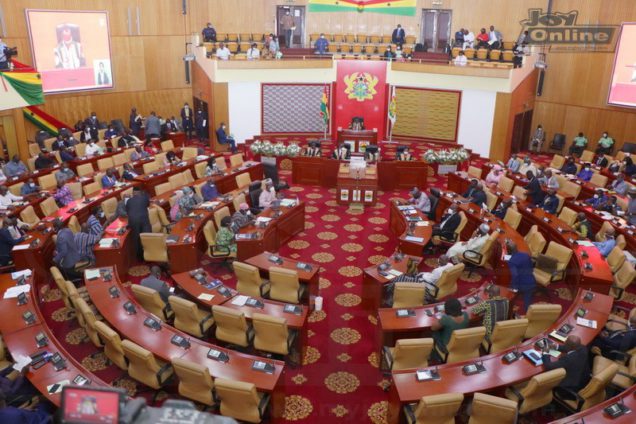
The Institute of Economic Affairs (IEA) has described proposals by the government and the Constitution Review Committee to improve the representation of women and other marginalised groups in Parliament as “grossly insufficient”.
In its constitutional review statement issued on Wednesday, September 2, 2026, the IEA called for a broader proportional representation system and mandatory quotas across public institutions.
The government has proposed capping Parliament at 300 members, comprising 276 constituency representatives and 24 additional members elected through proportional representation.
The additional seats would be allocated to women, persons with disabilities and young people, subject to a feasibility study.
However, the government rejected the Prempeh Committee’s broader proposal to use proportional representation as a general mechanism for increasing the participation of women and other under-represented groups, limiting the arrangement to the 24 additional seats.
“The IEA considers the proposals from both the Prempeh Committee and the Government grossly insufficient,” the Institute stated.
It proposed a system under which political parties would nominate women and members of other marginalised groups based on the proportion of votes secured in an election.
“There is the need for a system of proportional representation that allows political parties to nominate women and persons from other marginalised groups based on the proportion of votes won in an election,” the IEA said.
The Institute also called for mandatory quota and non-quota measures to ensure that every public institution comprises at least 30 per cent of each gender and other identified groups.
On District Assemblies, the Prempeh Committee proposed restructuring the 30 per cent appointed membership by introducing quotas for traditional authorities, women, businesses, persons with disabilities, young people and non-governmental organisations.
The government, however, wants to retain the existing one-third appointed membership, with the selection arrangements determined under the Local Government Act.
The IEA maintained that stronger constitutional measures were necessary to address the persistent under-representation of women and marginalised groups in Ghana’s political institutions.
Latest Stories
-
Lekzy DeComic to feature four generations of comedians on upcoming show
2 hours -
Nigeria wins arbitration as Sunrise’s $400 million hydropower claim dismissed
2 hours -
Xhaka under investigation over Covid-19 certificate
2 hours -
FAW chief questions Infantino’s Fifa reform claims
3 hours -
La Liga chief dismisses Real’s ref conspiracy claims
3 hours -
GMA rejects claims its vessel monitoring system is ineffective
3 hours -
I was close to joining Liverpool in 2016 – Mbappe
3 hours -
Ministry of Sports and Recreation holds national validation workshop on National Sports Policy Draft
3 hours -
‘Do you want me to be happy with this poor performance?’ – Bono East Minister fumes over Kintampo market project with less than 1% work done
3 hours -
London screening honours Nkrumah and 103 years of Ghana cinema
3 hours -
Founder’s Day: Is Nkrumah’s glory fading? – Nkrumah’s iconic fountain at Circle runs dry
3 hours -
GHS calls for stronger systems to ensure safe care for NCD patients
3 hours -
Kufuor calls for Africa’s resources and youthful population to be transformed into opportunities
3 hours -
Mahama administration not clamping down on free speech – Shamima Muslim
3 hours -
Ghana TVET Service, UNESCO, KPMG, Microsoft to train 100,000 facilitators in AI
4 hours