

Audio By Carbonatix
A fresh push for reparations tied to the transatlantic slave trade is gaining international attention, as a new legal submission to the United Nations (UN) proposes a targeted compensation model for specific descendant communities, adding a new dimension to the ongoing global debate.
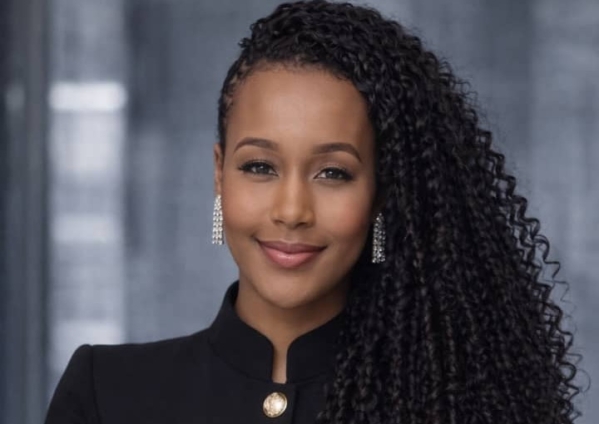
The petition, titled “A Proximity-Based Claim for Reparatory Justice by Descendants of Recaptive and Freed Slave Populations in Sierra Leone", was submitted to the UN Office of the High Commissioner for Human Rights by Amanda Mary Clinton, founder of the Freetown Reparatory Trust.
It comes on the heels of a recent United Nations General Assembly resolution, championed by Ghana, which recognised the transatlantic slave trade as a crime against humanity and called for renewed global efforts toward reparative justice.
A shift from broad claims to targeted justice
At the heart of the Sierra Leone submission is a departure from traditional reparations arguments, which have often been criticised as too broad and difficult to implement.
Instead, the document introduces what it describes as a “proximity-based” framework, arguing that reparations claims should focus on clearly identifiable groups with traceable historical links to slavery and demonstrable present-day disadvantages.
“This submission addresses that gap. It advances a model grounded not in abstraction but in precision: identifiable descendants, traceable historical continuity, and measurable ongoing harm,” the document by Ms Clinton, a private legal practitioner and Founding Partner of Clinton Consultancy, states.
The proposal specifically identifies the Krio people of Sierra Leone, descendants of freed and recaptured Africans settled in Freetown, as a legally definable claimant group.
Sierra Leone positioned as a ‘living case study’
The submission argues that Sierra Leone occupies a unique place in the history of slavery and its aftermath, describing it as a “legal-historical nexus” where the consequences of enslavement remain visible.
Founded in 1792 as a settlement for freed slaves, Freetown became home to Black Loyalists, Jamaican Maroons, and liberated Africans. From this convergence emerged the Krio community, historically influential in governance, commerce, and education across West Africa.
However, the document highlights that the community has experienced long-term decline due to civil conflict, economic challenges, and migration, resulting in reduced political and economic influence.
“Their present condition reflects enduring structural disadvantage… This is not a claim constructed retrospectively. It is one sustained by continuity,” the submission argues.
Legal argument: Slavery’s impact is ongoing
A key pillar of the proposal is the concept of “continuing violation", asserting that the effects of slavery are not confined to history but persist in modern inequalities.
“The central legal argument is not that injustice occurred, but that it persists,” the document states.
It further rejects arguments that slavery cannot form the basis for present claims because it was once legal, pointing to international law principles that classify slavery as a violation of fundamental human rights norms.
“The prohibition of slavery and the slave trade has attained the status of a jus cogens norm, from which no derogation is permitted,” it notes.
Proposed solution: Direct reparations mechanism
To address longstanding concerns about how reparations should be administered, the submission proposes the creation of the Freetown Reparatory Trust—an independent body tasked with managing and distributing funds directly to beneficiaries.
The trust would oversee investments in education, housing, cultural preservation, and economic empowerment for verified descendants.
The document warns that traditional state-to-state compensation risks mismanagement and disconnection from affected communities, advocating instead for “targeted, community-level reparations mechanisms".
UN urged to take action
The petition calls on the United Nations to formally recognise the Krio people as a distinct claimant group and to facilitate dialogue on pilot models for direct reparations.
It also urges international bodies to move beyond symbolic resolutions toward actionable frameworks.
“This submission seeks not merely recognition, but transformation… to move reparations from rhetoric to legal structure,” it states.
Growing global momentum
The proposal comes amid increasing global attention to reparatory justice, particularly following Ghana’s leadership at the United Nations in pushing for formal acknowledgement of slavery’s enduring impact.
While UN resolutions are not legally binding, they carry significant moral and political weight, and experts say such targeted proposals could shape future negotiations.
The Sierra Leone case may serve as a “test model” for how reparations could be implemented in practice, offering a more legally viable alternative to broad, continent-wide claims.
A test case for the future
Ultimately, the submission frames the Krio claim not just as a demand for justice but as a blueprint for global action.
“The Sierra Leone Krio case offers a path forward: defined victims, traceable harm, and a workable mechanism for remedy,” it concludes.
As the international community continues to grapple with the legacy of slavery, the question now shifts from acknowledgement to action and whether the world is ready to move from historic recognition to tangible redress.
Latest Stories
-
Man Utd agree £70m fee for Brighton’s Baleba
1 hour -
Inter-Agency Football Gala: YEA organize event as part of National Youth Month celebration
1 hour -
Receiver fights High Court order to hand over No.1 Oxford Street Hotel to Cheddar’s company
2 hours -
Partey begins new chapter in Saudi Arabia with Al Shabab
2 hours -
NSMQ 2026: St. Francis Xavier deny debutants Pentecost SHS one-eighth spot
2 hours -
One killed in sword attack at Swedish school
2 hours -
NSMQ 2026: Tamale SHS sweep aside Kalpohin, Wenchi Methodist to reach one-eighth stage
3 hours -
Tupac murder accused told police in 2008 his nephew fired fatal shots
3 hours -
Heart of the Beast to Practical Magic 2: 10 of the best films to watch this September
3 hours -
NSMQ 2026: Tears of relief as Labone SHS survive Notre Dame Sem. in thriller to secure one-eighth spot
3 hours -
Onga Tomato Mix unveils Diana Hamilton as Brand Ambassador
4 hours -
NSMQ 2026: Winneba Secondary School holds off Fijai SHS to reach one-eighth stage
4 hours -
KNUST assures staff, public over statute review process amid UTAG concerns
4 hours -
CLOGSAG Executive Secretary Dr Isaac Bampoe Addo passes on
4 hours -
Take post-flood disinfection seriously to prevent disease outbreaks – Environmental Health Officer backs Zoomlion
4 hours