

Audio By Carbonatix
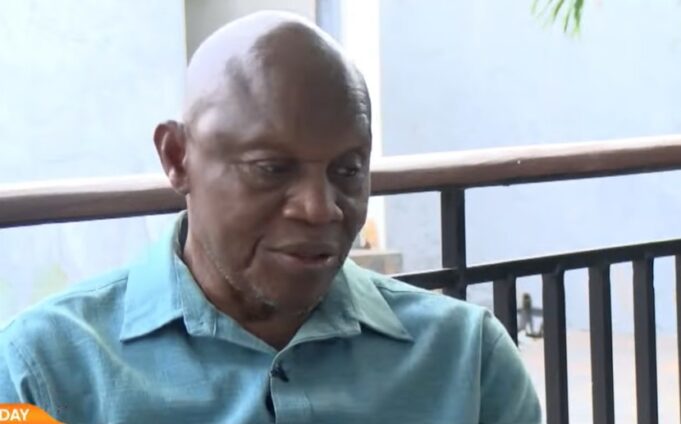
The scope of prosecutorial authority in Ghana has come under renewed legal scrutiny, with former Supreme Court judge William Atuguba questioning whether the Office of the Special Prosecutor (OSP) can independently prosecute cases without constitutional tension.
Speaking on the evolving debate in an interview with JoyNews on Monday, April 27, Justice Atuguba pointed to the central role of the Attorney-General under Ghana’s 1992 Constitution, suggesting that any attempt to extend prosecutorial powers beyond that office raises complex legal issues.
"As article 88 stands, it’s quite clear that it’s only the AG that has prosecutorial powers,” he stated, referencing Article 88 of the 1992 Constitution of Ghana, which vests the authority to initiate and conduct criminal prosecutions in the Attorney-General.
The former justice acknowledged that historically, prosecutorial authority has been exercised by institutions such as the police, but clarified that such arrangements were typically grounded in delegated authority.
“You find the police prosecuting—they are not the AG—but under some older legislation, the Attorney-General could delegate or authorize police officers or some other person to prosecute on his behalf,” he explained.
However, he warned that such precedents may not seamlessly apply within Ghana’s current constitutional framework, noting that many of those practices emerged during earlier political eras, including periods of military rule.
“That kind of thing was probably under a military regime or an era where there was no constitution with such a provision,” he added.
Legal Complexity: Can Delegated Power Be Re-Delegated?
At the heart of the issue is a long-standing legal principle—delegatus non potest delegare—which means a delegate cannot further delegate authority. Justice Atuguba argued that this doctrine complicates attempts to justify independent prosecutorial powers for bodies like the OSP.
“I ask another question because in law there’s the maxim delegatus non potest delegare—in other words, a delegate cannot sub-delegate his authority,” he noted.
He further explained that, under administrative law, true delegation involves transferring full authority, including final decision-making power.
“There’s no delegation unless everything, including the final decision of the matter, is entrusted to the delegate,” he said, describing the issue as “a tricky matter” within legal interpretation.
The comments come amid ongoing discussions about the mandate of the Office of the Special Prosecutor, which was established under the Office of the Special Prosecutor Act, 2017 (Act 959) to investigate and prosecute corruption-related offences.
While the OSP has pursued high-profile investigations and prosecutions since its creation, questions have persisted over whether its prosecutorial powers are constitutionally autonomous or ultimately derived from the Attorney-General.
Legal analysts say the tension lies in reconciling Act 959 with Article 88, particularly on whether Parliament can confer prosecutorial authority on an independent body outside the Attorney-General’s direct control.
Justice Atuguba’s intervention is likely to intensify calls for definitive judicial interpretation on the matter, especially as Ghana continues to strengthen its anti-corruption framework.
Observers note that a Supreme Court ruling may ultimately be required to settle the constitutional boundaries between the Attorney-General and the OSP, ensuring clarity in the prosecution of corruption cases.
Latest Stories
-
White vs traditional marriage: Aesthetics above culture?
9 minutes -
Tumu Municipal Hospital receives new delivery bed to boost maternity care
16 minutes -
Telecel Ghana unveils Project X with Black Sherif partnership
25 minutes -
Rev. Kwadwo Bempah defies restriction on preaching on buses; warns it won’t succeed
39 minutes -
French Embassy to partner Kobby Kyei Media for bloggers’ training
43 minutes -
Nestlé and NBA announce multi-year international marketing partnership
56 minutes -
Mahama sends condolences to Nigeria over plane crash that killed 25
57 minutes -
Our lifestyles may be killing us but our spatial planning is too
1 hour -
12 arrested as police seize firearms, suspected drugs in Tamale
1 hour -
Chamber of Mines challenges Reuters report on proposed mining law
1 hour -
LA 2028: Black Queens take first leg advantage with 3-0 win over Mauritius
1 hour -
UG academic calendar could collapse if GAUA strike extends into next week – Awandare
1 hour -
Black Sherif partners with Telecel Ghana to promote Telecel Cash
1 hour -
Nestlé Ghana expands Tema factory, raises evaporated milk production capacity
1 hour -
Telecel Ghana launches CARE Month with customer rewards and community outreach
1 hour