

Audio By Carbonatix
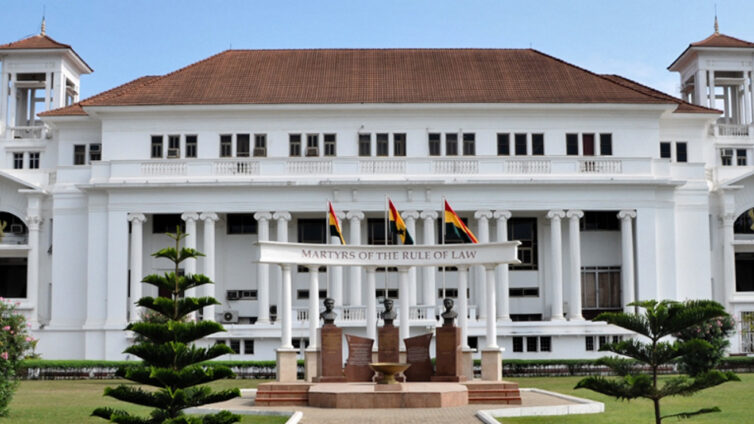
Private legal practitioner Martin Kpebu has described the Supreme Court's ruling affirming the Attorney-General's authority to discontinue prosecutions initiated by the Office of the Special Prosecutor (OSP) as a significant constitutional safeguard that will keep the anti-corruption agency in check.
Reacting to the judgment in an interview on Citi FM on Wednesday, July 29, Mr Kpebu said the decision provides much-needed clarity on the constitutional relationship between the Attorney-General and the OSP.
"It's a welcome relief, very timely. It will help to at least keep Kissi Agyebeng in check for a bit," he said.
According to Mr Kpebu, the ruling confirms that although the OSP has prosecutorial powers under the Office of the Special Prosecutor Act, those powers are exercised on behalf of the Attorney-General.
He explained that the Constitution vests the power to prosecute criminal cases in the Attorney-General, who also retains the authority to discontinue any prosecution at any stage.
"The Supreme Court has been very clear that the Office of the Special Prosecutor is under the Attorney-General's office. The decision is that it's only the Attorney-General who has power to prosecute. Any other person prosecuting a criminal case is doing it on behalf of the Attorney-General," he stated.
Mr Kpebu argued that the judgment creates an important constitutional check against any potential abuse of prosecutorial authority by the OSP.
He said individuals who believe they have been unfairly targeted by the anti-graft agency can now seek redress from the Attorney-General, who has the power to review the case and discontinue proceedings where appropriate.
"The Attorney-General will call for the file and look at it and see if your case has merit. The Attorney-General will stop what the OSP is doing. So that's very key. It's a key check," he added.
The Supreme Court's ruling followed a constitutional challenge filed by private legal practitioner Noah Adamtey, who argued that Parliament could not confer independent prosecutorial powers on the OSP because Article 88 of the 1992 Constitution vests that authority in the Attorney-General.
While the apex court upheld the constitutionality of the Office of the Special Prosecutor Act, 2017 (Act 959), it ruled that the Attorney-General's constitutional power to discontinue prosecutions remains intact, including in cases initiated by the Special Prosecutor.
Latest Stories
-
New York Times executive fatally shot allegedly by elderly in-laws
37 minutes -
Teacher Payment Crisis: GES races to protect academic calendar
46 minutes -
US prosecutors reopen case of alleged gang rape at Cornell University
1 hour -
Journalist to be crowned king in Uganda after bitter succession dispute
1 hour -
OpenAI scraps rollout of new model over safety concerns
1 hour -
Nigerian attempts to break world record by dancing non-stop for seven days
2 hours -
GES urges government agencies to end blame game over teacher payments
3 hours -
GES sets Oct. 5 deadline to resolve teachers’ payment dispute
4 hours -
GES working around the clock to get teachers back to class, says Daniel Fenyi
4 hours -
French PM warns against escalation of school protests after 164 arrested
4 hours -
UK tries to stop Trump’s diesel export ban
5 hours -
Late Olise goal gives France win over Belgium
5 hours -
Mancini enjoys first win since return as Italy boss
5 hours -
Interest payments to average a high 20% of government revenue over next 4 years
5 hours -
Anthropic warns AI may pose ‘existential risks to humanity’ in IPO filing
5 hours