

Audio By Carbonatix
In the Bono East Region, your chance of surviving childbirth depends entirely on your location. While the regional leadership proudly touts a skilled delivery average of 67.6% at the 2026 Mid-Year Performance Review, the reality for women in the remote eastern corridors is nothing short of a public health emergency.
In Sene East, that figure plummets to a catastrophic 27.85%—meaning nearly three out of four women give birth without a trained professional.
The reason is brutally simple: an absolute absence of hospitals. As the Regional Director of Health Services, Dr Freeman Samani, starkly warned, "Regional averages may be green, but if districts remain red, our work is not finished."
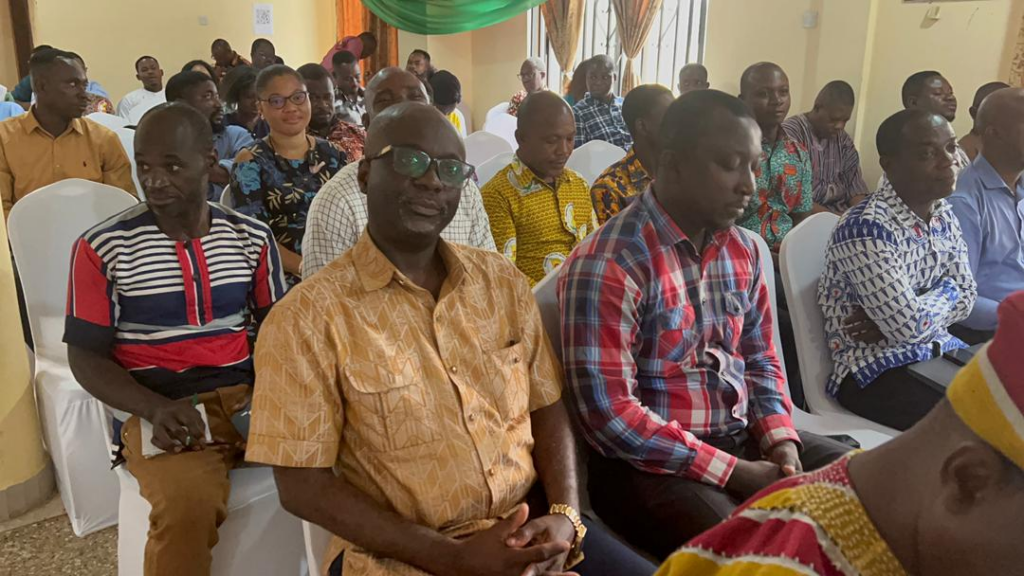
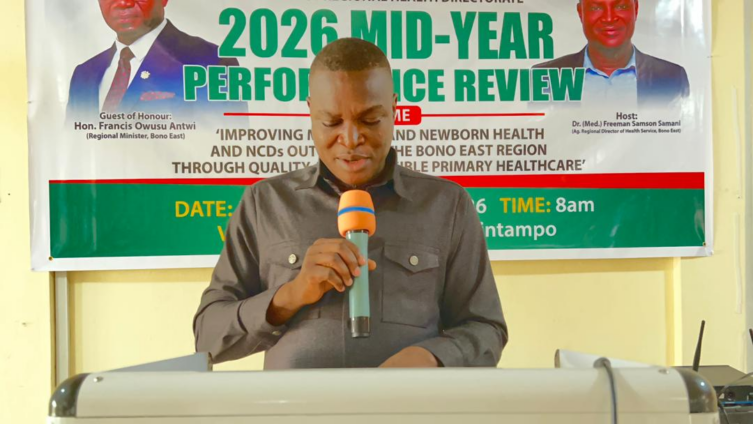
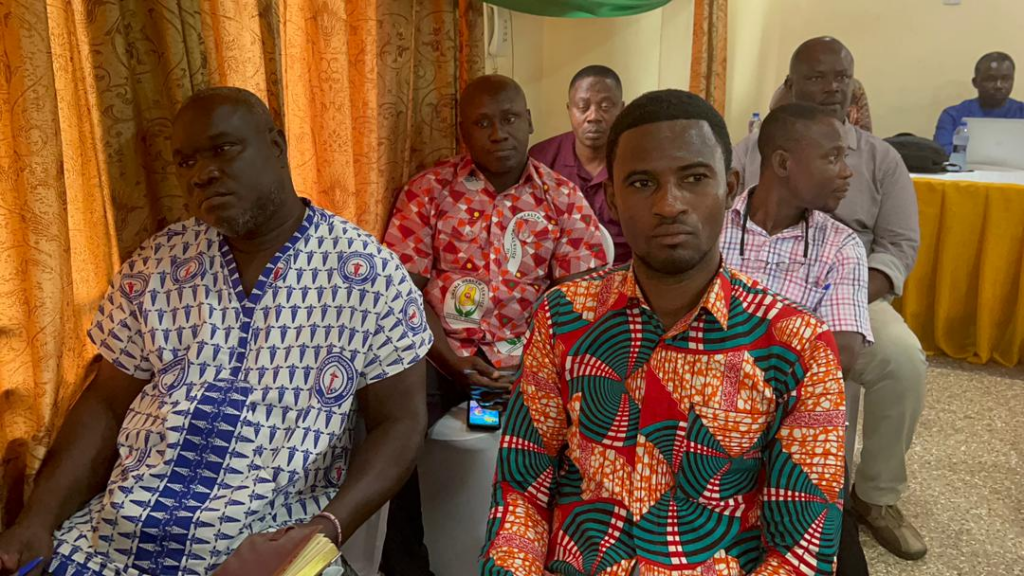
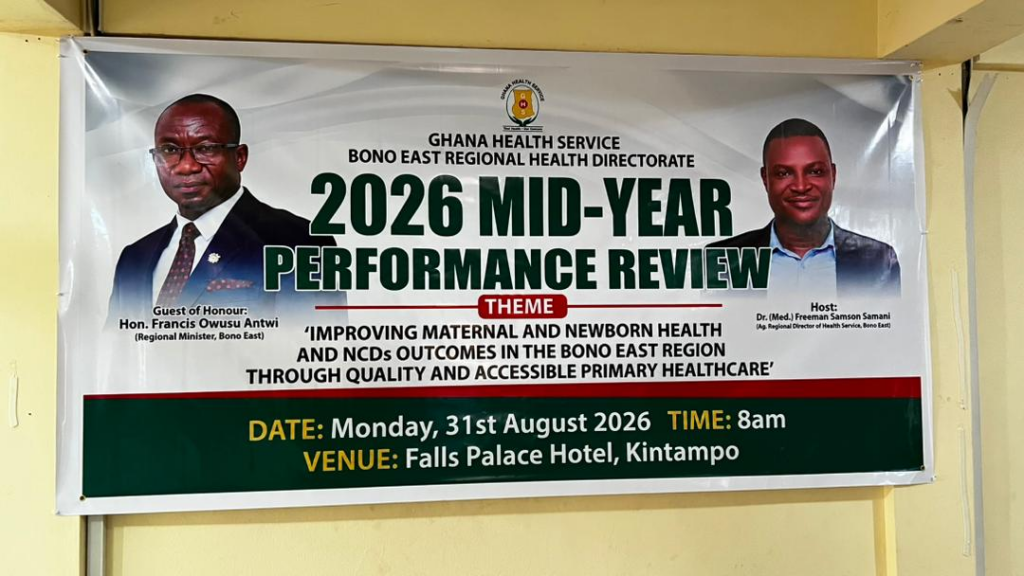
Speaking at the 2026 Mid-Year Performance Review meeting in Kintampo, the Bono East Regional Director of Health Services, Dr Freeman Samani, cautioned that impressive regional averages often conceal the plight of underserved districts.
He stressed that "regional averages may be green, but if some districts, facilities or communities remain red, then our work is not finished."
A Tale of Two Districts
The disparity is starkest in skilled delivery coverage. While the regional average stands at 67.6%, the picture is dramatically different on the ground. Sene East District recorded a meager 27.85%, while Techiman North followed closely with just 33.34%.
This means that in these districts, more than two out of every three women are giving birth without the assistance of a skilled birth attendant, a critical factor in preventing maternal and newborn deaths.
This gap is not a statistical anomaly. It is a direct consequence of a lack of basic health infrastructure. According to the Ghana Health Service, the Bono East Region has seven municipal/district hospitals, but four districts still lack a district hospital. Among these are Sene East, Techiman North, Nkoranza North and Pru West.
In the Sene East District, the situation is particularly dire. The district currently has no standard hospital, relying instead on just three health centers located at Bassa, Kajaji, and Kojokrom.
For emergency cases, pregnant women and critically ill patients must be referred to hospitals in Kwame Danso, Atebubu, or even the Krachi Government Hospital, journeys that are often hampered by poor road networks. The long-awaited Agenda 111 District Hospital project in Kajaji, which is meant to solve this crisis, remains incomplete.
Similarly, Techiman North lacks a district hospital. Residents, such as those in Akonkonti, are forced to travel to neighboring communities for medical care due to the absence of a clinic or CHPS compound.
The Human Cost of Inequality
The consequences of these gaps are fatal. Dr. Samani noted that the region has continued to record maternal deaths and stillbirths, with some facilities and districts carrying a "disproportionate burden."
The challenges are compounded by the region's difficult geography. The Bono East Region is characterized by sprawling landscapes and remote communities, making access to healthcare a significant challenge. In Sene East, the existence of numerous island communities further isolates residents from the few available health facilities.
Dr Samani emphasised that the goal of universal health coverage cannot be achieved while such glaring inequities persist. He stated, "Where a person lives should not determine whether they live or die."
The Way Forward
The Regional Health Directorate has identified the expansion of access to quality primary health care, particularly in underserved areas, as a top priority.
The rollout of the Free Primary Health Care policy is seen as a critical opportunity to address these gaps, with resources being channeled to strengthen service delivery at the community level.
However, the immediate need for functional hospitals in Sene East, Pru West and Techiman North remains urgent. The Regional Minister, Francis Owusu Antwi, has previously acknowledged the lack of standard hospitals in the region and called for the completion of the Agenda 111 projects.
As Dr Samani concluded, the figures discussed at the review represent real people: a pregnant woman in need of emergency care, a newborn deserving a healthy start, and a family depending on the health system.
The data is clear, and the call to action is urgent.
Latest Stories
-
Number of debit cards issued by banks decreased by 11.8% to 5.7m in 2025
12 minutes -
Total mobile money transaction values grew by 50.8% to GH¢4.54trn in 2025
15 minutes -
Private aggregators, not state, will bear local refining costs – GoldBod
16 minutes -
Ablakwa urges African leaders to adopt new leadership paradigm to create opportunities for youth
22 minutes -
Photos: Mahama holds talks with Serbian President in Belgrade
31 minutes -
Local gold refining good for economy but costs must be controlled – Economist
32 minutes -
Keir Starmer announces he is standing down as MP
33 minutes -
One still missing after Grand Canyon floods kill two and prompts rescue efforts
34 minutes -
Mahama Ayariga calls for major overhaul of Ghana’s waste management system
37 minutes -
GoldBod programme contributed just 1.3% to reserves increase – Amin Adam
37 minutes -
Drive to Inspire–Africa equips UESD students with skills for future careers
39 minutes -
Diana Hamilton reveals she experiences stage fright before performances
44 minutes -
Number of ATMs declined by 0.5% to 2,272 in 2024 – BoG
44 minutes -
Look beyond government securities – GVCA tells pension funds
45 minutes -
COCOBOD settles GH¢2.3bn DDEP obligations for 2026
47 minutes