

Audio By Carbonatix
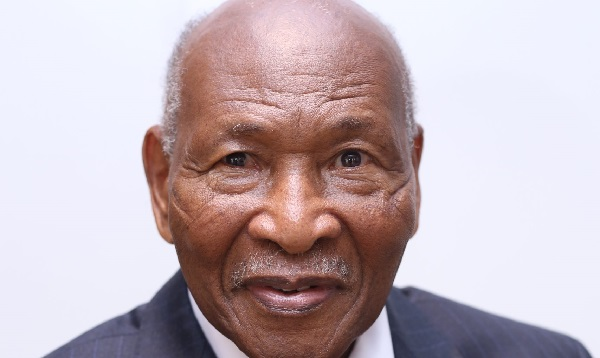
Former president of the Ghana Bar Association, Sam Okudzeto, has criticised the Office of the Special Prosecutor (OSP), describing its very foundation as a dangerous experiment that was never grounded in necessity.
Speaking on Joy News’ PM Express on December 8, he questioned the logic, purpose and effectiveness of the institution, insisting that Ghana did not need a parallel prosecutorial body in the first place.
Okudzeto said the big question Ghanaians must confront is simple: why was the OSP created and what has it achieved?
“Sometimes someone says it is not what you think you are entitled to, it is what you can give, but it should be. So you’re asking me this question. The question is simply this: why was the institution set up? Has it achieved its purpose?”
When host Evans Mensah pressed him for an answer, he did not hesitate.
“I don’t think so. That is exactly the issue that I’m trying to drive here. He hasn’t achieved his purpose because the corruption is still on. I see it every day. Everywhere you turn in every institution, you see it openly.
"They don’t even… they are not even afraid. People are no longer even afraid. You go there, and they demand money from you to do this for you, when you already paid.”
To him, this alone shows the OSP has failed to justify its existence. And when asked whether scrapping it is the solution, he stood firm.
“Yeah, I’m saying that that institution is not achieving its purpose. Because look at it this way, you have an attorney general’s department. Is that not correct? Yes, in that department, they have a civil section, and then they have a prosecutorial section. This one is headed by the Director of Public Prosecutions. The other one is headed by the Solicitor General.”
He said the core functions already exist. “Now, what is the director of all prosecution supposed to do? He’s supposed to prosecute criminal offences which will include corruption, corruption-related.
"There is nothing which makes corruption anymore different from any other crime. We have direct or to public prosecution, that is his job. Why do you create another institution to do the same job? That’s the whole issue.”
Evans Mensah reminded him that the OSP was created as a special-purpose vehicle. But Okudzeto rejected the model Ghana adopted.
“You see, in other places where you have this special prosecutor, it means that there is a specific problem that has arisen, and you want that person to go there and solve that problem.
"You don’t create the whole institution for it, as we have done; if you like, you can go and search and ask where and where we have that kind of institution?”
He referenced international and local prosecutorial traditions to make his point.
“You see, the Prime Minister of England, you know what his position was before? You know how he got the knighthood? He was the director of public prosecution. Justice D. F. Anang, who became the Speaker of Parliament, was also Director of Public Prosecutions.”
For Okudzeto, the solution aligns with those calling for a return to the Attorney-General’s mandate.
“That is what should have been done. But I suspect that somebody thought that corruption was too rampant in the country, and, therefore, to create an institution for that purpose was a good idea.”
He warned that the OSP became centred on an individual rather than an institutional system.
“And then, of course, you appoint an individual. Don’t forget, it’s just an individual you’ve appointed. Then you are now trying to create an institution around that individual. What is the background of that? That’s the question I ask. What is his background of that individual?”
He added that the problem is not solved by simply naming someone to a new office. “If I am going to try and select one of the top legal luminaries and say that I’m giving him that just a different thing.”
His final warning was blunt and stark. “I’m just saying that when you don’t train people to do a job, you think that creating institutions, particularly when they think it’s just an individual, it’s dangerous….It’s very, very dangerous.”
Latest Stories
-
Edmond Boateng takes up secretary role at Honorary Consular Corps of Ghana
1 hour -
Gambia appoints British barrister to prosecute gruesome Jammeh-era crimes
2 hours -
Girl group Flo on entering into their ‘bombastic, confident, strong’ era
2 hours -
Germany suspends military approval for long stays abroad for men under 45
2 hours -
Liverpool face uphill Champions League task after PSG thrashing in Paris
2 hours -
‘Ketamine Queen’ sentenced to 15 years in Matthew Perry overdose death
2 hours -
Nigeria begins mass trial of 500 terrorism suspects
2 hours -
Atletico Madrid stun 10-man Barcelona to seize Champions League semi-final advantage
3 hours -
Black Stars coach to be announced by next week – Sports Minister
3 hours -
Chiefs, queen mothers and principal elders of Odau group denounce ‘rebellious Etweresohene’, pledges allegiance to Okyenhene
3 hours -
KNUST library dress code sparks online backlash over strict rules
3 hours -
Cultural Diplomacy in Action: Ghanaian youth leaders present symbolic smock to U.S. Chargé d’Affaires
3 hours -
Ghana Card payment activation under review – NIA breaks silence on financial integration
4 hours -
Ofori-Atta’s ICE release on bail positive; he poses no risk – Amanda Clinton
4 hours -
Ken Ofori-Atta’s passport seized after bail, set to reappear in US Court on April 27
4 hours