

Audio By Carbonatix
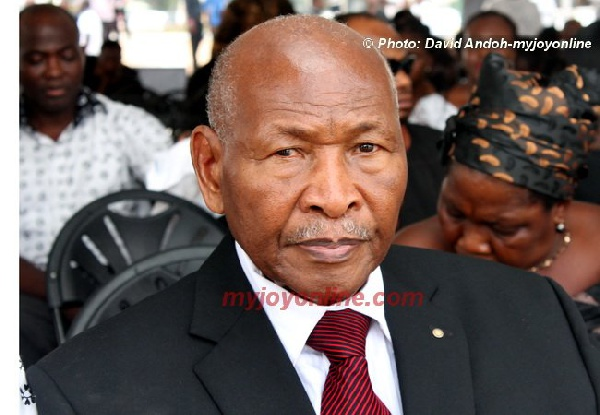
Former President of the Ghana Bar Association, Samuel Okudjeto, has cautioned political actors against what he describes as the increasing politicisation of Ghana’s constitutional institutions, warning that such tendencies pose a threat to the country’s democratic stability.
Speaking in an interview on Joy FM's Midday News on Wednesday, February 18, he noted that Ghana’s democracy can only thrive when independent institutions are protected from partisan interference.
The former GBA President argued that Ghana’s constitutional framework was designed to strengthen institutions beyond electoral cycles, ensuring continuity and stability regardless of which political party is in power.
He pointed out that democratic progress over the past decades has been driven by the country’s commitment to competitive elections and institutional governance rather than political control.
"All the countries you are seeing on the planet where there is stability, it means that the institutions are allowed to work. Let us allow our institutions to work, please, please, and please," he appealed.
His comment follows partisan calls and petitions for the removal of the Electoral Commissioner, her deputies, and the Special Prosecutor.
However, the Chief Justice, Paul Baffoe-Bonnie, has ruled that there is no prima facie evidence to justify further investigation into the petitions.
According to Mr. Okudzeto, the Constitution clearly outlines procedures for addressing concerns involving holders of high public office, and those processes must be respected rather than manipulated for political convenience.
“The Constitution has laid down specific issues to be followed, but many of these threats were made long before the elections,” he said.
Mr. Okudjeto expressed concern that partisan politics has begun to dominate national discourse to the extent that institutions such as the EC, the Office of the Special Prosecutor, and even the Judiciary are increasingly viewed through political lenses.
He warned that attempts to remove officeholders simply because there has been a change in government could set a dangerous precedent.
“It means that any time there is a change of government, people with constitutional mandates must be thrown out for party loyalists to take over. That is not democracy,” he noted.
Latest Stories
-
Dutch authorities enlist Ghana in hunt for fugitive drug lord Bolle Jos
4 minutes -
Ghana housing finance conference adopts communiqué to improve affordable housing access
4 hours -
Special Initiatives Minister urges Wa Technical Institute to enrol more girls as EU-backed solar training lab opens
5 hours -
In the matter of my first year at the Bar
5 hours -
ActionAid Ghana calls for an end to child marriage, greater investment in girls’ rights
5 hours -
Newsfile to tackle World Cup visa scandal, beach demolitions, education strikes, BRICS bid
6 hours -
UK-Ghana Trade & Investment Summit: Trade Resource Centre to help businesses maximise UK-Ghana trade opportunities
6 hours -
Embassy of Denmark celebrates World Maritime Day
6 hours -
Linking LEAP to productive inclusion could cut extreme poverty by 2030 – UNICEF
7 hours -
Trade Ministry backs use of creative arts to rehabilitate prison inmates
7 hours -
Negotiations with government to continue despite strike suspension – GNAT
7 hours -
‘Ghana cannot afford to waste public resources; every cedi has a job’ – Ato Forson
7 hours -
Ghana expects economic boost as World Assemblies of God Congress brings 10,000 delegates to Accra
7 hours -
Joy in Nayilifong as Farouk Aliu Mahama donates 100kVA transformer to improve power supply
8 hours -
Chief Justice urges employers to tackle mental health stigma in workplaces
8 hours