

Audio By Carbonatix
Cancer is a word that instils fear in many families. In Ghana, many of us have either seen someone battle the disease or felt the pain of losing a loved one to it.
Dr. Mrs. Beatrice Wiafe Addai, who is the President of Breast Care International (BCI) and former Board Chair for the Ghana Cancer Board, said cancer cases have been on the rise since 2018. Ghana records around 24,000 new cases every year and over 15,000 deaths.
Breast cancer claims the most lives, followed by liver, cervical, and prostate cancer, as revealed by the Global Cancer, Mortality and Prevalence Report 2020.
Traditional treatments such as chemotherapy, radiation, and surgery are often long, painful, and do not prevent disease recurrence. These treatments are costly and may start too late to make a difference. However, a promising discovery is rewriting the story of cancer treatment worldwide.
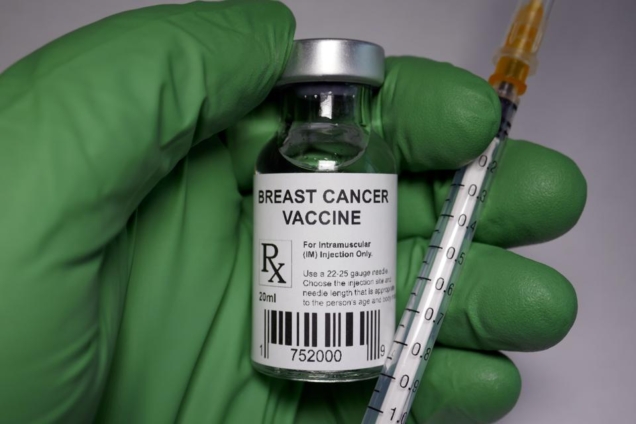
For the first time in decades, cancer treatment is moving beyond fighting harder to fighting smarter. Scientists have developed “personalised cancer vaccines” that are showing results once thought impossible.
Simply put, these vaccines train the body’s immune system to recognise and destroy cancer cells. This is something medicine has been trying to achieve for decades. It may take some time, but these vaccines will soon be available in Ghana.
In April 2021, researchers Eryn Blass and Patrick A. Ott published a study highlighting progress in the development of personalised neoantigen-based therapeutic cancer vaccines. This review showed that patients with advanced skin cancer who received the vaccine recorded a 44% lower risk of the cancer recurring. Nearly 8 out of the 10 patients stayed cancer-free for at least 18 months.
More significant results were achieved in the treatment of kidney, pancreatic, brain, and neck cancers, with all patients staying cancer-free for over two years.
This is a breakthrough in medicine because cancer is cunning. Cancer cells hide in the body by disguising themselves as normal cells. As a result, treatments like chemotherapy and radiotherapy often act like blunt weapons, attacking both healthy and cancerous cells simultaneously. This leads to the harsh side effect patients dread, but the new vaccine exposes cancer’s tricks, helping to target and eliminate these deceptive cells.
Here is how this new vaccine is designed. Every cancer cell carries tiny “identification tags” called neoantigens. These neoantigens are unique identification tags that appear only on cancer cells.
Scientists can now read a patient’s tumour, find those “identification tags” and design a vaccine that shows the immune system exactly what to attack. It is just like giving the body’s security guards a detailed wanted poster. Once they know what the criminal looks like, they can track them down anywhere in the body. This process is highly personal; no two cancers are alike, so no two vaccines are the same. Each one is custom-made for the patient using the same technology that powered COVID-19 vaccines.
While these vaccines are still in trials and cost over $100,000 per patient, the technology is advancing fast. Production times have been reduced from nine weeks to less than four weeks.
Experts say the first approved neoantigen cancer vaccines might be available by 2029. This timeline gives Ghana a chance to prepare. With growing investment in biotechnology and health research, our medical community can play a crucial role in ensuring that life-saving treatments reach Ghanaian patients faster.
There are still challenges with this new therapy that are being addressed. For now, these vaccines are highly effective when administered shortly after surgery, before the cancer spreads widely. They must also be combined with other special drugs to achieve the best results. The costs must also come down before widespread use is possible, but the direction is clear. Cancer vaccines are not miracles, but they mark a significant advancement in the long fight against a disease that affects nearly every family. As more than 120 clinical trials continue worldwide, one thing is certain: future of medicine is moving towards care that is not only effective but also personalised, tailored for each patient.
The writer is a final year student pursuing a bachelor of science in Biochemistry and Molecular Biology from the School of Basic and Biomedical Sciences (SBBS) at the University of Health and Allied sciences (UHAS), Ho, Volta Region, Ghana.
Contact : princehenryhonya@gmail.com
Latest Stories
-
Alleged Bondi gunman seeks order to suppress family’s identity
6 minutes -
Curbing food Smuggling from Togo key to protecting local industry — John Dumelo
7 minutes -
COMSSA Men’s Cook-Off redefines gender narratives through culinary showdown
13 minutes -
12 farm service centres to be commissioned soon to boost agricultural productivity — Dumelo
15 minutes -
AMA launches pilot waste programme alongside Agbogbloshie Market clean-up
19 minutes -
Strait of Hormuz tensions could hike fuel prices, affect electricity and transport — Expert warns
25 minutes -
Engage Now Africa empowers 60 women in Mamobi and Kasoa with vocational skills
26 minutes -
The PURC’s ‘quiet diplomacy’ on the rapid depletion of ECG prepaid credits is a betrayal of the Ghanaian Consumer
29 minutes -
Advancing justice for remand prisoners in Ghana through mediation & rehabilitation
47 minutes -
Richmond Mensah declares bid for NPP UK Branch chairmanship, promises transparent and honest leadership
53 minutes -
Africa Extractives Media Fellowship highlighted as model for women-focused leadership development
56 minutes -
GoldBod Jewellery clarifies it did not sponsor UK Women of Valour event
1 hour -
‘Such crimes are against humanity’ — Otokunor backs prosecution of former COCOBOD officials
1 hour -
COCOBOD’s rollover contracts cost Ghana nearly $1bn – Otokunor
2 hours -
Gov’t bought 581,000 tonnes of cocoa at $7,200 — prices then plunged: Otokunor explains
2 hours