

Audio By Carbonatix
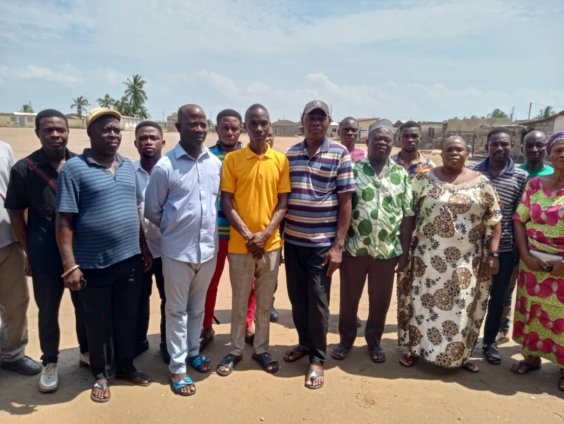
The AbibiNsroma Foundation, in collaboration with the FIDEP Foundation, has conducted a community mobilization activity in Keta-Vodza, bringing together a diverse group of 22 representatives from various coastal community groups.
This initiative aimed to foster a progressive, rights-based approach to energy transition and address the potential impacts of the Keta Delta Oil Block.
The event saw the participation of traditional authorities, fishermen associations, women’s groups, and youth organizations, all united in their commitment to advocate for systemic change.
The attendees were drawn from the communities of Vodza, Kedzi Horvedzi, Kedzi Xorvi, Kedzi Harvedzi, Woe, Afidenyibga, and Anlo-Afidenyibga, ensuring a comprehensive representation of the region's populace.
Central to the discussions was the need for a sustainable and inclusive energy transition that considers the rights and livelihoods of local communities. Participants engaged in in-depth deliberations on the potential environmental and socio-economic impacts of the Keta Delta Oil Block, emphasizing the importance of community involvement in decision-making processes.

Moreover, discussions highlighted international frameworks such as the UN Free, Prior, and Informed Consent (FPIC) Convention, which underscores the rights of indigenous peoples and local communities to give or withhold consent to projects affecting their lands and resources. Participants explored how FPIC principles could strengthen local governance and ensure that community voices are central in energy development initiatives.
Additionally, the MARPOL (International Convention for the Prevention of Pollution from Ships) and the OSPAR Convention were examined in relation to marine pollution prevention and management.
Coastal community representatives expressed concerns over potential marine environmental impacts from oil exploration and underscored the need for stringent environmental regulations and monitoring frameworks aligned with international standards.
In addition to debating the challenges and opportunities presented by energy transition, the forum aimed to establish an active coalition. This coalition will work to demand systemic changes that prioritize environmental sustainability and social justice.
Following extensive deliberations, the participants drafted a joint communique outlining five key demands:
- Full Implementation of FPIC: Demand that all energy projects, including the Keta Delta Oil Block, adhere to the principles of Free, Prior, and Informed Consent as outlined in the UN FPIC Convention. Local communities must have the right to meaningful consultation and decision-making regarding projects affecting their lands and resources.
- Comprehensive Environmental Impact Assessment (EIA): Call for a rigorous and transparent EIA process for the Keta Delta Oil Block and other energy projects. The assessment should include cumulative impacts on biodiversity, marine ecosystems, and local livelihoods.
- Enhanced Environmental Regulations: Urge for strengthened regulations and enforcement mechanisms, aligned with international standards such as MARPOL and OSPAR, to prevent and mitigate environmental pollution from energy activities, particularly in marine ecosystems.
- Capacity Building and Empowerment: Request support for capacity-building programs that empower local communities, particularly women and youth, to actively participate in decision-making processes related to energy development and environmental management.
These demands reflect the collective aspirations of the coastal communities in Keta-Vodza to safeguard their environment, uphold their rights, and promote sustainable development in the face of energy transition challenges.
The AbibiNsroma Foundation and the FIDEP Foundation's collaboration underscores a commitment to empowering coastal communities in Keta-Vodza. By fostering collaboration and collective action, the foundations aim to ensure that energy policies and projects are aligned with the needs and rights of the people most affected.
As the coalition forms and plans its next steps, the foundations and community members remain committed to ongoing dialogue and advocacy, striving for a future where energy transition leads to sustainable development and improved livelihoods for all.
Latest Stories
-
The Ghanaian prophet and the mysterious death of his scottish wife Charmain Speirs
37 minutes -
Nearly 400 sentenced in Nigeria for links to militant Islamists
58 minutes -
Ghana’s recovery supported by gold strength despite global oil price pressures – Standard Bank Research
1 hour -
Kwaku Azar writes: A-G vs OSP
2 hours -
Mfantsipim–Adisadel rivalry built excellence, not division – Sam Jonah
2 hours -
Vice President launches Mfantsipim’s 150 years of shaping Ghana’s greatest mind
2 hours -
I assure Otumfuo, Mahama will join him to commission KNUST Teaching Hospital by end of this year – Haruna Iddrisu
3 hours -
Barcelona dominate derby to extend La Liga lead
3 hours -
Gov’t to roll out free special education for persons with disabilities from July 1 – Education Minister
3 hours -
Importers and Exporters Association declares full support for Publican AI port system
4 hours -
“We used it to test our officiating officials’ readiness” – Bawah Fuseini after CAA Athletics event
4 hours -
Volleyball emerges as Ghana’s fastest rising sport
4 hours -
National Sports Fund needs strong leadership from the top – Administrator David Wuaku
4 hours -
JoySports Exclusive: Steve McLaren in talks with GFA after expressing interest in Black Stars job
4 hours -
Fire guts auto parts warehouse at Bubuashie, one fire officer injured
4 hours