

Audio By Carbonatix
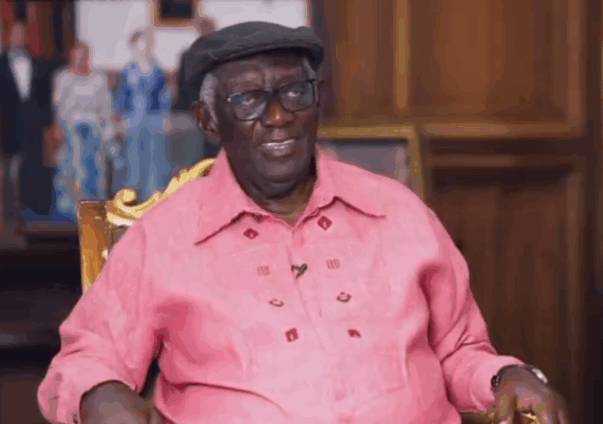
Former President John Agyekum Kufuor has criticised Ghana’s ministerial vetting process, arguing that the country’s multi-party parliamentary system makes it difficult for lawmakers to independently scrutinise presidential nominees.
Speaking in an interview on the AM Show, Mr Kufuor said the structure of parliamentary committees means a president who controls the majority in Parliament of Ghana will almost always have their nominees approved.
According to him, because vetting committees reflect the party composition of Parliament, majority members tend to back the president’s choices, leaving little room for meaningful opposition scrutiny.
“The president will have the majority of the vetting committees in the legislature, and so once the president nominates, invariably the nominee sails through because the majority tends to be there to support the president,” he said.
Mr Kufuor noted that this dynamic often weakens the oversight role of Parliament, as party loyalty can take precedence over objective assessment of nominees.
Drawing from his own experience in public office, he said the system’s limitations are not new.
The former president previously served as a Member of Parliament in both 1969 and 1979 before leading the country from 2001 to 2009 under the New Patriotic Party.
“The minority may have its say, but the majority would have its way,” he said, referencing a common parliamentary phrase that highlights how majority rule can determine outcomes regardless of opposing views.
As a possible solution, Mr Kufuor suggested transferring the vetting of key public appointees to a non-partisan second chamber made up of experienced professionals and national figures.
He explained that such a body could assess nominees strictly on merit while conducting its deliberations openly before the public.
The issue of ministerial vetting has long been debated in Ghanaian politics. Critics across different administrations have often accused the Parliament of Ghana Appointments Committee of merely endorsing presidential nominees rather than subjecting them to rigorous scrutiny.
Latest Stories
-
The Accra-Kumasi Expressway: Building it right
5 minutes -
Beyond gold exports: Building value and economic resilience from Ghana’s gold
12 minutes -
2027 AFCONQ: Ghana under pressure as Gambia beat Somalia 2-1
25 minutes -
Eastern NPP Women’s Organiser calls on AG, Police to secure bail for Salomey Baffoe
27 minutes -
Poverty, illiteracy driving acceptance of vote-buying among women – Damongo Queen Mother
1 hour -
Photos: Democracy Is Not For Sale forum in Savannah region
1 hour -
GNFS launches 2026/27 National Anti-Bushfire campaign in Atebubu, records 62.8% reduction in bushfire cases
1 hour -
I’ll vote for a female president; women are less likely to steal from the state – Okyeame Kwame
1 hour -
More public education needed to stop vote-buying – Savannah Region MP
2 hours -
Absa Bank commissions new head office, commits to strengthening operations in Ghana
2 hours -
Republic Bank-JoyNews Habitat Fair clinic: Day 1 ends on positive note as patrons explore housing solutions at Junction Mall
2 hours -
Vanderpuye: NDC welfare system needed to support former officials, cadres
2 hours -
Chamber of Mines extends support to Akropong, Mampong Special Schools
2 hours -
Tumu chiefs, MP back clearance of road corridor for Ghana-Burkina road corridor
2 hours -
‘Democracy Is Not For Sale’: Monetisation of elections could lead to wrong people entering Parliament – UDS lecturer
2 hours