

Audio By Carbonatix
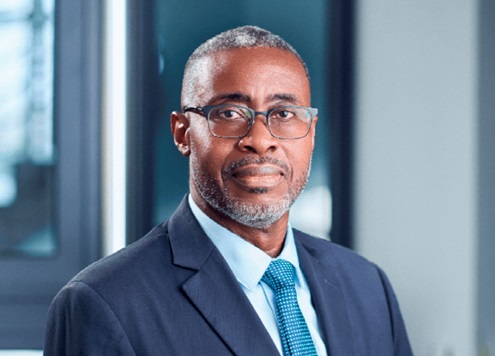
A legal practitioner and senior partner of Bentsi-Enchill, Letsa & Ankomah, Ace Anan Ankomah, has called for the establishment of an Independent Natural Resources Commission to serve as a one-stop shop for regulating the country’s natural resource sector.
He also proposed the Independent National Prosecutions Authority to be a merger of the Office of the Director of Public Prosecutions (DPP) and the Office of the Special Prosecutor (OSP) into a constitutionally insulated body led by a Director-General.
In a paper delivered at the Ghana Academy of Arts and Sciences (GAAS) Public Forum 2025, Mr Ankomah, who is a fellow of the academy, explained that while the single consolidated body to replace fragmented commissions in the natural resource sector, including Minerals Commission, the Water Resources Commission, and the Forestry Commission, would address gaps in regulation, the Independent National Prosecutions Authority would eliminate executive influence over prosecutions, uphold the rule of law and prevent abuses, such as politically motivated discontinuation of prosecutions.
The three-day GAAS public forum was on the theme: “Galamsey Revisited: A National Dialogue on Solutions”.
Mr Ankomah explained that the proposed Independent Natural Resources Commission, which must be constitutionally insulated from executive control, would help to eliminate confusion and regulatory overlap and improve coordination and sustainability.
Additionally, he said the independent commission would allow only broad policy direction from the government, not operational interference.
He spoke on the topic “overhaul of national institutions regulating mining: role of local institutions including chiefs.”
Justification
Mr Ankomah said the country’s fragmented natural resource management structure had created regulatory gaps that hampered the efficient harnessing and utilisation of the resources.
For instance, he said, prospective miners navigated multiple agencies such as Minerals Commission, Forestry Commission, Environmental Protection Authority (EPA), creating room for manipulation.
He stressed that a unified, constitutionally insulated Natural Resources Commission, with separate divisions for minerals, forestry, water, fisheries, and arguably even environmental protection, would eliminate overlap and increase transparency.
The lawyer also said the independent commission would be authorised to issue constitutional instruments for governance.
He added that the commission would take over licensing powers from ministers, leaving them with general policy-making roles only.
“Constitutionally, Parliament should establish these Commissions (Article 269) and leave them to regulate and manage resource utilisation. But Parliament has passed legislation that directly regulate the resources and vest operational powers in Ministers – contrary to constitutional intent. My recommendation seeks to reinforce the Commission’s autonomy,” he said.
Mr Ankomah said Parliament’s other role was limited to ratifying resource agreements (Article 268); yet the legislature often bypassed necessary consultation with affected communities and chiefs.
“For instance, from 1992 to 2017, no small-scale mining licence was ratified, rendering them unconstitutional. Parliament ignored calls from civil society for pre-ratification audits and reform, and quietly ratified the licences in 2020 – a lost opportunity. I recommend retaining the power of ratification, but making such consultations mandatory,” he said.
Prosecutions Authority
On the need to set up an Independent National Prosecutions Authority, Mr Ankomah said the prosecutions authority would help to prevent abuses, such as politically motivated discontinuation of prosecutions.
The lawyer said it was worrying that prosecutorial independence had been undermined by the late 1950s’ fusion of the Attorney-General and the Minister for Justice roles.
“Currently, article 88 grants prosecutorial power to the AG; but as a Cabinet member, the AG is politically compromised,” he said.
Touching on the creation of the Office of the Special Prosecutor, he said the move was “a half-measure that admits this, especially in the case of corruption and corruption-related offences, some still suggest that, that creation is inherently unconstitutional.”
“I propose an even more robust approach: remove the Articles 88(3) and (4) power of the AG ‘for the initiation and conduct of all prosecutions of criminal offences,’ and vest that power in a new, independent National Prosecutions Authority,” Mr Ankomah said.
He proposed that the body should have full prosecutorial powers; be accountable only to the Constitution and the courts; and be insulated from political interference, just like the judiciary.
Latest Stories
-
I assure Otumfuo, Mahama will join him to commission KNUST Teaching Hospital by end of this year – Haruna Iddrisu
11 minutes -
Gov’t to roll out free special education for persons with disabilities from July 1 – Education Minister
33 minutes -
“We used it to test our officiating officials’ readiness” – Bawah Fuseini after CAA Athletics event
59 minutes -
Volleyball emerges as Ghana’s fastest rising sport
1 hour -
National Sports Fund needs strong leadership from the top – Administrator David Wuaku
1 hour -
JoySports Exclusive: Steve McLaren in talks with GFA after expressing interest in Black Stars job
2 hours -
Fire guts auto parts warehouse at Bubuashie, one fire officer injured
2 hours -
I owe my victory to coach Ofori Asare – Allotey after winning WBA Africa Gold Super Flyweight belt
2 hours -
Church of Pentecost supports over 2,000 BECE candidates in Obuasi with career guidance seminar
3 hours -
Brandon Asante and Coventry all but promoted to Premier League despite Sheffield Wednesday draw
4 hours -
GPL 2025/26: Late Kwartemaa strike downs Hearts in Tema
4 hours -
Ghana Faces Sierra Leone Moment as Prosecutorial Powers come under strain
4 hours -
Don’t consume fish or seafood from Tema Shipyard until further notice – FDA warns
4 hours -
Why volunteering might be Africa’s most underrated career accelerator
4 hours -
ActionAid Ghana raises concern over gender gaps in Feed Ghana Programme
4 hours