

Audio By Carbonatix
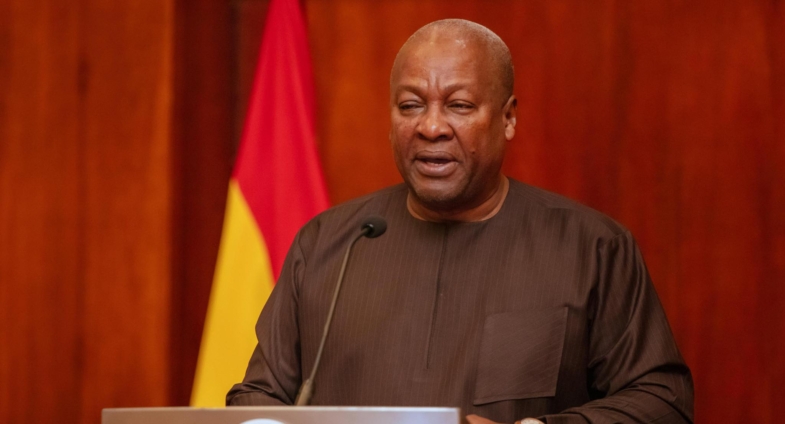
President John Mahama has called on African countries to invest boldly in skills, industrial capacity and unity, warning that the continent risks underdevelopment in a fast-changing global economy if it fails to act decisively.
Addressing global political and business leaders at the Accra Reset Davos Convening Event on the sidelines of the World Economic Forum on Thursday, January 22, President Mahama said the world was entering “an era where countries must compete, innovate, and build or be left behind ”.
He said Africa’s growing youth population was watching closely and losing patience with slow progress.
“Our young people are watching. They’re brilliant, they’re hungry, and they’re running out of patience,” the President told the gathering.
President Mahama outlined five key priorities he believes African leaders must focus on to secure the continent’s future.
First, he said, the need is to invest in skills that respond directly to the real economy, rather than education alone.
“We must invest in skills. Not just education, but skills that match real jobs in the real economy,” he said, pointing to digital skills, green energy skills and manufacturing skills as critical areas. According to him, Africa needs “a generation of young Africans who can build, not just consume ”.
Secondly, the President urged African countries to work together to industrialise, arguing that no single country can succeed on its own.
“No African country can industrialise alone,” he said, calling for regional prosperity platforms, shared manufacturing zones, energy grids and digital infrastructure that can give businesses the scale they need and workers better opportunities.
President Mahama also called for a united African front in international negotiations, especially on trade, minerals and climate finance.
“When we bargain separately, we’re weak. When we negotiate together on minerals, trade, and climate finance, we’re formidable,” he said, adding that unity must go beyond rhetoric. “Unity should not be a slogan; it must be the strategy.”
Furthermore, he said, the importance of producing key goods locally is to reduce dependency on external markets.
“From vaccines to semiconductors to solar panels, if we don’t make it, we’ll always be dependent on someone who does,” President Mahama said.
He rejected the idea that industrial policy is outdated, noting that “industrial policy isn’t old-fashioned. It is what will make us survive ”.
Finally, the President mentioned the need for accountability and reform within African states, warning that corruption and weak systems undermine confidence and investment.
“We cannot ask the world to invest in us if we tolerate corruption, waste, and systems that don’t work. reset means reform. And reform means results,” President Mahama said.
Latest Stories
-
GloMeF CEO urges intensified public education on new road traffic regulations
2 minutes -
Akim Swedru MP opposes ChatGPT tax, says it threatens education and innovation
6 minutes -
Obuasi SHTS sexual abuse scandal exposes systemic failure in child protection – Moving Masculinity
6 minutes -
Hubtel CEO calls for national data-sharing framework to boost AI development
9 minutes -
Twelve Golden Rules of real estate development in Ghana, Africa
13 minutes -
Five new telephony cell sites in Ashanti Region to be activated in October 2026 – Sam George
14 minutes -
Mahama cuts sod for Afienya Industrial Park, targets 120 enterprises
19 minutes -
Rush for fuel from accident tankers is stealing, punishable by law – NPA boss, Edudzi Tamakloe
24 minutes -
GhIG pushes for legislation to regulate geoscientists’ activities
30 minutes -
Mfantsipim @150: Ace Anan Ankomah leads project to preserve school’s musical heritage
34 minutes -
Gov’t launches rCOMSDEP in Ahanta West, Mpohor Fiase to promote responsible community mining
36 minutes -
AI is forcing professionals to rethink how they deliver value – Hubtel CEO
39 minutes -
Daily Insight for CEOs: Strengthening the CEO’s Leadership Legacy
40 minutes -
Jimmy Aglah’s ‘When the River Testified’ approved by NaCCA as Supplementary Reader
48 minutes -
Hubtel willing to contribute to Ghana’s proposed AI fund – CEO
53 minutes