

Audio By Carbonatix
The government has revealed details of its plans to cut foreign aid, with support for children's education and women's health in Africa facing the biggest reductions.
The government said in February it would slash foreign aid spending by 40% - from 0.5% of gross national income to 0.3% - to increase defence spending to 2.5% after pressure from the US.
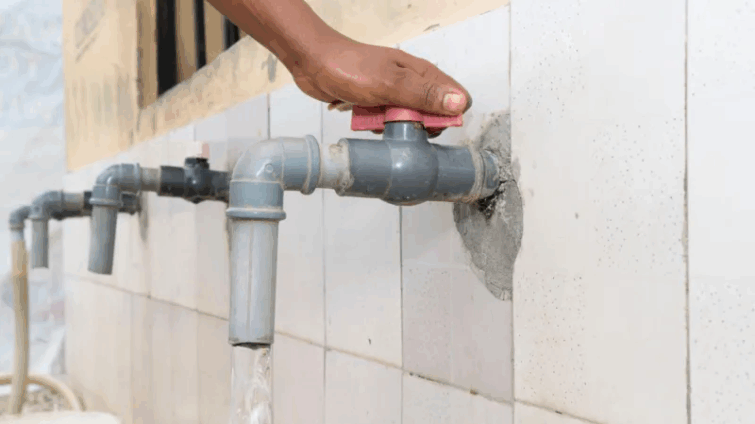
A Foreign Office report and impact assessment show the biggest cuts this year will come in Africa, with less spent on women's health and water sanitation with increased risks, it says, of disease and death.
Aid charities have criticised the move, saying the cuts would impact the world's most vulnerable people.
But the government said spending on multilateral aid bodies - money given to international organisations like the World Bank - would be protected, including the Gavi vaccine alliance, and it said the UK would also continue to play a key humanitarian role in hotspots such as Gaza, Ukraine and Sudan.
Baroness Chapman, minister for development, said: "Every pound must work harder for UK taxpayers and the people we help around the world and these figures show how we are starting to do just that through having a clear focus and priorities."
The government said the cuts follow "a line-by-line strategic review of aid" by the minister, which focused on "prioritisation, efficiency, protecting planned humanitarian support and live contracts while ensuring responsible exit from programming where necessary".
The Foreign Office said bilateral support - aid going directly to the recipient country - for some countries would decrease and multilateral organisations deemed to be underperforming would face future funding cuts. It has not yet announced which countries will be affected.
The move has been criticised by International Development Committee chair Sarah Champion, who said it appears the cuts "will come at the expense of some of the world's most vulnerable people".
Bond, a UK network for international development organisations, said it was clear the government was "deprioritising" funding "for education, gender and countries experiencing humanitarian crises such as South Sudan, Ethiopia and Somalia, and surprisingly the Occupied Palestinian Territories and Sudan, which the government said would be protected".
"It is concerning that bilateral funding for Africa, gender, education and health programmes will drop," Bond policy director Gideon Rabinowitz said.
"The world's most marginalised communities, particularly those experiencing conflict and women and girls, will pay the highest price for these political choices.
"At a time when the US has gutted all gender programming, the UK should be stepping up, not stepping back."
Unicef, a UN agency providing aid to children, said the cuts "will have a devastating and unequal impact on children and women" and called the move "deeply short-sighted".
Philip Goodwin, Unicef UK chief executive, said: "We urge the government to adopt a new strategic approach that places vulnerable children at the heart of its aid programmes and policies...
"At least 25% of aid should be directed to child-focused initiatives, ensuring that children's health, nutrition, education, and protection are prioritised."
British-founded charity Street Child told the BBC that some of its work to help children get access to education in Sierra Leone, South Sudan and the Democratic Republic of the Congo - where British aid has been a main backer - will come to an end because of the cuts.
CEO Tom Dannatt said education was the greatest long-term builder of hope, and he described reducing the support as "sad and short-sighted".
"So children who used to go to school will not go to school, and so, more children will be found roaming the streets and ploughing fields and not developing their critical faculties," he said.
"Whereas they should be in school learning and having a chance to build a brighter future for themselves and for their societies, but because of these cuts by British aid for the poorest children, especially in the poorest countries, that's not the reality anymore."
Foreign aid has come under intense scrutiny in recent years, with the one cabinet minister admitting the public no longer supports spending on it.
One organisation that escaped the cuts was the World Bank. The Foreign Office confirmed that the International Development Association (IDA), the World Bank's fund for the world's lowest income countries, would receive £1.98bn in funding from the UK over the next three years, helping the organisation benefit 1.9 billion people.
The Labour governments under Sir Tony Blair and Gordon Brown committed to increasing the overseas aid budget to 0.7% of national income.
The target was reached in 2013 under David Cameron's Conservative-Liberal Democrat coalition government, before being enshrined in law in 2015.
However, aid spending was cut to 0.5% of national income in 2021 under the Conservatives, blaming the economic pressures of Covid.
Latest Stories
-
Mahama reprimanded Baba Jamal – NDC says code of conduct is already working
55 minutes -
Description of conduct as ‘inappropriate’ is based on NDC’s constitution – Gbande on vote-buying claims
1 hour -
NDC can only reprimand, not prosecute – Gbande explains limits of party sanctions
2 hours -
Even talking about it is progress – NDC’s Gbande defends probe into vote-buying claims
2 hours -
PM asks Sir Jim Ratcliffe to apologise for saying UK ‘colonised by immigrants’
5 hours -
16 hours of daily use is ‘problematic,’ not addiction – Instagram boss
5 hours -
US House votes to overturn Trump’s tariffs on Canada
5 hours -
Dad unlawfully killed daughter in Texas shooting, coroner rules
5 hours -
Anas wins 7 – 0 as SC unanimously rejects attempts to reverse judgment in his favour
5 hours -
Trump tells Netanyahu Iran nuclear talks must continue
6 hours -
The cocoa conundrum: Why Ghana’s farmers are poor despite making the world’s best chocolate
7 hours -
Powerful cyclone kills at least 31 as it tears through Madagascar port
7 hours -
GoldBod summons 6 gold service providers over compliance exercise
7 hours -
Power disruption expected in parts of Accra West as ECG conducts maintenance
7 hours -
Police investigate alleged arson attack at Alpha Hour Church
8 hours