

Audio By Carbonatix
Renowned Ghanaian businessman Anthony Oteng-Gyasi believes that the International Monetary Fund (IMF) and World Bank can guide Ghana and other African countries from poverty to economic prosperity.
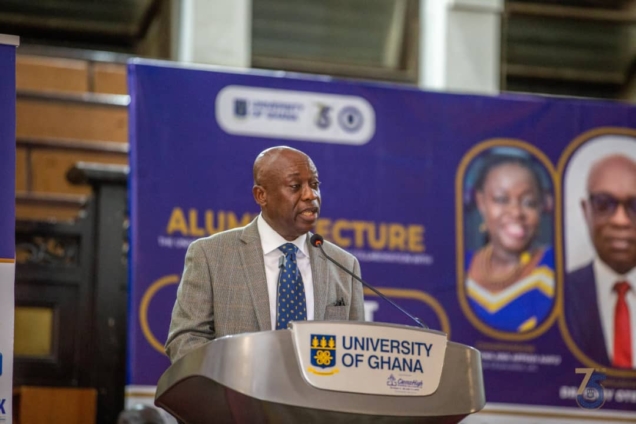
During the 2023 Alumni Lecture at the University of Ghana, Oteng-Gyasi highlighted the success of China and other Asian Tigers, asserting that these economies flourished under the guidance of the two international financial institutions.
Oteng-Gyasi debunked the common belief in Ghana that “no country has developed under the watch of IMF and World Bank.”
He argued that this notion is clearly untrue. He emphasized that while many countries diligently adhere to recommendations of international institutions, Ghana and other African nations, influenced by pride and indiscipline, approach such advice with less commitment, resulting in limited economic growth.
The Managing Director of Tropical Cable and Conductor Limited credited the IMF and World Bank with playing a role in developing the Asian Tigers. He acknowledged the valuable policy advice from these institutions, ranging from the free zones concept to technology centers and tax policy guidance, which, if embraced, could contribute significantly to national development.
Oteng-Gyasi's thought-provoking lecture covered topics such as economic development, policy formulations, public sector procurement, rent-seeking, and other intellectually stimulating subjects. He attributed Ghana’s historical underperformance in manufacturing to the absence of a pragmatic manufacturing promotion policy, the lack of established value chains, and the allure of easier profit through importation.
The Chairman of the Board of the Ghana Revenue Authority highlighted that the International Finance Corporation faced challenges in identifying viable manufacturing projects in Ghana. He noted that a significant number of the nation’s top talents were more inclined to pursue lucrative public contracts for imported goods and services, rather than investing in and developing manufacturing industries.
Oteng-Gyasi emphasized that the lax enforcement of laws, particularly regarding import duty regimes and local content rules, has favored traders and importers over local producers.
This imbalance, he argued, has transformed the nation into one dominated by traders, resulting in the loss of quality manufacturing jobs that traditionally supported the middle class. The situation influences political strategies focused on appeasing the majority through low prices and free social programs to secure and retain political power.
Latest Stories
-
At least 30 feared dead in crush at Haitian tourist site
3 hours -
Four arrested over murder of Scottish businessman in Kenya
4 hours -
New Mainoo deal closer, says Man Utd boss Carrick
4 hours -
Sinner beats Alcaraz to return to world top spot
4 hours -
An inappropriate joke nearly ended his career. Now he’s back with more humour
4 hours -
GPL 2025/26: Dreams FC stage stunning comeback to hammer Eleven Wonders
5 hours -
Livestream: The Probe examines Kumasi’s looming water crisis
5 hours -
MTN Ghana gears up to lead Africa’s AI revolution
5 hours -
Philanthropist Alhaji FuZak donates Da’wah bus to Ambariya Sunni community
5 hours -
GUTA calls for suspension of Publican AI system over trade disruptions
5 hours -
TTAG raises alarm over proposed recruitment of 7,000 teachers, demands national posting roadmap
6 hours -
Civilians feared killed after reports of air strike on Nigerian market
6 hours -
Bishop Simon Kofi Appiah installed as new Jasikan Diocese Bishop
6 hours -
Trump’s Strait of Hormuz blockade threat raises risks and leaves predicaments unchanged
6 hours -
US Court backs extradition of former MASLOC CEO Sedina Tamakloe-Attionu to Ghana
7 hours