

Audio By Carbonatix
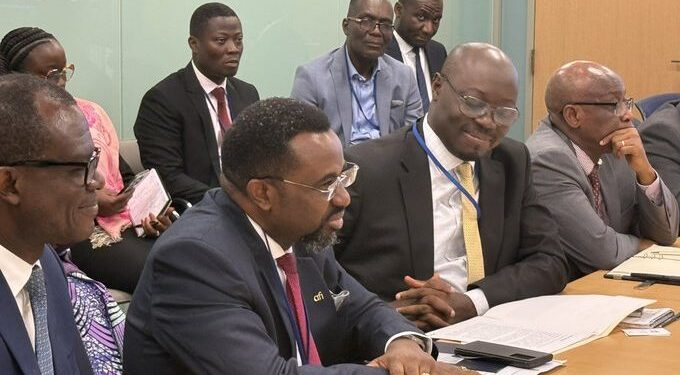
The Governor of the Bank of Ghana, Dr Johnson Pandit Asiama, has disclosed that government has begun steps to recapitalise the central bank, with a bond already issued to support the process.
According to him, the government remains the majority shareholder of the central bank and is legally mandated to restore its capital position.
“Government has given us a bond to kick-start the recapitalisation process. Government is the main shareholder, and the law mandates the government to recapitalise the Bank of Ghana, and there is an Memoranda of Understanding to that effect,” he stated.
The recapitalisation follows the significant impact of the Domestic Debt Exchange Programme, which led to losses on the central bank’s holdings of government securities and weakened its balance sheet. The programme formed part of broader fiscal and monetary reforms aimed at restoring macroeconomic stability.
Dr Asiama explained that the bond issuance is part of a structured plan agreed between the central bank and government to gradually rebuild capital buffers and ensure the Bank remains financially sound.
He further assured that despite these challenges, the central bank remains committed to its core mandate of maintaining macroeconomic stability.
“We will continue to meet our mandate of price and exchange rate stability,” he emphasised.
The Governor added that recent policy measures, including a 150 basis points cut in the policy rate to 14 percent, reflect growing confidence in the economy’s recovery path. He noted that easing inflationary pressures, relative exchange rate stability, and improved external sector conditions have created room for such policy adjustments.
In addition, the Bank reported improvements in the financial sector, with total assets of the banking industry increasing and non-performing loans declining due to a reduction in the stock of impaired loans. However, credit growth to the private sector remains subdued, highlighting the need for sustained policy support to stimulate lending.
The recapitalisation effort is therefore expected to reinforce the Bank of Ghana’s ability to sustain recent economic gains, support financial sector stability, and enhance the effectiveness of monetary policy in driving growth.
Latest Stories
-
NPP had more permanent fuel relief measures than current GH¢2 diesel cut – Amin Adam
13 minutes -
Photos from the 3rd Republic Bank-JoyNews Habitat Fair Clinic
16 minutes -
Ethiopia’s army promises restraint amid fears of new civil war
26 minutes -
Amin Adam calls for review of fuel taxes as diesel prices remain above GH¢18
57 minutes -
World Vision Ghana, Ahafo districts sign MoU for universal WASH coverage
1 hour -
When the gold engine stutters: What Ghana’s Cedi and reserves are telling us about the new economic architecture
2 hours -
Two reportedly die after being trapped in mining pit at Juaboso
2 hours -
Petrosol cleans up Wa Municipal Hospital, to donate medical equipment
2 hours -
‘If NPP was ‘insensitive’ over fuel prices, NDC must accept same description now’ — Amin Adam
2 hours -
KiDi brings the hits to London in sold-out UK headline concert
2 hours -
The last goodbye of Ghanaian shot dead in the US
3 hours -
MCC opens door to Ghana again as MiDA revives development partnership
3 hours -
CSIR moves to turn scientific research into jobs, national growth
3 hours -
More patrons troop in as 3rd Republic Bank-JoyNews Habitat Fair clinic enters final day stretch
3 hours -
German, Russian foreign ministers hold rare talks amid rising tensions
3 hours