

Audio By Carbonatix
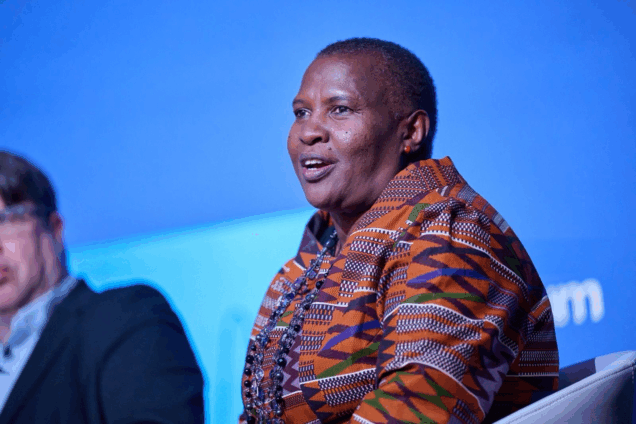
AGRA President Alice Ruhweza says artificial intelligence (AI) is a defining force that is already reshaping the future of the agricultural sector, and Africa must be at the forefront of that.
Speaking on the sidelines of the World Economic Forum in Davos, Switzerland, she said, “AI is the big subject. And AI for agriculture and AI for food have been in many discussions. I think the future of food systems will be very much technology- and data-driven.
In many panels I attended, we kept talking about the need to embrace this. It is coming,’ she said.
Ms Ruhweza, however, cautioned that while AI will transform food systems, its value will ultimately depend on how equitably and practically it is applied.
“We need to make sure that when it comes, the benefits are spread. And that everybody understands it. But importantly, it solves the problem. Because we don’t want farmers to adopt AI unless it solves a problem,” she said.
The AGRA president identified access to financing and decision-making information as two areas of the food system where AI could help improve. “We want to make sure AI makes access to information easier. It makes credit scoring easier for women farmers who need access to finance,” she said.
“We need to make sure that the regenerative agriculture that we want to introduce, that we are getting the data that we need that tells us these are the farming practices that we need to do.
"So, I think the future of food systems will be data-driven. But that future is in Africa,” the AGRA President added.
The World Economic Forum's Annual Meeting 2026 in Davos, Switzerland, was under the theme “A Spirit of Dialogue.”
World leaders from government, business, civil society and academia convened to engage in forward-looking discussions to address global issues and set priorities.
The conversations about artificial intelligence gained traction at the meeting. The world’s richest man and Tesla CEO, Elon Musk, argues that if AI, robotics, and solar power are deployed more broadly, they could unlock an era of unprecedented global abundance.
“If you have ubiquitous AI that is essentially free or close to it and ubiquitous robotics, you will have an explosion in the global economy that is truly beyond all precedent,” he said.
He said robots could perform industrial tasks, care for ageing populations and support families, addressing labour shortages while lowering costs.
Latest Stories
-
Gov’t orders deployment of Metro Mass buses to cushion commuters amid fuel price hike
2 minutes -
Key Indian state polls begin in test for Modi’s party
8 minutes -
Gomoa Easter Carnival in photos
15 minutes -
Gov’t orders removal of fuel taxes to ease pump price hikes
21 minutes -
“Whatever the decision of CAS, we will respect it” – CAF President Motsepe after AFCON final meetings in Morocco
37 minutes -
Emma Ankrah: When waiting becomes part of treatment – Reflections on hospital care
41 minutes -
Ghana urges travellers to prepare for new EU border system roll-out
50 minutes -
Mahama enforces fuel coupon ban for ministers as cabinet moves to slash fuel taxes
54 minutes -
Task force probes strange fish deaths in Tema
58 minutes -
Neglected traffic lights turn Awoshie–Anyaa highway into deadly hotspot
1 hour -
EOCO declares Dr Gabriel Tanko Kwamigah-Atokple a fugitive over alleged gold fraud
2 hours -
GSE records GH¢1.09bn trade in equity market; 10 stocks register gains
2 hours -
Fuel prices: Ghana places 15th in Africa
2 hours -
Africa must look inward: Reframing resilience in a shifting global economy
2 hours -
9 dead, 2 missing after boat capsizes on Volta Lake
2 hours