

Audio By Carbonatix
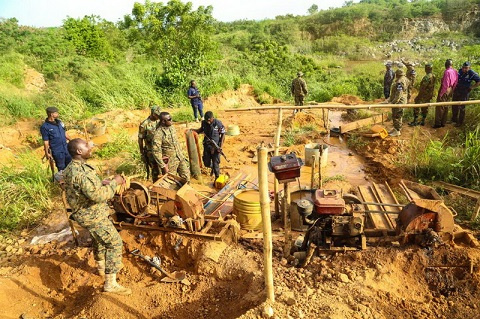
The artisanal and small-scale gold mining sector in Ghana is complicated. To address the challenges associated with the sector, a comprehensive strategy incorporating the very miners, local communities, and a bottom-up approach is required. Furthermore, policies and actions that address the underlying causes (i.e., the reasons why people engage in the behaviour in the first place) would be more effective.
The underlying causes of the problem could be economic (such as poverty and unemployment in mining communities), social (such as marginalization of people in mining communities and the right of the people to seek justice by digging for survival), institutional (such as lengthy waits, onerous requirements, and bureaucracies for miners to obtain new licenses), technological (such as advancement in the ASM industry through the use of large equipment), or political (e.g., involvement of political figures and big men).
One may then ask, which activity is more effective at reducing poverty and sustaining livelihood in host mining communities: farming, small-scale gold mining, or even teaching?
Before criminalizing and discouraging the actions of artisanal miners, governments should carefully examine their tactics and policy measures, as this section is designed to accomplish. It will assist the government as it carefully evaluates its plans for alternative livelihood programs as an alternative to dissuade the miners from returning to mining sites. Will the plans for alternative livelihood put the miners off from their sites? I respond to this briefly by drawing parallels between farming, one of the proposed remedies as alternative sources of livelihood to artisanal gold mining. In addition, I give research findings and argue that no amount of alternative livelihood programs can deter the artisanal small-scale gold miners from returning to their mining pits to continue digging!
Agriculture and mining may be the only two big competing occupations in Africa's rural economies. In rural Africa, the vast majority of farmers and miners are smallholder and artisanal, respectively. In terms of income generation and poverty alleviation, artisanal gold mining outcompetes and has a competitive edge over farming in peri-urban and rural economies. Artisanal and small-scale mining dwarfs farming because it is also associated with higher pay. Crop losses and low harvests are also typical in farming due to their seasonal nature. Additionally, lack of insurance policies on many farms, changes in weather patterns and pests and diseases may lead to crop failure and yield losses in farming. Further, farming takes time before harvest can be determined. In this respect, scholars like Kamanga in 2009 found that artisanal small-scale gold mining provided 48 percent of household income in rural Malawi, while farming provided 28 percent.
More interestingly, artisanal and small-scale gold miners earn substantially more than both senior high school teachers and recruits for the government's flagship program, NABCO. It is widely reported in scholarships that artisanal and small-scale gold miners earn rough monthly incomes ranging from GHS 1,000 to GHS 5,000. Senior High School graduates earn approximately GH 1600 (US$ 262.54) per year. Some temporary workers at small-scale mine sites can even receive GH 1600 (US$ 262.54) without paying taxes.
In his 2017 book, "Historical and Modern Artisanal Small-Scale Mining in Akyem Abuakwa, Ghana," historian Emmanuel Ababio Ofosu-Mensah argued:
"The government's three primary tactics to combating the problem of negative environmental effects connected with small-scale mining have been formalization, military action, and alternative livelihood schemes". Traditional methods of deterring illegal miners, such as force and livelihood efforts in traditional states, have failed because proponents fail to recognize the complexities of the country's unlawful mining populations. To address the issue of illegal mining, it is necessary to examine the topic of why miners are unlawful in the first place".
CONCLUSION:
In economics, for something to qualify as an alternative for something, it must be economically viable enough to compensate for what you are taking away from the individual so that the person in question is not worse off. According to the evidence presented above, alternative livelihoods such as farming and even teaching in host mining communities are insufficient to deter miners from returning to sites to continue digging!
-
By: Albert Kobina Mensah, Ph.D.
Latest Stories
-
Manhyia South MP Baffour Awuah pleads not guilty to EOCO charges, granted GH¢10m bail
3 minutes -
NPP conference: We need leaders to complement our efforts in Parliament – Annoh-Dompreh
6 minutes -
Sammy Crabbe steps down from NPP Chairmanship race, backs John Boadu
6 minutes -
NPP postpones constitutional amendments, including proposal on party leadership to next national conference
10 minutes -
NDC ‘running into opposition like Usain Bolt’ – Sammy Awuku
21 minutes -
Local pharma production can create jobs, strengthen Africa’s health security – Mahama
23 minutes -
Mahama calls for removal of barriers to boost Africa’s pharmaceutical industry
29 minutes -
NPP needs ‘war-like’ leaders to take fight to government – Annoh-Dompreh
32 minutes -
Mahama unveils HINGE digital platform to streamline health investment and regulation in Africa
38 minutes -
We won’t return to the classroom without concrete solutions – NAGRAT
44 minutes -
Mahama urges Africa to invest in local pharmaceutical manufacturing
50 minutes -
Akufo-Addo giving Bawumia space to assert himself as NPP leader – Gabby Otchere-Darko
56 minutes -
NPP delegates, not social media, will decide election winners – Miracles Aboagye
1 hour -
I have no interest in this election; I believe Bawumia will win 2028 election – NAPO
1 hour -
Livestream: NPP National Delegates Conference underway in Kumasi
2 hours