

Audio By Carbonatix
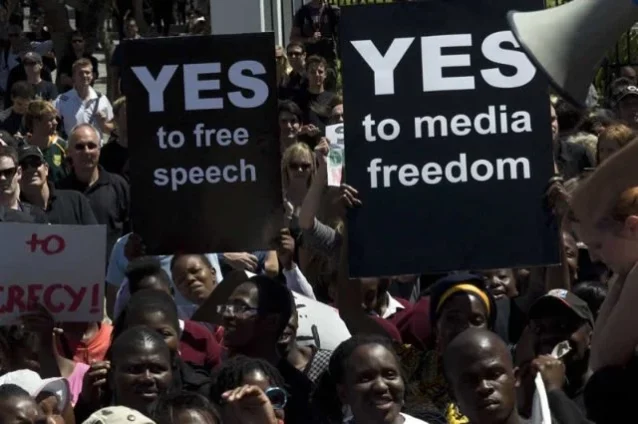
As Ghana gears up for the 2024 polls, concerns are mounting over a surge in attacks on the country's press.
The Ghana Journalists Association (GJA) has meticulously recorded 45 instances of assaults on journalists and media institutions between 2019 and 2023. Shockingly, 2023 witnessed the highest annual incidents, culminating in a disturbing attack on United Television by youths associated with the ruling New Patriotic Party. The attackers faced legal consequences, were convicted and fined GH₵2,400 ($203) each.
Over the past few years, Ghana has witnessed a concerning decline in press freedom. In 2021, Ghana proudly held the 30th position among 180 countries in the global press freedom index.
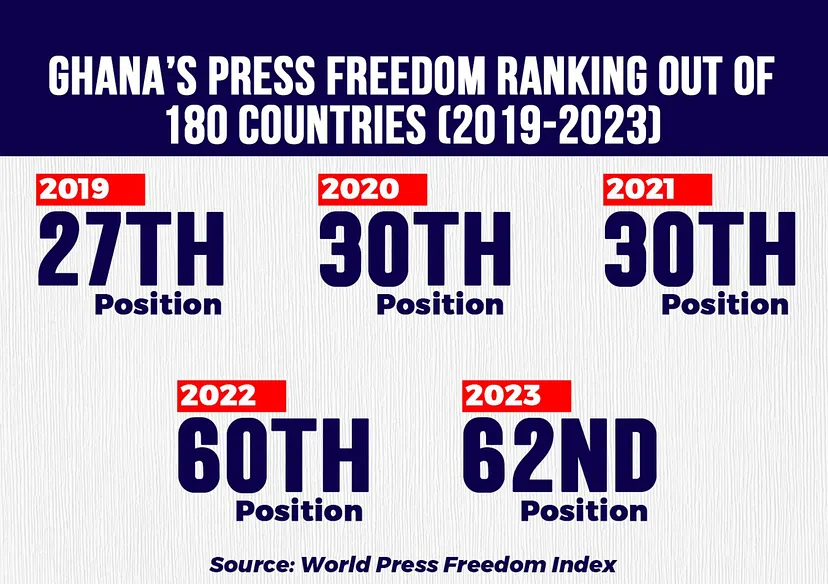
However, this accolade took a dramatic nosedive by 2023, plummeting to a distressing 62nd position on the same index. The approach to the 2024 general elections, merely within a 330-day countdown, has been marred by an alarming increase in reported cases, with at least seven incidents occurring in less than a year. October 2023 particularly stood out as a hotspot, witnessing three cases reported in less than a week.
These incidents underscore a troubling trend in the suppression of journalism in the country. The increasing intolerance of government authorities towards criticism has cowed many journalists into practising self-censorship to protect their jobs and personal security.
Compounding this issue is the substantial ownership of a third of the country’s media outlets by politicians or individuals closely associated with political parties.
This ownership influence perpetuates the production of partisan content, significantly undermining the neutrality and credibility of news dissemination.
While the National Media Commission is ostensibly designed to help regulate the media space and ensure professionalism among practitioners, and as well insulate the state-owned media from governmental control, government's continued selection of a good number of Commission members as dictated by the national constitution, has left the nation still waiting for the day when the Commission will be angry enough to advocate for let alone lead the prosecution of these politically-exposed attackers of media practitioners.
The result is a media space susceptible to political interference and regrettably, cases of death threats against investigative journalists by politicians persist, while instances of police violence against journalists often go unaddressed.
Essentially, Ghana’s struggle with declining press freedom and the challenged independence of its media represent a critical challenge to its democratic values.
Follow Isaac Kofi Agyei on:
Twitter (X): @isaackofiagyei
LinkedIn: Isaac Kofi Agyei
Latest Stories
-
Aburi Amanfrom landowners appeal for government support for Atwapim development project
4 minutes -
Cargill Ghana and International Cocoa Initiative celebrate 111 young graduates building skills for the future
26 minutes -
Video: Madina MP Francis-Xavier Sosu collapses while addressing students at GIMPA
28 minutes -
Hunnyboy reveals how social media landed him Shatta Wale feature
33 minutes -
I am a perfectionist – Actor William Lamptey
38 minutes -
No room for another false start as Ghana begin AFCON qualifying campaign
57 minutes -
“We are grateful for what you have achieved” – AGI President tells Finance Minister
1 hour -
“No Nation is Inferior”: Mahama champions human dignity and security council reform at the UN
1 hour -
Manhyia South residents, NPP executives fume over botched EOCO arrest of MP
2 hours -
Mahama unveils new deal with global philanthropy
2 hours -
Daily Insight for CEOs: Building customer-centric leadership
2 hours -
Democracy must deliver food, jobs and healthcare, not just elections – Mahama
2 hours -
Capacity constraints must never be a barrier to restitution – Mahama
2 hours -
COMAC pushes for suspension of sections of Customs Act 2026
2 hours -
Mahama calls for Great African Museum to anchor continent’s heritage revival
2 hours