

Audio By Carbonatix
The Economic Governance Platform (EGP), a coalition of civil society organisations, which focus on economic issues, is advocating for a national conversation on sustainable debt management as the country strives for economic recovery.
It said the cyclical International Monetary Fund (IMF) bailouts over the years would continue to persist if managers of the economy do not adopt pragmatic measures geared towards ending the over-reliance on borrowing to manage the economy.
Mr. Abdul Karim Mohammed, Coordinator of EGP, said Ghana’s subscription to IMF programmes over the years were driven by a debt crisis and stressed the need for a broader stakeholder consultation to end the perennial unsustainable debt levels.
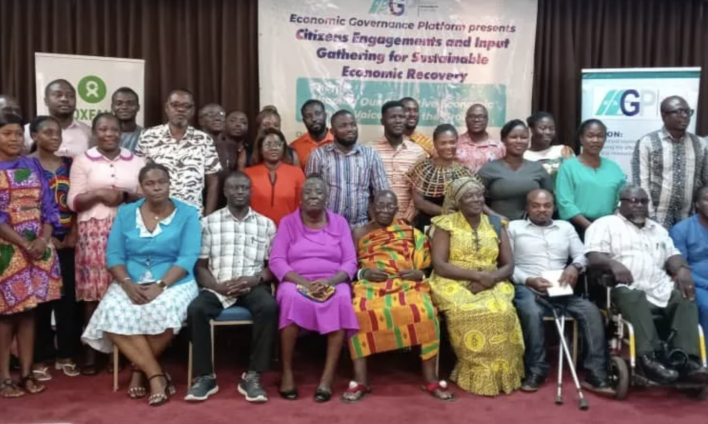
He was speaking at a citizens’ engagement and input gathering for economic recovery in Kumasi ahead of a national forum to discuss how to end the cyclical IMF bailouts as a country.
The goal was to collate inputs from participants drawn from local civil society organisations, the private sector, organised youth groups, students, and the media.
Participants were exposed to a comprehensive overview of the current IMF programme and its implications on national development, especially in the development sectors.
“We need to have a conversation as a nation on sustainable debt management.
“If you look at the number of times that we have been to the IMF, it has mostly been influenced by a debt crisis,” Mr. Mohammed said.
Seeking bailouts from the IMF 18 times as a country, according to him, is a cause for worry and called for prudent economic policies that would minimise borrowing, which had been the cause of the numerous IMF bailouts.
“We need to borrow for productive activities that will give us returns to enable us to pay our debt. But if we don’t do that and we borrow for recurrent expenditure or for other purposes for which we are unable to repay the interest, the ordinary citizen will have to pay taxes to defray the debt,” he pointed out.
He said monies spent on servicing debt compared to what was allocated for the delivery of important social services, emphasising the need to do things differently to save the economy from further decline.
“It has been established by both government and the IMF that the solutions that will take us out of the current economic crisis lie far beyond what we are getting from this IMF bailout,” he indicated.
Mr Mohammed said the IMF programme was not a panacea to the challenges facing the Ghanaian economy and that more needed to be done to holistically address the problem.
It is for this reason that the EGP is breaking down the IMF programme to the understanding of citizens and also collating their views on how best to manage the national debt to prevent a return to the IMF in future.
Latest Stories
-
Ghana at the heart of global PR excellence
3 minutes -
Ghana Institute of Architects clarifies position on ARC-ASG dispute amid ongoing case
4 minutes -
NDC supporters storm Fomena constituency office over alleged disqualification of chairman aspirant
7 minutes -
NPA CEO assures tanker drivers of action on welfare concerns
8 minutes -
Karpowership seeks contract extension as Ghana’s power demand grows
11 minutes -
Gender Ministry inaugurates committee to drive early childhood development
13 minutes -
Four Schools, One Crown: Prempeh, Corpus Christi, Mfantsipim and St Augustine’s battle for NIQ trophy
13 minutes -
HIV status cannot be used to deny employment under Ghana law – Ghana AIDS Commission
15 minutes -
Buffer Stock calls for expansion of national storage capacity as it falls below 50,000 metric tonnes
15 minutes -
Central Regional Minister urges use of religious platforms to change environmental, sanitation practices
38 minutes -
Henry Kweku Banning
38 minutes -
Execution of US murderer Christa Pike halted an hour before it was due to happen
41 minutes -
GoldBod generates US$1.87bn in FX in September, exceeds monthly target
44 minutes -
SOE comments controversy: ‘We must never abandon our humanity because of judicial office’ – CJ
54 minutes -
Samuel Kojo Brace declares intention to contest NPP parliamentary primary in Ahanta West
55 minutes