

Audio By Carbonatix
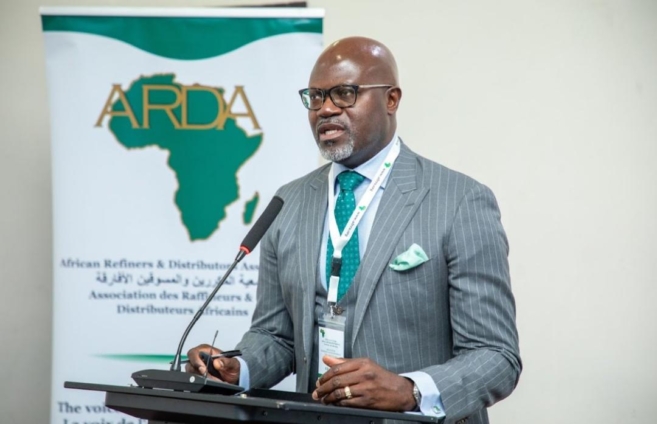
A recent report from the African Refiners and Distributors Association (ARDA) has issued a stark warning of Africa’s heavy reliance on imported refined petroleum products, which leaves the continent dangerously exposed to economic paralysis.
The report, authored by ARDA Executive Secretary Anibor Kragha, paints a grim picture of a continent held hostage by its fuel imports, where a mere 30-day disruption would bring economies to a grinding halt.
Despite producing over 5 million barrels of crude oil daily, Africa imports more than 70% of its refined fuel, a strategic vulnerability described as "hiding in plain sight".
The report details a catastrophic chain reaction that would unfold if imports were to cease:
- Economic Shutdown: Critical sectors like aviation, trucking, and mining would collapse overnight. Planes would be grounded, goods would be stranded, and billions of dollars in revenue from exports like copper, cobalt, and gold would be lost.
- Infrastructure Failure: Essential services—including hospitals, banks, and water systems—would lose power as diesel-powered generators shut down. This would lead to widespread blackouts and the potential collapse of public services in cities.
- Social and Political Instability: The resulting fuel shortages, food inflation, and economic paralysis would create a ripe environment for social unrest and political instability across the continent.
The Energy Paradox: Resource-Rich, Refinery-Poor
The report highlights a key paradox: Africa is rich in crude oil but severely lacks refining capacity. Although the continent has over 40 refineries, many are outdated, underutilised, or entirely idle.
Nigeria, for example, despite its new 650,000 bpd Dangote Refinery, still relies on imports for over half of its fuel needs. This dependence undermines economic sovereignty and destabilises currencies.
Addressing this imbalance is now a strategic priority for ARDA.
The association’s "Africa First" vision, emphasised at its recent ARDA Week 2025 conference in Cape Town, calls for a coordinated continental strategy focused on five key pillars:
- Refining Capacity: Upgrading and expanding refining infrastructure through commercially viable projects.
- Harmonizing Standards: Creating continent-wide fuel specifications to facilitate intra-African trade.
- Investment: Attracting both local and foreign investment through transparent and bankable projects.
- Infrastructure: Developing critical infrastructure like pipelines, depots, and storage terminals.
- Human Capital: Building a skilled workforce in regulation, engineering, and finance.
Mr Kragha stresses that this transformation requires more than just advocacy; it demands immediate and coordinated action.
He urges governments to cut red tape, mobilise domestic capital—including from pension and sovereign wealth funds—and empower regulators.
The report also advocates for creating national and regional fuel stockholding frameworks to build resilience against global supply disruptions.
“This isn’t just a supply chain risk anymore; it marks a strategic inflection point,” the report concludes. “The choice is clear: remain exposed to external shocks or seize the moment to invest in refining capacity, infrastructure, and workforce development to secure lasting energy sovereignty.”
Read the details of the report below.
Latest Stories
-
UniMAC-IF holds workshop on Vertical Revolution: Mastering micro-dramas for African digital economy
1 minute -
Pan-African Progressive Front hosts landmark online conference ahead of Geneva Forum
6 minutes -
Civil society is not an adversary of gov’t, but partners in nation-building – Mahama
15 minutes -
Defeamekpor calls for interdiction of Land Ministry’s director of finance
18 minutes -
Atebubu Paramount Chief visits NPA boss to strengthen ties
18 minutes -
TGMA Group of the Year nominees to be announced this week – Robert Klah
23 minutes -
Ex-Effia MP writes: Big Push for infrastructure, Small Push for people
24 minutes -
Interior Minister demands probe into GH¢3m payments made outside GIFMIS
27 minutes -
Ex-Defence Ministry procurement director to face prosecution over GH¢4.8m scandal
43 minutes -
Gov’t committed to finishing Tema Motorway by 2027, says Agbodza
49 minutes -
OSP under threat from political interference — Kissi Agyebeng calls for constitutional protection
53 minutes -
T.I. Ahmadiyya SHS, Kumasi, celebrates 75 years of excellence
1 hour -
Court orders SHS students to pay compensation for assault on teacher
1 hour -
Mahama assents to 5 bills, including key amendments on security, education and finance
1 hour -
Students of Nkwantanang M.A 6 Basic School benefit from ‘Break the Silence’ Menstrual Awareness Initiative
1 hour