

Audio By Carbonatix
An African aphorism says, “When elders sit together, words are weighed, not counted.” “And when value circulates locally, trust deepens, and community stability holds.”
Much of today’s global conversation is shaped by new technologies, including Artificial Intelligence (AI), digital transformation, and social media, and by the impact of these forces on democracy, peace, security, geopolitics, integration, and economic development. Digital platforms are revolutionising the world faster than many institutions can keep pace. They intensify the battle for the minds and hearts while shaping public opinion.
The new baby in the boardroom, AI, has quickly gained global prominence. It shapes many sectors, including drone warfare, surveillance systems, medical records management systems, diagnostic, digital libraries, trade flows, border operations, telecommunications, traffic regulations, social interactions, and the profiling of personal data. In these spheres of interaction, trust is built or broken softly.
Simply put! AI is increasingly being deployed to shape global narratives—the way we live, work, and interact. It is my estimation that AI will significantly alter and shape the hardware and software of data, digital infrastructure, and communication, now and in the future. It is therefore essential that we establish a continental consensus on AI governance and data sovereignty to harness the benefits while mitigating potential harms.
The African reality and drawbacks
Technology and the internet are not Africa’s weakest link; rather, the real constraints are access to and affordability of the internet, policy alignment, people's skill sets, incentives, and institutional ownership. When Africa exports raw data but imports refined intelligence, the value of data governance ultimately accrues to the manufacturer’s jurisdiction. This undermines Africa’s infrastructural resilience and data sovereignty.
Technology alone does not produce data sovereignty. The two must run concurrently. African governments cannot pursue technology advancement while their data sovereignty is stored on rented computers outside their jurisdiction. Africans must not be passive users while machines are learning. They must also become technologically innovators, developers and sovereign.
AI is a powerful dialogue: Africans must embrace it
AI is no longer merely a technology dialogue. It is a powerful dialogue. The question is not whether AI will shape our worldview. It already does. What should concern Africans is whether AI will expand the frontiers of governance, continental trade, and integration, or whether it will polarise and fragment regional blocs by default.
Whoever develops and controls data will ultimately dictate AI data autonomy, set the governance framework, and the terms of engagement. The value proposition for AI governance in Africa rests on data sovereignty. Africa’s AI will be measured by data standards and analytics pooling that deliver real value at the regional scale and global competitiveness.
Africa will need AI applications that will strengthen several sectors of the economy. Such as governance, peace, security and early warning; borderless integration and mobility, trade and social service delivery; technology, communication and interoperability; regional resilience against epidemics; detection of fraud and criminality; local language translation, climate-informed advisory, energy and critical minerals; agriculture, health, education; ethical and regulatory considerations; and several smarter policies targeting.
In this context, AI and data sovereignty should be underpinned by well-defined safeguards that protect national security, including robust and comprehensive data protection regimes, algorithm security, content moderation, and software assurance for governments and users.
Why AI and data sovereignty matter to Africa’s integration, peace, and security?
First, local realities. Where can African states and non-state actors be located within the AI ecosystem? Are Africans just consumers, content creators and disseminators or are they developers and innovators? Given that Africa’s population is largely youthful, digitally active and technologically connected, it must be positioned and propelled to become a technology and innovation driver and developer.
Second, digital platforms, including AI, are enablers of development. They support trade and integration, peace, security and economic justice. For example, ECOWAS Vision 2050 is anchored on these ambitious targets to achieve “people-centred governance”, regional integration and democratic consolidation.
Third, the research-policy nexus. Researchers working with new technologies in Africa and across the Global South often find their work forced to fit into certain frameworks that do not fully reflect local realities, constraints, or priorities or are pushed aside altogether.
Fourth, Africans must question the assumptions of AI: Governments and users ought to conduct reflective analyses that challenge prevailing assumptions about AI and new technologies. This includes research that reveals limitations, trade-offs, and ethical concerns through grounded and contextual analysis.
Fifth, technology-enabled battlefields are often invisible. These are usually encrypted in code, cloud chips, and foreign firmware embedded in routers and IoT (Internet of Things) devices. Cheap, off-the-shelf technologies can become strategic threat multipliers when left ungoverned. Across Africa, drone and autonomous incidents already show consistent warning patterns. Overreliance on AI can reduce critical thinking, scholarship and innovation. Balance is therefore essential.
Sixth, technology adoption is outpacing regulation. Users’ privacy must begin with informed consent. Interactions with AI and other new technologies can silently erode users’ consent. It is common knowledge that metadata is not harmless. Large volumes of personal demographic information amount to surveillance. Therefore, privacy, dignity, safety and sovereignty must be the watchdogs of governments and users of digital platforms.
Real leap for Africa and what AI success means
Continental success does not begin with pilots. Rather, it begins with scaling what already works in at least one member State. Success must be framed as measurable public value, anchored in faster services, lower transaction costs, improved targeting, fewer leakages, and stronger trust through peer learning.
A future-ready approach: Key considerations
Our collective future will be judged by how wisely we adopt, adapt and indigenise data sovereignty and resilience, in the age of AI, rather than copying external models without context. The lesson for African governments should be balance and anchored in five areas: innovation, development, participation, distribution, and harmonisation. This will include the following considerations:
Policy and strategic alignment: The African Union (AU) should rekindle the implementation of the 2014 Malabo Convention on cybersecurity and personal data protection. A Regional Trust and Stack Action Plan on cybersecurity, data governance, and digital infrastructure is required. A Citizen Communication Compact that protects public trust and counters disinformation and digital threats is equally vital.
Local identity: The route to Africa’s data sovereignty should be rooted in Africa’s intelligence. Technology should be designed for local needs, built by African talent, and scalable globally. When technology and innovation are rooted in African identity, language, and experience, they become more effective. A lesson can be learned from “Awarri”, a Nigerian AI startup, which shows what intelligent sovereignty looks like in practice. African indigenisation means local data, local languages and local jobs. Africa’s model success story will be determined by how it travels across borders through interoperability or remains confined within national silos.
Building talent pipelines: Africa should build a strong network of AI labs, producers and innovators with significant financial injections. Regional AI research labs must be methodologically robust, contextually grounded, and connected to applied innovation and policy needs, while respecting producers and innovators autonomy and intellectual ownership.
Regional research colloquia: Regional blocs should establish forums where early- and mid-career researchers can engage deeply with questions of context, methods, and power. And whose work, whether exploratory or advanced, is intellectually ambitious and grounded in lived realities and experiences of Africans.
Global knowledge exchange: AI research and development forum between the Global North and Global South would provide a neutral space for innovators, policymakers and researchers to exchange ideas and connect technological advances to real development challenges.
Conclusion
In order to harness these growth poles, African Governments must position their Agenda 2063 in a manner that is strategically driven by AI, technology, and communication, and aligned with digital policies, infrastructure, regulatory frameworks, connectivity, and telecommunications across member States. Such an approach requires patience, coordination, financial injection and long-term commitment.
*******
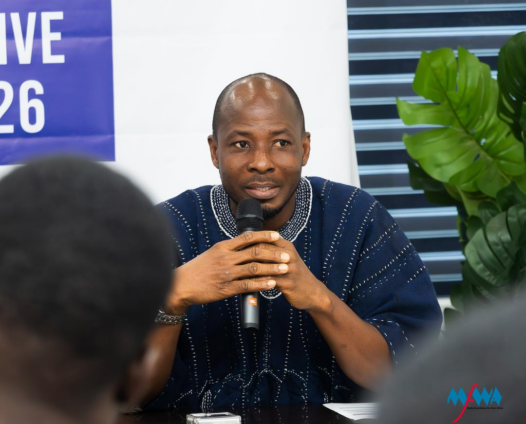
The writer holds a PhD in Human Security, Democratic Policing and Public Safety & Director, Media for Democracy and Good Governance at the Media Foundation for West Africa. Email: impraim.kojo.nana@gmail.com
Latest Stories
-
NTC refutes claims of licensure fee hike, says NDC hasn’t abandoned abolition promise
13 seconds -
Court remands galamsey operator for wife’s murder
3 minutes -
2025/26 Women’s FA Cup Semis: Hasaacas face Jonina Ladies; Army play Samartex Ladies
5 minutes -
Peripheral hospitals must be strengthened to ease ‘No Bed’ crisis — GMA
6 minutes -
The impact of negative emotional climate in the workplace
8 minutes -
NPP ‘fishing for non-existent scandal to smear NDC government’ — Hopeson Adorye
17 minutes -
GMA says ‘No Bed Syndrome’ stems from weak emergency systems, calls for overhaul
21 minutes -
UPSA, CIMG launch first BSc in Applied Marketing with professional certification
39 minutes -
IMF projects 4.6% growth for sub-Saharan Africa, highlights Ghana among reform-driven economies
40 minutes -
Cement prices risk going up as port congestion delays clinker shipments in Ghana
41 minutes -
Right to Information Commission holds meeting with Communication Minister
57 minutes -
The Cocoa Conundrum: Why Ghana’s farmers are poor despite making the world’s best chocolate
1 hour -
National Teacher Licensure Examination not cancelled – NTC
1 hour -
Artificial Intelligence: Africa gov’ts must adopt, adapt, and indigenise, but do not copy and paste
1 hour -
Most power outages fixed in Kumasi, Accra; repairs ongoing in Tema, Adenta – Richmond Rockson
1 hour