

Audio By Carbonatix
The African Union’s Child Online Safety and Empowerment Policy must move beyond documents and declarations to real action at the national level, Executive Director of Child Online Africa, Awo Aidam Amenyah, has said at the Africa Safer Internet Day (ASID) 2026 Leadership Forum in Accra.
Speaking at the high-level forum on Tuesday, February 10, 2026, Mr Amenyah stressed that the success of the continental policy depends on strong legislation, enforcement, and public education across member states.
“If this policy is to make a real impact, it must be translated into clear national laws, properly enforced, and supported by sustained public awareness,” he said.
The forum, held at Studio 502 in Adabraka and streamed online for participants across Africa, was organised under the theme, “Together for a Better Internet: AU Online Safety Policy in Action.” It coincided with this year’s Safer Internet Day and brought together policymakers, regulators, civil society groups, media practitioners, and private sector actors.
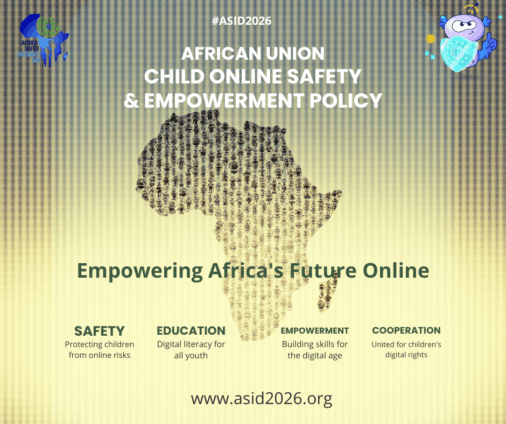
Discussions focused on the African Union Child Online Safety and Empowerment Policy, adopted in February 2024. The policy, the first regional framework of its kind globally, sets out common principles to protect children’s rights to safety, privacy, participation, and empowerment in the digital space. It also outlines ten strategic goals for implementation by AU member states.
Secretary General of the African Telecommunications Union (ATU), John Omo, said Africa has taken global leadership in rights-based child online protection, but warned that implementation remains the biggest test.
“Africa has shown leadership in developing this policy. Now we must match that leadership with consistent execution across countries,” he noted.
In a keynote address, President of the Inter-Parliamentary Union (IPU), Dr Tulia Ackson, called on African parliaments to align national laws and budgets with the AU policy.
She urged lawmakers to strengthen oversight and promote inclusive engagement to ensure children’s digital rights are protected.
“We cannot leave this to institutions alone. Parliaments must ensure the right laws and resources are in place,” she said.
From the regulatory front, Ms Anne Rachel Inne of Niger’s Agency for the Information Society said online safety must reach ordinary citizens and communities.
According to her, “sustainable protection comes from informed and empowered users who understand their rights and responsibilities.”
Ms Saudatu Shehu Shagari of the Nigerian Communications Commission also emphasised the need for balanced regulation, awareness campaigns, and strong enforcement in line with AU principles.
Participants also heard from learning scientist, Dr Jared Cooney Horvath, whose video presentation highlighted research on children’s screen time and learning outcomes, urging policymakers to adopt evidence-based digital education strategies.
Panel discussions, moderated by Dr Justina Asafu-Adjaye, reflected the AU’s whole-of-society approach. Henry Kabwe of the Media Network on Child Rights and Development highlighted the role of journalists in promoting positive digital content, while Kwaku Antwi of the Ghana Domain Name Registry explained how technical compliance can support safer online spaces.
The private sector also pledged support for the policy’s implementation. A representative from MTN Ghana outlined ongoing initiatives in child-friendly product design, reporting systems, and digital literacy programmes.
Samuel Bartels noted that parents must also be equipped with digital skills.
“Parental digital literacy is now just as important as child digital literacy,” he said.
Representing Ghana, Deputy Director General of the Cyber Security Authority, Dr Jamal Tonzua Seidu, called for stronger alignment between national strategies and AU commitments.
He said this would help ensure consistent protection for children across the continent.
“We must align our national frameworks with AU standards so that no child is left exposed,” he stated.
In his closing remarks, ATU Secretary General John Omo reiterated that connectivity alone is not enough.
“Access without safety and empowerment is incomplete. We must ensure that digital use is productive, safe, and meaningful,” he said.
The ASID 2026 Leadership Forum reaffirmed growing momentum behind Africa-led efforts to protect children online. Stakeholders agreed that translating the AU’s 2024 policy into real impact will require sustained collaboration among governments, regulators, industry players, civil society, and young people themselves.
Latest Stories
-
Christina Koch becomes first woman to travel around the moon on Artemis II
1 minute -
Epstein survivors’ calls to meet King Charles and Queen harder to ignore as US visit approaches
7 minutes -
UN Secretary-General names Ghana’s Anita Kiki Gbeho as South Sudan envoy
9 minutes -
Mali withdraws recognition of Sahrawi Republic, backs Morocco’s autonomy plan
13 minutes -
Gov’t distributes over 8,500 laptops to One Million Coders project
14 minutes -
Julius Debrah, ‘man to beat’ as NDC’s James Agbey dismisses Musah Dankwah’s polls
20 minutes -
GPRTU in Savannah Region to protest alleged eviction in Damongo
49 minutes -
Re: Reinsurance does not replace process — A response to the SIGA–SIC defence
1 hour -
Gender Ministry supports Harriet Amuzu in ongoing abuse case
1 hour -
AG joins plaintiff to scrap OSP ?: We should be mindful of the mischief in this – Bobby Banson
1 hour -
Samson Lardy Anyenini questions willingness of Attorneys-General to prosecute political colleagues
1 hour -
It is only fair the OSP is heard in Supreme Court case – Bobby Banson
2 hours -
Asiedu Nketia resumes Ashanti tour, second leg kicks off on Sunday
2 hours -
NLA denies salary cut claims, threatens legal action over reports
2 hours -
BoG Governor honoured for stabilising cedi, improve inflation
2 hours