

Audio By Carbonatix
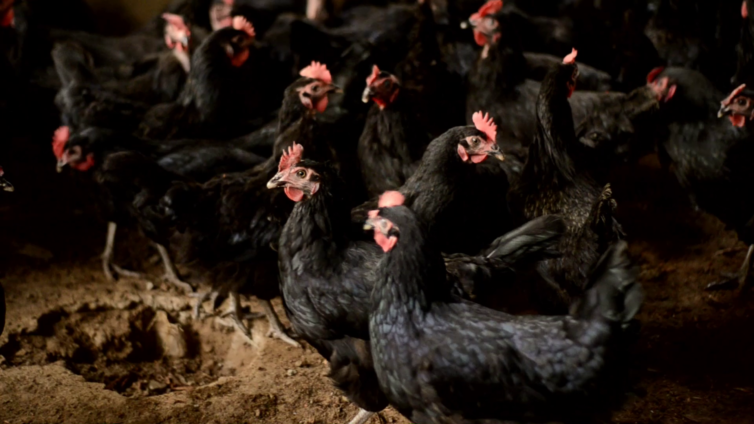
The World Animal Health Information System (WAHIS) has urged its members to maintain enhanced disease surveillance in domestic and wild birds in order to prevent the spread of Avian influenza by implementing strict biosecurity measures in poultry holdings.
"In particular, step up the biosecurity around mink farms to avoid the introduction of the virus. Control movements of susceptible domestic animals and their products to avoid disease spread. Protect humans in close contact with, or handling poultry or sick domestic or wild animals," a statement from WAHIS said.
According to the statement, people who have been exposed should always take precautions, including wearing personal protective equipment (PPE), especially when investigating die-offs or outbreaks.
They should also monitor vulnerable domestic and wild animals and look into any unusual increase in mortality events in wild animals (die-offs).
Cases of avian influenza in all species are expected to be reported to the World Organization for Animal Health (WOAH) via WAHIS in accordance with international standards.
"Timely and transparent reporting is key to maintain a good knowledge of the disease situation and to prevent any type of misinformation or disinformation. SHARE genetic sequences of avian influenza viruses in publicly available databases."
Concerns have been expressed by the international community about the current avian influenza situation. Since October 2021, an unprecedented number of outbreaks have been reported in several regions of the world, reaching new geographical areas and causing devastating impacts on animal health and welfare.
The disease jeopardises global food security as well as the livelihoods of those who rely on poultry farming. It has also resulted in an alarming rate of wild bird extinctions, as well as effects on other wildlife such as sea and land mammals.
While avian influenza primarily affects poultry and wild birds, it can occasionally be transmitted to mammals, including humans. A growing number of H5N1 avian influenza cases have been reported in both terrestrial and aquatic mammalian animals, causing morbidity and mortality.
This raises concerns about the threat to domestic and wild animal health, biodiversity, and, potentially, public health.
The current situation highlights the danger of H5N1 avian influenza adapting to mammals and spreading to humans and other animals.
According to WOAH, some mammals, such as mink, may act as mixing vessels for various influenza viruses, resulting in the emergence of new strains and subtypes that are potentially more dangerous to animals and/or humans.
"…….. some mammals, such as mink, may act as mixing vessels for different influenza viruses, leading to the emergence of new strains and subtypes that could be more harmful to animals and/or humans. Recently reported infections in farmed mink are a concern because infections of large numbers of mammals kept in close proximity of each other exacerbate this risk. Several studies are currently on-going to further explore the virulence and transmissibility (including between mammals) of these viruses."
The World Organization for Animal Health (WOAH) is closely monitoring the situation in collaboration with its expert network to assess the risks to animals and humans.
WOAH stated that it is fully committed to assisting its members in mitigating the impact of avian influenza.
It will also continue to collaborate with its expert networks as well as public and private partners, most notably the One Health Quadripartite Alliance and the Global Framework for Transboundary Animal Diseases (GF-TADs), to provide technical updates as new information becomes available.
Latest Stories
-
Gender Ministry convenes Equity Committee meeting, commissions secretariat to strengthen coordination
1 hour -
Aggie Asiimwe Konde: Soil is Africa’s hidden growth asset
1 hour -
Fiscal slippage could weigh on Ghana’s credit rating – S&P warns
1 hour -
Gender Ministry reviews Anti-Trafficking Action Plan to strengthen implementation
1 hour -
Fidelity Bank supports UG’s ‘One Student, One Laptop’ initiative
1 hour -
Ellembelle MP donates 1,000 set of furniture to KIMTECK
1 hour -
We’re focused on basic needs, not Anti-LGBTQ Bill – Mahama
2 hours -
Mahama announces April 15 launch for Free Primary Health Care Programme
2 hours -
Government pushes scaled investment in women entrepreneurs at Accra Summit
2 hours -
Gov’t sets 12%–12.5% guidance for 7-year bond as market re-entry gains momentum
2 hours -
Tourism Minister encourages youth to take advantage of theatre for jobs
2 hours -
New political party to challenge dominance of two major parties
2 hours -
Stroke survivors demand inclusive healthcare, urgent policy interventions nationwide
2 hours -
China reaffirms unwavering ties with Ghana as Ambassador presents credentials
2 hours -
Wrongful teacher postings undermine early childhood education in Upper East
2 hours