

Audio By Carbonatix
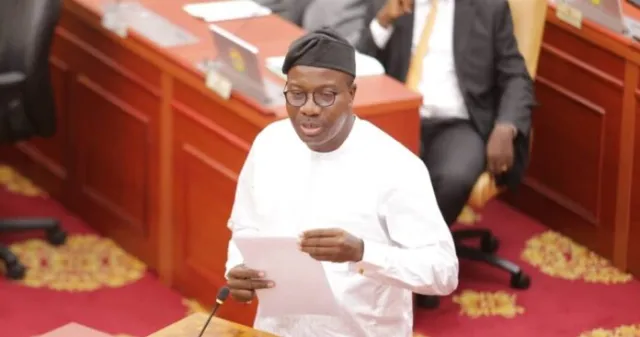
As Ghana’s Parliament closed for the year, Majority Leader Mahama Ayariga firmly pushed back against growing allegations that state investigative agencies are being weaponised to suppress the Minority in the legislature.
In a strong-worded rebuttal during his closing remarks on the floor of Parliament, Mr. Ayariga described the claims as unfounded and contrary to his extensive experience in public service.
“I have been in this House for close to two decades—as an opposition member, as a minister, and now as Majority Leader. I have never seen anything like that,” he stated, dismissing suggestions of institutional intimidation.
His comments come amid a backdrop of political tension and public scrutiny over the perceived use of legal and investigative institutions in politically charged matters.
Some members of the Minority Caucus have recently raised concerns over what they describe as a climate of intimidation and selective prosecution.
However, Mr. Ayariga—who has served in various capacities under both National Democratic Congress (NDC) and New Patriotic Party (NPP) administrations—insisted that Ghana’s democratic institutions remain independent and robust.
The Majority Leader also used the opportunity to commend both sides of the House for their dedication and spirited debates throughout the year, emphasising the importance of maintaining decorum and unity in national discourse.
Meanwhile, Minority Leader Alexander Afenyo-Markin struck a more personal and reflective tone in his own end-of-year submission, urging MPs to prioritise their personal well-being and family life during the recess.
“To all honourable members, please spend time with your family. We’ve worked hard enough. Let’s use this period to check our health,” he advised, drawing attention to the often-overlooked mental and physical toll of public service.
With growing awareness of health-related challenges among political leaders across the continent, Mr. Afenyo-Markin underscored the need for proactive care.
“When we leave this abode, the Constitution requires that there must be a replacement. Life will go on without you. Don’t be afraid to know your medical condition. It is better to know and treat it than live in fear of the unknown, only for it to worsen,” he added.
His remarks struck a chord with many within and outside the chamber, reminding political leaders of the delicate balance between national duty and personal health.
As Parliament adjourns, lawmakers are expected to return in early 2026 for the next session, with several key legislative matters—including the national budget implementation, electoral reforms, and constitutional amendments—awaiting attention.
The call for renewed focus, accountability, and wellness serves as a fitting reminder of the human side of governance, even as political tensions simmer ahead of the next election cycle.
Latest Stories
-
Anthony Joshua declines showdown with Tyson Fury but admits they ‘probably’ clash next
9 minutes -
Tyson Fury dominates Makhmudov, calls out Joshua next
29 minutes -
I have supported highway authority financially to fix roads in my constituency – A Plus
2 hours -
US, Iran fail to reach peace agreement after marathon talks in Pakistan
2 hours -
ECG kicks off Phase Two of transformer upgrades at Lashibi; brief outages expected
3 hours -
Port crises loom as 11,000 drivers threaten four-day strike
3 hours -
A source of excellence across generations – Vice President Opoku-Agyemang lauds Mfantsipim
4 hours -
(Photos) Mfantsipim School launches historic 150th anniversary
5 hours -
Knights and Ladies of Marshall group backs Catholic Bishops’ stance on anti-LGBTQ+
6 hours -
Bright Simons writes: All the Filla in the Ibrahim Mahama/E&P – Gold Fields Saga
6 hours -
Monetise Idiocy In Ghana
6 hours -
The Ghanaian prophet and the mysterious death of his scottish wife Charmain Speirs
7 hours -
Nearly 400 sentenced in Nigeria for links to militant Islamists
7 hours -
Ghana’s recovery supported by gold strength despite global oil price pressures – Standard Bank Research
7 hours -
Methodist Church hails Mfantsipim@150; calls for “fresh consecration” to excellence
8 hours