

Audio By Carbonatix
A top police officer has revealed that Ghana's current bail system for drug possession cases is a significant obstacle in the fight against illicit drug trafficking.
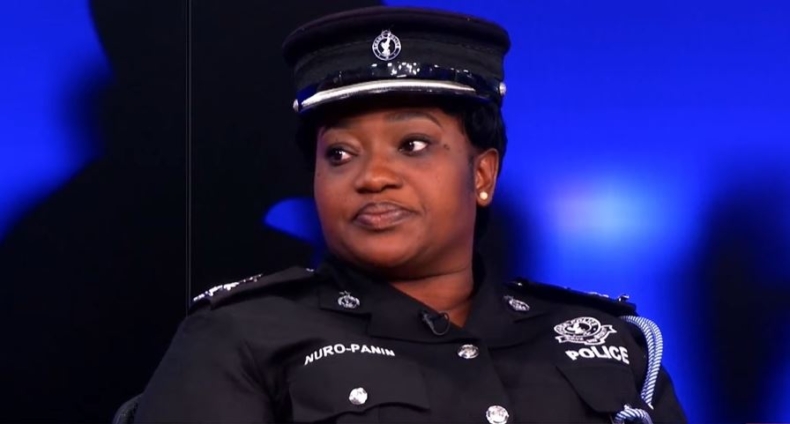
According to Chief Superintendent Dr. (Med) Birgit Nuro-Panin, Head of the Psychiatry Department at the Police Hospital, the ability for suspects to be bailed so quickly allows them to evade further investigation and prosecution, undermining police efforts to dismantle drug networks.
Speaking at a JoyNews dialogue titled "Breaking the Chains: Ghana's Opioid Crisis," Dr. Nuro-Panin explained that the quick release of suspects poses a major challenge to law enforcement.
“Once you pick someone up, once they are able to go back into their community, they are able to hide better because we are not tracking the person that we've picked up,” she said.
She elaborated that police rely on information and intelligence gathered during an arrest to conduct "bigger drug sweeps" and trace the supply chain.
However, with suspects often bailed within an hour, this window of opportunity is lost.
"By the time you get your necessary intelligence, they've gone underground," she lamented.
The police officer also emphasised the critical role of evidence in successful prosecutions, which becomes difficult to secure when the primary source of intelligence disappears.
"It's not a matter of, oh yeah, we caught this person and they said person A or person B is a distributor or an importer. So with the lack of evidence, it becomes more difficult to prosecute," she added.
Dr. Nuro-Panin's comments shed light on one of the key systemic challenges in combating Ghana's escalating drug problem.
Recent data from the Narcotic Control Board reveals a concerning trend, with 50,000 drug users in Ghana, of which 35,000 are students aged between 12 and 35.
The most commonly abused opioids include Tramadol, as well as the more potent and illicitly imported Tapentadol and Carisoprodol.
Government and regulatory bodies like the Food and Drugs Authority (FDA) have ramped up efforts to combat the crisis, including the reclassification of Tramadol as a controlled substance and the destruction of large consignments of illegal opioids at the borders.
A joint task force involving the FDA, Narcotics Control Commission (NACOC), and Customs has also been established to tighten border controls and conduct raids on illicit drug operations.
However, the police's struggle with the bail system highlights a crucial gap in the country's multifaceted approach.
While other agencies focus on supply reduction and public awareness, the ability of law enforcement to effectively prosecute offenders is being hampered by legal provisions that, while intended to protect individual rights, are inadvertently frustrating the fight against drug crime.
The challenges raised by Dr. Nuro-Panin underscore the need for a comprehensive review of legal frameworks to better support the efforts of security agencies in tackling the nation's drug crisis.
Latest Stories
-
André Ayew: Should he make Ghana’s 2026 World Cup squad?
7 minutes -
Ghana is not for rent – Accra warns world powers amidst EU-Ghana defence pact
17 minutes -
Narcotics Control Commission opens applications for cannabis cultivation and management licences
23 minutes -
PAC Chair Abena Osei-Asare to recuse herself from GH¢68.7bn audit probe — PAC Member
32 minutes -
Carney inches closer to majority, as fourth MP defects to Liberals
35 minutes -
Gov’t condemns drone incident near Dubai airport that injured two Ghanaians
39 minutes -
GH¢68.7bn audit irregularities deliberate, not administrative lapses — Crime Analyst
47 minutes -
Ablakwa reveals Ghana’s role in US-Nigeria Christmas Day strikes on ISIS targets
48 minutes -
Iran cannot participate in FIFA World Cup, sports minister says
50 minutes -
CSOs engage Parliament to strengthen anti-corruption efforts
51 minutes -
Redefining Leadership: Pearl Nkrumah’s story of resilience and impact
57 minutes -
Agyemang-Manu was arrested over Sputnik V vaccine deal, he’ll face charges — Kwakye Ofosu
1 hour -
FDA investigates alleged use of plastic in frying plantain chips
1 hour -
Yango Ghana marks IWD 2026 with empowering chit-chat, gifts for female partners and couriers
1 hour -
PAC to probe GH¢68.7bn audit irregularities thoroughly — Akwasi Konadu assures
1 hour