

Audio By Carbonatix
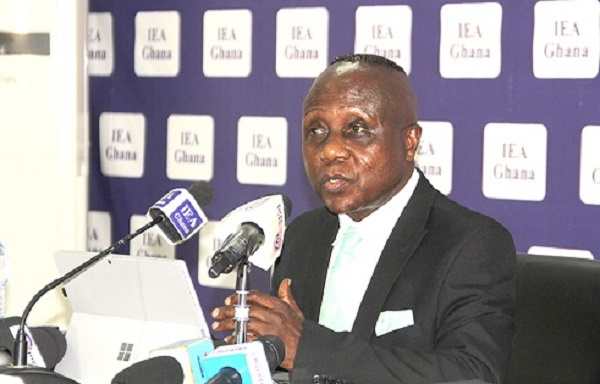
The Executive Director of the Institute of Economic Affairs (IEA), Dr. John Kwakye, has criticized the Bank of Ghana for using monetary policy instructions to finance the 2024 budget at the expense of domestic banks.
Dr. Kwakye argued that high interest rates and the increase of the cash reserve ratios have created unfavorable conditions for banks, hampering their operations and access to liquidity for lending to individuals and businesses.
Describing the Bank of Ghana’s policy decisions as ineffective, Dr. Kwakye questioned the motives behind the Monetary Policy Committee’s move to starve banks from having enough funds to lend to private businesses.
This, he said has contributed in high interest rates, hurting the operations of private businesses seeking for cheaper loans to expand.
"Because the banks are deprived of that much (cash) in terms of their deposits they take from the public, they have less deposits to be able to lend to the public, they use at a monetary control instrument”, he said at a press briefing to respond to some issues in the State of the Nation Address presented by President Akufo-Addo.
He pointed out that the use of high policy rate as a monetary control instrument to check inflation is counterproductive and not yielding the targeted results.
“These are not the solution to the problem. Bank of Ghana contributed to excess liquidity in the system through monetary financing of the budget and then turn around to mop the excess liquidity through very high interest rates, and very high reserve requirements.”
In addition, Dr. Kwakye criticized the significant increase in cash reserve ratios, stating, that the hike from 15 percent to 25 percent is too drastic.
Providing some recommendations, Dr. Kwakye proposed that the central bank should revise the rate to a more moderate level, suggesting a peg of 5 percent.
According to him, such an adjustment would provide banks with the necessary leverage to boost their investments and increase lending to the private sector.
On issues of taxes, Dr. Kwakye stated that government must be remember that it came to power on the promise that it was going to move economic policy away “from taxation to production,” which runs counter to the current economic situation.
“We, on our part, have argued that some of the taxes, such as E-levy, Covid Levy, Growth and Sustainability Levy, Sanitation Levy, and the aborted Emissions Levy, Betting Levy and VAT on electricity consumption, are multiple, nuisance or outdated taxes that cannot be justified”.
Expressing his disappointment, Dr. Kwakye criticized the government for refusing to cut down on wasteful expenditures.
“We recognise the lack of equal effort on the part of Government to curtail its expenditure, including in respect of its size and numerous flagship programmes. The fiscal consolidation being implemented under the IMF program has to be even handed; it must fall equally on expenditure and not just taxes”, he said.
Latest Stories
-
John Boadu pledges unity, reconciliation as he takes over as NPP National Chairman
1 minute -
‘Whatever the personal cost, I will not abandon my duty’ – Baffour Awuah assures Salomey Bafoh
3 minutes -
Government to increase funding for Houses of Chiefs to speed up dispute resolution
5 minutes -
Govt’ to introduce digital property rate system to boost MMDAs’ revenue – Mahama Ayariga
7 minutes -
Traditional Medicine Practice Council closes three unlicensed spa and massage centres in Ashanti Region
9 minutes -
Let’s accept the reality and move along – Mike Oquaye on NPP’s decision to make flagbearer party leader
11 minutes -
Early presidential primary helped cool tensions in NPP – Prof. Mike Oquaye
29 minutes -
NDC congratulates new NPP executives, urges national interest above party interests
32 minutes -
NPP implementing 2024 election review recommendations in stages – Prof Mike Oquaye
33 minutes -
Ghana Rugby Union announces managerial changes
33 minutes -
US removes all bombers from RAF Fairford base
34 minutes -
France closes up to 500 schools Monday over student protests
34 minutes -
Girl, 12, fatally shot in US during ‘dispute over parking space’
35 minutes -
NPP is a party for all classes – Prof. Mike Oquaye
36 minutes -
Chief Justice urges Judiciary to strengthen foundations of justice
36 minutes