

Audio By Carbonatix
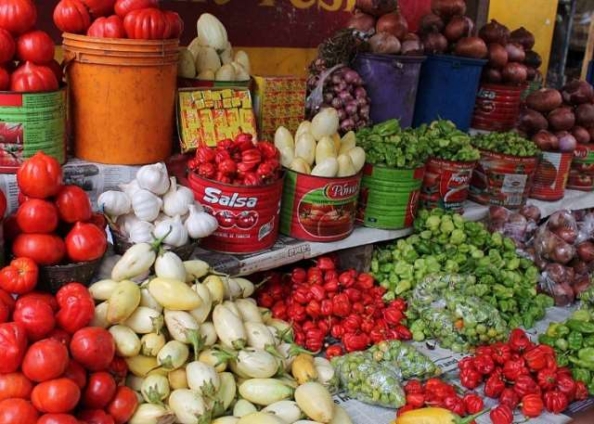
The Institute of Economic Affairs (IEA) Ghana has asked the Government to control food inflation as one of the means to check total inflation in the country.
This follows recent inflation trends, which have seen food inflation consistently being higher than non-food inflation, even though total inflation has remained broadly stable since December 2023.
“The fact that food accounts for nearly 44% of the CPI basket means that you cannot ignore it when you want to bring inflation under control,” Dr John K. Kwakye, Director of Research, IEA Ghana, said.
He said this when he met the press in Accra to present the Institute’s reactions on the State of the Nation Address (SONA) delivered by President Akufo-Addo on February 27, as well as the Monetary Policy Committee (MPC) Decision delivered on March 25 by the Governor of the Bank of Ghana, Dr Ernest Addison.
Dr Addison in his address, noted that headline inflation declined to 23.2 per cent in February, down from 23.5 percent recorded in January 2024.
He added that the decline was broad-based, with food inflation down by 0.1 percentage point to 27.0 per cent, while non-food inflation declined to 20.0 per cent.
That, the IEA Director of Research said confirmed the important role of food inflation in recent inflation trends, “a role that needs to be recognised and taken into consideration if inflation is to be controlled on a durable basis”.
The Governor of the Bank of Ghana also reported that from January to March 20, 2024, the Ghana Cedi recorded a depreciation of 6.8 per cent against the United States Dollar, stressing, however, that the cedi “continues to recover its value”.
Reacting to that, Dr Kwakye said the Cedi rather continued to depreciate, reaching nearly GHS 13 to the dollar.
He emphasised that relying on funds from the International Monetary Fund, World Bank, Eurobonds, cocoa syndicated loan, among others, to strengthen the cedi, was “a lazy man’s approach” and unsustainable, as the pressure would be back when the loans fell due for repayment.
To stabilise the Cedi on a durable basis, Dr Kwakye said the country must increase its foreign exchange earnings through greater ownership of, and value addition to, its natural resources.
He added that the nation must reduce its import demand through domestic industrialisation as well as entrenching its fiscal and monetary discipline.
Latest Stories
-
Hotline Documentary: ‘Silent Football’ to air on JoyPrime and JoyNews today
50 minutes -
NDPC examines how evidence shapes Ghana’s development planning and policy decisions
50 minutes -
Education Ministry calls urgent talks to break GAUA strike deadlock
52 minutes -
NCCE engages women in North East Gonja on rule of law, anti-corruption
1 hour -
NDPC reviews 2004 planning guidelines to reflect changes in decentralised system
1 hour -
Trade Ministry commends Prisons Service for using art to drive inmate rehabilitation
1 hour -
Books, brushes and second chances: Dr Abena Asomaning launches three titles to support prison outreach
1 hour -
Treasury bill auction oversubscribed by 53.5% as yields fall across maturities
1 hour -
NPP warns aspirants premature campaigning could jeopardise eligibility for primaries
1 hour -
Ghana courts investors in Bangkok after exit from $3bn IMF bailout
2 hours -
8 arrested over alleged internet fraud initiation assault in Bono Region
2 hours -
SSNIT says Labadi Beach Redevelopment will create local economic opportunities
2 hours -
BoG proposes 30-day liquidity buffer requirement for banks
2 hours -
BoG plans reviews of banks’ cybersecurity compliance
2 hours -
GRA cautions taxpayers against attacking tax officials
2 hours