
Audio By Carbonatix
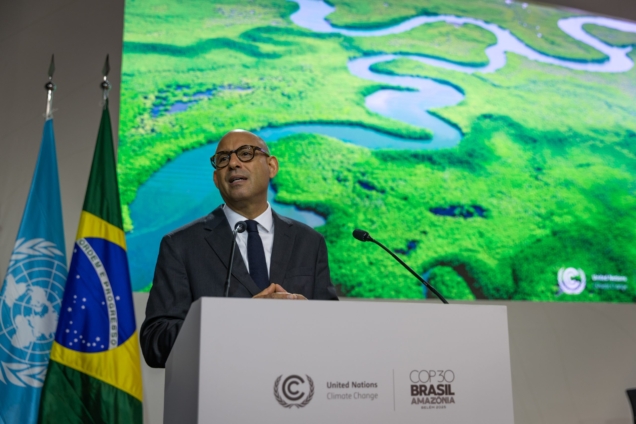
The launch of the Belem Health Action Plan at COP30 was anchored by a stark, simple statement from UN Climate Change Executive Secretary, Simon Stiell: "We're reminded of the deep connection between human health and the health of our planet."
For an African journalist, that connection is not an abstract concept but a daily headline. From the relentless coastal erosion in Accra's Glefe community of Ghana, where rising seas contaminate water sources and fuel cholera outbreaks, to the north, where prolonged droughts and sudden floods disrupt farming cycles and exacerbate malnutrition and meningitis threats, the climate crisis is a present and visceral public health emergency.
The new plan, and the rhetoric surrounding it, offers a framework that speaks directly to the continent's precarious position on the front lines.
Stiell’s speech in Belem, delivered in the shadow of the Amazon, served as a global diagnosis that could have been written for Africa.
"Rising temperatures, floods, droughts and storms are claiming lives, fueling diseases and malnutrition and placing immense pressure on health systems," he stated, precisely cataloging the chronic ailments afflicting health security across the continent.
The numbers are staggering. Stiell cited the latest Lancet Countdown report, which found heat-related deaths have surged 23% since the 1990s, "now exceeding half a million deaths per year."
While global, this trend has a devastating African dimension, where vulnerable communities, "young children, the elderly and people with pre-existing health conditions", are disproportionately impacted.
"But these are not statistics," Stiell insisted, pivoting from data to a moral imperative that resonates deeply. "They are families, communities and futures already paying the price of global heating."
The Belem Health Action Plan, born from collaboration between the Brazilian government and the World Health Organization, is the proposed prescription. Its three core pillars; adaptation, equity, and climate justice, are not just bureaucratic terms; they are the essential ingredients for any effective response in Africa.
- Adaptation: This translates directly to building health systems that can withstand the shocks of a changing climate. Stiell painted a heartbreakingly vivid picture of the alternative: "watching Super typhoons and flash floods rip through hospitals and local health clinics." For Africa, this means retrofitting health facilities to be energy and water resilient, preparing for mass casualty events from cyclones, and developing early warning systems for climate-sensitive diseases.
- Equity: The plan’s focus on equity ensures that interventions reach those who need them most. Stiell emphasized that "vulnerable communities are hit the hardest," a truth evident from the Sahel to the Sahel to the SADC region. An equitable approach means prioritizing the rural clinics, the urban informal settlements, and the communities of pastoralists and smallholder farmers who bear the brunt of climate impacts with the fewest resources.
- Climate Justice: This pillar acknowledges the historical responsibility for the climate crisis. It aligns with the long-standing African argument that nations that contributed least to the problem are now suffering the most severe consequences. By integrating climate justice, the plan provides a moral and operational foundation for directing resources and support to the continent.
The speech moved beyond lamentation, with Stiell declaring plainly that "lamenting is not a strategy. We need real solutions."
A key part of that solution, announced at COP30, is the new Climate and Health Funders Coalition, which has committed an initial $300 million. This funding is explicitly tied to "help convert the Belem health action plan into real-world results." For African nations, this represents a crucial, if initial, down payment on the massive investment needed to build climate-resilient health infrastructure.
The challenge, however, remains monumental. As Stiell noted, "Many health systems are fragile, lacking climate-trained personnel, resilient infrastructure and adequate surveillance." This is a perfect description of the gaps that hamper many African health systems, making them vulnerable to collapse under climate pressures.
The way forward, as outlined in Belem, is through partnership and evidence. Stiell highlighted a new three-year collaboration between UN Climate Change and the Wellcome Trust to ensure "robust health evidence informs more climate policy making." This is critical for Africa, where data on the climate-health nexus can empower policymakers to argue for more targeted interventions and funding.
Ultimately, the power of the Belem Health Action Plan for Africa lies in its core promise, as articulated by Simon Stiell: "Every measure that strengthens resilience, cuts emissions or protects ecosystems is also a public health intervention."
For a continent where the health of people is so directly tied to the health of the environment, this integrated approach is a necessity for survival.
The Belem plan provides the blueprint; the world must now provide the sustained will and resources to ensure it is built, ward by ward, clinic by clinic, across Africa.
-
The author, Kenneth Awotwe Darko is a multimedia journalist, climate change and sustainability enthusiast. He is also a Fellow of the Africa Youth Negotiators Fellowship (AYNF).
Email: Kenneth.darko@myjoyonline.com
Latest Stories
-
Gyan headlines Ghana, Africa presence as PUMA unveils World Cup kits in New York
4 minutes -
Gov’t initiates talks with Burkina Faso over fresh tomato export ban
18 minutes -
Joy Ghana Fest 2026 off to a flying start as doors open at Achimota Retail Center
29 minutes -
3 dead as tipper truck crashes into vehicles on Apire–Hemang road
1 hour -
Eid-ul-Fitr: Chief Imam urges Ghanaians to protect environment
2 hours -
Netanyahu says Israel ‘acted alone’ in Iran energy strike, will heed Trump’s call not to repeat attack
2 hours -
Police nab 12 over highway attacks in Ashanti Region, recover weapons
2 hours -
They were not set up to help Africa – Seth Terkper on global finance
3 hours -
IHRC calls for peace in Middle East as Muslims mark Eid
3 hours -
Bretton Woods institutions were never built for Africa – Seth Terkper
3 hours -
Jinijini–Sampa road to be completed by 2027 — Mahama
11 hours -
Afroman wins legal battle over songs mocking US police
12 hours -
MTN Ghana deepens role in national growth with record tax contributions and expanded investments
12 hours -
Kevin Spacey and accusers settle before civil trial
12 hours -
Premier League extends £30 cap on away tickets
12 hours