

Audio By Carbonatix
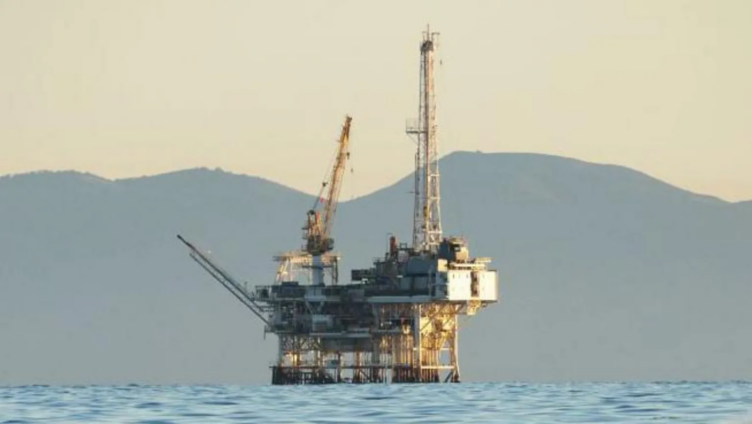
US President Joe Biden has announced a ban on new offshore oil and gas drilling along most of America's coastline, weeks before Donald Trump takes office.
The ban covers the entire Atlantic coast and eastern Gulf of Mexico, as well as the Pacific coast of California, Oregon and Washington and a section of the Bering Sea off Alaska.
It is the latest in a string of last-minute climate policy actions by the Biden administration ahead of Donald Trump's return to the White House.
Trump has vowed to revoke the ban "immediately" when he takes office, but he may find it difficult to reverse under US law.
During his campaign, Trump pledged to "unleash" domestic fossil fuel production in a bid to lower gas costs, despite the US already seeing record-high extraction rates.
Announcing the new drilling ban, Biden said: "My decision reflects what coastal communities, businesses, and beachgoers have known for a long time: that drilling off these coasts could cause irreversible damage to places we hold dear and is unnecessary to meet our nation's energy needs.
"It is not worth the risks."
In a radio interview, Trump branded the ban "ridiculous".
"I'll unban it immediately," he said. "I have the right to unban it immediately."
Trump has previously said he will reverse Biden's conservation and climate change policies.
For the new drilling ban, Biden is taking action under the Outer Continental Shelf Lands Act of 1953, which allows US presidents to withdraw areas from mineral leasing and drilling.
The law does not grant presidents the legal authority to overturn prior bans, according to a 2019 court ruling. It means a reversal would likely require an act of Congress, which is now controlled by Trump's Republicans.
The law also does not allow presidents to revoke any areas already leased for offshore drilling.
Trump - despite being in favour of more oil and gas exploration and repeatedly deploying his tag line "Drill, baby, drill" during campaigning - has used the law himself to protect waters off the coast of Florida in 2020.
At the time, this was seen as an effort to garner votes from the state ahead of the 2020 US election, and the protection was due to expire in 2032. Biden's decision will protect the same area with no expiry date.
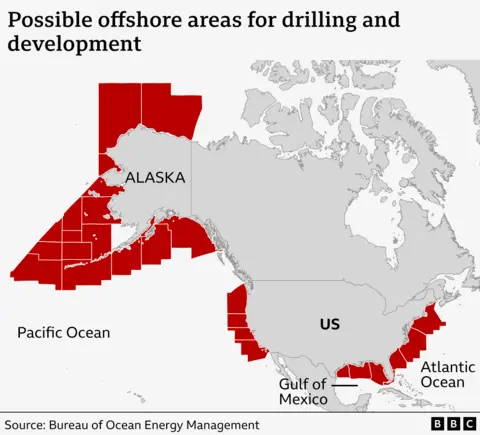
The new offshore drilling ban covers more than 625 million acres (253 million hectares) of water.
After it was reported last week that Biden would introduce the policy, Trump's incoming press secretary Karoline Leavitt called it "a disgraceful decision".
She said the move was "designed to exact political revenge on the American people who gave President Trump a mandate to increase drilling and lower gas prices".
Environmental groups, however, welcomed the move.
Joseph Gordon, from the conservation organisation Oceana, said: "This is an epic ocean victory.
"Our treasured coastal communities are now safeguarded for future generations."
An oil and gas industry trade group said Biden's decision would harm American energy security and should be reversed by Congress.
Mike Sommers, president of the American Petroleum Institute, said: "We urge policymakers to use every tool at their disposal to reverse this politically motivated decision and restore a pro-American energy approach to federal leasing."
In 2017, during his first term in office, Trump tried to reverse former President Barack Obama's protection of 125 million acres (50.6 million hectares) of the Atlantic and Arctic Oceans.
Two years later, a US District Court ruled that the act did not allow a president to reverse decisions of previous administrations – meaning Trump could not revoke Obama's protections.
It is expected that Trump - whose inauguration ceremony takes place on 20 January - will still seek to challenge Biden's move. A final legal decision could be made by the Supreme Court, which currently has a majority of Republican judges.
Environmentalists and Democrats had been calling on Biden to introduce the ban because of concerns that any new drilling would threaten US ambitions to cut its greenhouse gas emissions and tackle climate change.
The International Energy Agency estimates that global oil and gas demand needs to fall by 5% annually to limit global temperature rise to 1.5C, which is seen as crucial to help avoid the most damaging impacts.
Latest Stories
-
Gov’t orders deployment of Metro Mass buses to cushion commuters amid fuel price hike
49 minutes -
Key Indian state polls begin in test for Modi’s party
56 minutes -
Playback: Gomoa Easter Carnival in photos
1 hour -
Gov’t orders removal of fuel taxes to ease pump price hikes
1 hour -
“Whatever the decision of CAS, we will respect it” – CAF President Motsepe after AFCON final meetings in Morocco
1 hour -
Emma Ankrah: When waiting becomes part of treatment – Reflections on hospital care
1 hour -
Ghana urges travellers to prepare for new EU border system roll-out
2 hours -
Mahama enforces fuel coupon ban for ministers as cabinet moves to slash fuel taxes
2 hours -
Task force probes strange fish deaths in Tema
2 hours -
Neglected traffic lights turn Awoshie–Anyaa highway into deadly hotspot
2 hours -
EOCO declares Dr Gabriel Tanko Kwamigah-Atokple a fugitive over alleged gold fraud
2 hours -
GSE records GH¢1.09bn trade in equity market; 10 stocks register gains
3 hours -
Fuel prices: Ghana places 15th in Africa
3 hours -
Africa must look inward: Reframing resilience in a shifting global economy
3 hours -
9 dead, 2 missing after boat capsizes on Volta Lake
3 hours