

Audio By Carbonatix
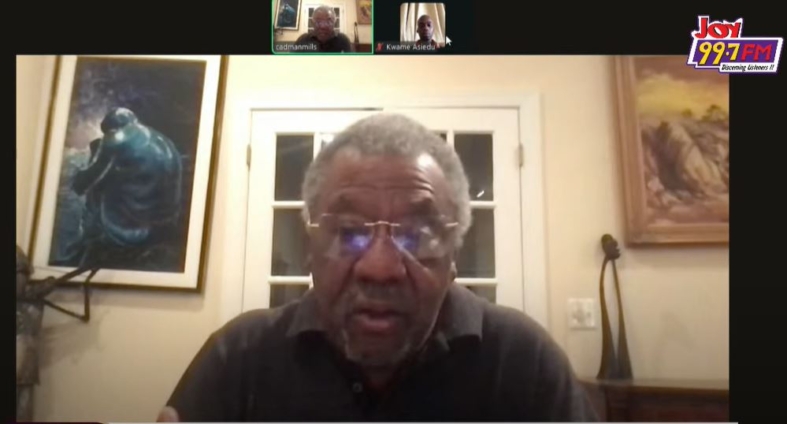
The brother of the late President John Evans Atta Mills, economist Cadman Atta Mills, has provided a stark professional and personal analysis of illegal mining (galamsey), describing it not just as an environmental crisis but a complete breakdown of Ghana's governance system.
Speaking on the Joy FM Super Morning Show on Tuesday, September 23, he stated that the illegal activity is "unacceptable" and a betrayal of the proper, scientific methods of mining.
Mr. Mills, an astute economist with decades of experience from the World Bank, explained the fundamental difference between legitimate mining and the rampant destruction caused by galamsey.
He stated that proper mining requires a meticulous process of scientific exploration to determine the economic viability and size of a mineral deposit.
This is followed by a "plan of development" and a comprehensive "environmental assessment plan" with built-in mitigation measures to protect the land and water.
A license to mine is granted only after these rigorous steps are completed.
"That is not what is happening in Ghana," he said. He lamented that "any bozo just simply goes because he's a party member and he's given a licence to explore, and the exploration licence is being used to actually mine."
This, he argued, is an abuse of the system that is "unacceptable."
Mr Cadman Atta Mills brought the seriousness of the issue to a personal level, sharing a shocking account of his recent visit to Ghana.
Despite being away for only a year, he fell ill from using water in the Central Region.
He disclosed that he experienced a "major upset for almost all the time that I was there" just from using the water to cook and brush his teeth, without even drinking it.
"That was the click to me that look, this thing is not some theory," he said.
His personal anecdote underscores a growing body of scientific evidence. Studies by the Water Resources Commission have shown that major rivers like the Pra and Ankobra are heavily polluted with mercury, cyanide, and other toxic chemicals used in illegal mining.
According to a report by the Ghana Academy of Arts and Sciences (GAAS), the destruction of water bodies and farmlands is a national catastrophe.
The Ghana Water Company Limited (GWCL) has also repeatedly warned that the high turbidity and chemical content of water from these sources make treatment extremely difficult and costly, raising fears of a potential water importation crisis if the issue is not resolved.
Mr. Mills' comments serve as a powerful validation of the ongoing #StopGalamseyNow protests, adding a veteran economist's perspective to the environmental and social calls for action.
He concluded by reiterating that Ghana’s leadership must have the political will to enforce its own laws and stop the destruction, which is being enabled by cronyism and a disregard for proper procedure.
Latest Stories
-
Sacking Otto Addo was in Ghana’s best interest – Kurt Okraku
2 hours -
Judge temporarily halts construction of Trump’s White House ballroom
3 hours -
Tech giant Oracle makes ‘significant’ job cuts
3 hours -
Iran will play World Cup games in US – Infantino
3 hours -
World Cup risks being ‘stage for repression’ – Amnesty
3 hours -
Barcelona move difficult to turn down – Cucurella
3 hours -
England beaten by Japan in final match before World Cup squad is named
3 hours -
Newcastle not looking to make Howe change at moment – CEO
4 hours -
Italy fail to reach third straight World Cup after penalty shootout loss to Bosnia
4 hours -
Fire at Ashaiman Tulaku brought under control
4 hours -
WFP, UK Govt push for fortified rice in school feeding to tackle child malnutrition
4 hours -
Tottenham Supporters’ Trust says it cannot support De Zerbi appointment
4 hours -
Gyokeres’ late winner fires Potters’ Sweden past Poland to World Cup
4 hours -
SIC MD denies political interference claims, admits SIGA only ‘encouraged’ state entities
4 hours -
Turkey beat Kosovo to reach first World Cup in 24 years
4 hours