

Audio By Carbonatix
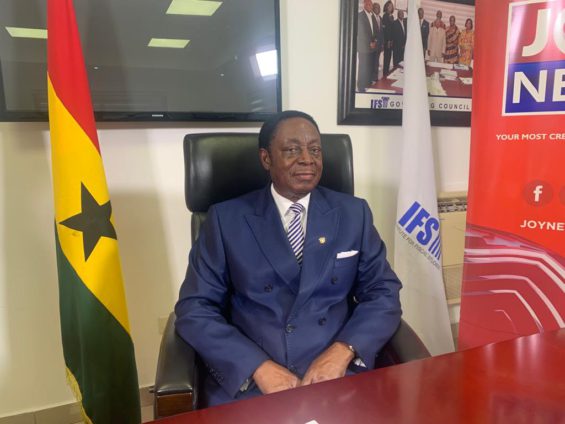
A former Finance Minister, Dr. Kwabena Duffour has intimated that the depreciation of the cedi accounts for 30% of the public debt.
Speaking in an exclusive interview with JoyNews, on November 30, 2021, Dr. Duffour opined that "the public debt is quoted in cedis [and] between 2006 and 2019, the cedi depreciation affected the public debt because about half of the public debt is in foreign money. So when the cedi depreciates, it affects that portion."
"So the increase you see is not money government has used or you and I have used," he said.
Commenting on the country's current economic situation, Dr. Duffour acknowledged that there are challenges that need to be addressed. Of great concern to him is the huge public debt the country has accumulated.
Regardless, he is optimistic that the challenges can be addressed. Proposing solutions to dealing with the situation, he urged the government to explore opportunities in the extractive industry. He noted that government can raise revenue as well as reduce the public sector debt through investing in the extractive sector.
“I would have looked at the extractive industry [i.e the minerals, the mining, and the oil and gas industry] if I were the Finance Minister. I think we can have a deal with them,” he said.
“Botswana lives on diamonds mainly and their diamond reserves are not bigger than our gold reserves at all, but Botswana rakes in almost 4billion dollars every year from their diamonds because of the module they have.
“Government should look at acquiring more shares in the mining and oil industries. They can sit down with the players in the mining industry and renegotiate,” he added.
Performance of the Cedi against the dollar
Meanwhile, with barely five weeks to end the year, the Ghana cedi has come under intense pressure and is being classified among African currencies with the ‘Worst Spot Returns’.
The cedi is now ranked 14th among 20 top African currencies tracked by Bloomberg. It was actually the best-performing currency in Africa in the first quarter of 2021.
A combination of factors including increased corporate demand for the US dollar and the exit of the country’s bond by some foreign investors have put pressure on the local currency, lately.
The past week has been worst as the local currency lost more ground to the dollar.
Bloomberg, therefore, put the depreciation of the cedi at 4.05%, though the Bank of Ghana data shows a lower decline in value of the local currency to the US dollar.
Despite a rebound in oil prices, amongst other exports commodities, it appears dollar inflows are not enough to stabilize the local currency.
Latest Stories
-
Power restoration fault suspected in Kumasi Central Market fire
4 hours -
The 7-foot giant of Ngleshie Amanfro: Seven-foot Ghanaian Ephraim Saawa dreams of joining the national basketball team
5 hours -
Government promises support for Kumasi Central Market fire victims
5 hours -
Vibes The Movie: Big Ghun’s Ghanaian film earns five nominations at 2026 REFFA
5 hours -
MamaCare CEO warns unresolved conflicts among health workers could undermine maternal and neonatal care
6 hours -
Health professionals urged to translate medical knowledge into practice to save mothers
6 hours -
Conflicts among care providers linked to maternal, neonatal deaths – Expert
7 hours -
GIS marks 10th TIME conference, champions improved teaching practices
7 hours -
BRICS Or Balance? What Ghana’s bid really means
8 hours -
GPRTU wants full TRAFFITECH-GH implementation to start in 2027
8 hours -
How 10-mile walks for basic education birthed a 50-year legal career for Justice Korbieh
8 hours -
Mahama announces plans to import electric wheelchairs for PWDs
8 hours -
KGL U17 Colts 2026: Western beat Prempeh Elite Academy to set up final final with Greater Accra Region
8 hours -
Late Solanke strike salvages 10-man Spurs draw at Man United
9 hours -
Gender Ministry to monitor welfare of Nana Akua Addo’s children amid domestic violence case
9 hours