

Audio By Carbonatix
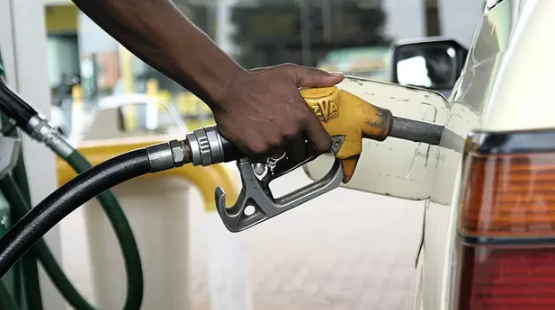
The Chamber of Petroleum Consumers (COPEC) has cautioned that fuel prices will continue to surge in the coming weeks if the depreciation of the cedi against the dollar is not addressed.
The Chamber blamed the recent marginal increments in fuel prices on the depreciation of the local currency and predicted that fuel prices were likely to go up again at the pumps by the end of the week.
In an interview, Duncan Amoah, Executive Secretary of COPEC, called for urgent action to halt a further depreciation of the cedi to stabilise prices at the pumps.
“If the cedi is still not showing strength and still depreciating, there is a greater tendency that you will pay more for fuel at the pumps…it is likely prices will go up again,” Mr Amoah said.
After months of stabilised prices at the pumps, prices of petrol, diesel and liquefied petroleum gas (LPG) went up marginally for two consecutive pricing windows, from February 1, 2024.
In the February 2024 Second Pricing Window, fuel prices went up at an average of GHS0.45 per litre for petrol and GHS0.30 per litre for diesel. LPG increased by GHS0.65 per kilogram.
Prices went up again in the March 2024 First Pricing Window. Currently, petrol is selling at an average of GHS13.49 per litre and GHS14.49 for diesel.
The Institute of Energy Security (IES) attributed the increment in prices to the depreciation of the cedi against the dollar.
In its evaluation of the February 2024 Second Pricing Window, the IES Economic Desk found that the Ghana cedi depreciated by 1.44 per cent to a U.S. Dollar, trading at GHS 12.60 to the dollar.
“Barring any intervention, in the coming days, consumers should expect further marginal increases in the price of Gasoil, Gasoline and LPG, this is largely due to the worsened Ghana Cedi,” the IES said.
COPEC said the Government’s gold for oil programme was not a sustainable intervention to address the forex factor that contributed to the increment in fuel prices.
Mr Amoah said the policy only covered about 20 per cent of total consumption and that meant that a larger percentage of the market relied on dollars to import petroleum products into the country.
He said using the country’s gold reserves to cushion the cedi from depreciating would have been a more sustainable option than exchanging the gold with petroleum products on the international market.
The Government announced the Gold for Oil Policy in November 2022 as an innovative measure to exchange gold for petroleum products instead of US Dollars.
The Government said the move was intended to reduce the demand for dollars for the importation of petroleum products and by extension reduce the rate of depreciation of the Cedi.
It is estimated that the country requires about $400m to import petroleum products monthly – out of which the Bank of Ghana can supply only $120m to petroleum importers.
Latest Stories
-
MamaCare CEO warns unresolved conflicts among health workers could undermine maternal and neonatal care
3 minutes -
Health professionals urged to translate medical knowledge into practice to save mothers
9 minutes -
Conflicts among care providers linked to maternal, neonatal deaths – Expert
2 hours -
GIS marks 10th TIME conference, champions improved teaching practices
2 hours -
BRICS Or Balance? What Ghana’s bid really means
2 hours -
GPRTU wants full TRAFFITECH-GH implementation to start in 2027
3 hours -
Mahama announces plans to import electric wheelchairs for PWDs
3 hours -
KGL U17 Colts 2026: Western beat Prempeh Elite Academy to set up final final with Greater Accra Region
3 hours -
Late Solanke strike salvages 10-man Spurs draw at Man United
3 hours -
Gender Ministry to monitor welfare of Nana Akua Addo’s children amid domestic violence case
3 hours -
Benedict Okyere Yeboah: Ghana’s football problem goes beyond sacking a coach
3 hours -
GPL 2026/27: Darkwah Wiafe’s winner sees All Blacks beat Kotoko
4 hours -
ITF World Tour : Patel Wins Boys’ Singles Final at J100 Accra
4 hours -
Ghana must pursue BRICS partnership if it brings economic benefits – Kpebu
4 hours -
Success and Wright Claims J100 Accra Girls’ Doubles Championship
4 hours